All dishes / ラテンアメリカ
Sopa de lima Period BOrigin theory CVerified
Some fields (dish name, region and gates) are shown from the Japanese-edition data.
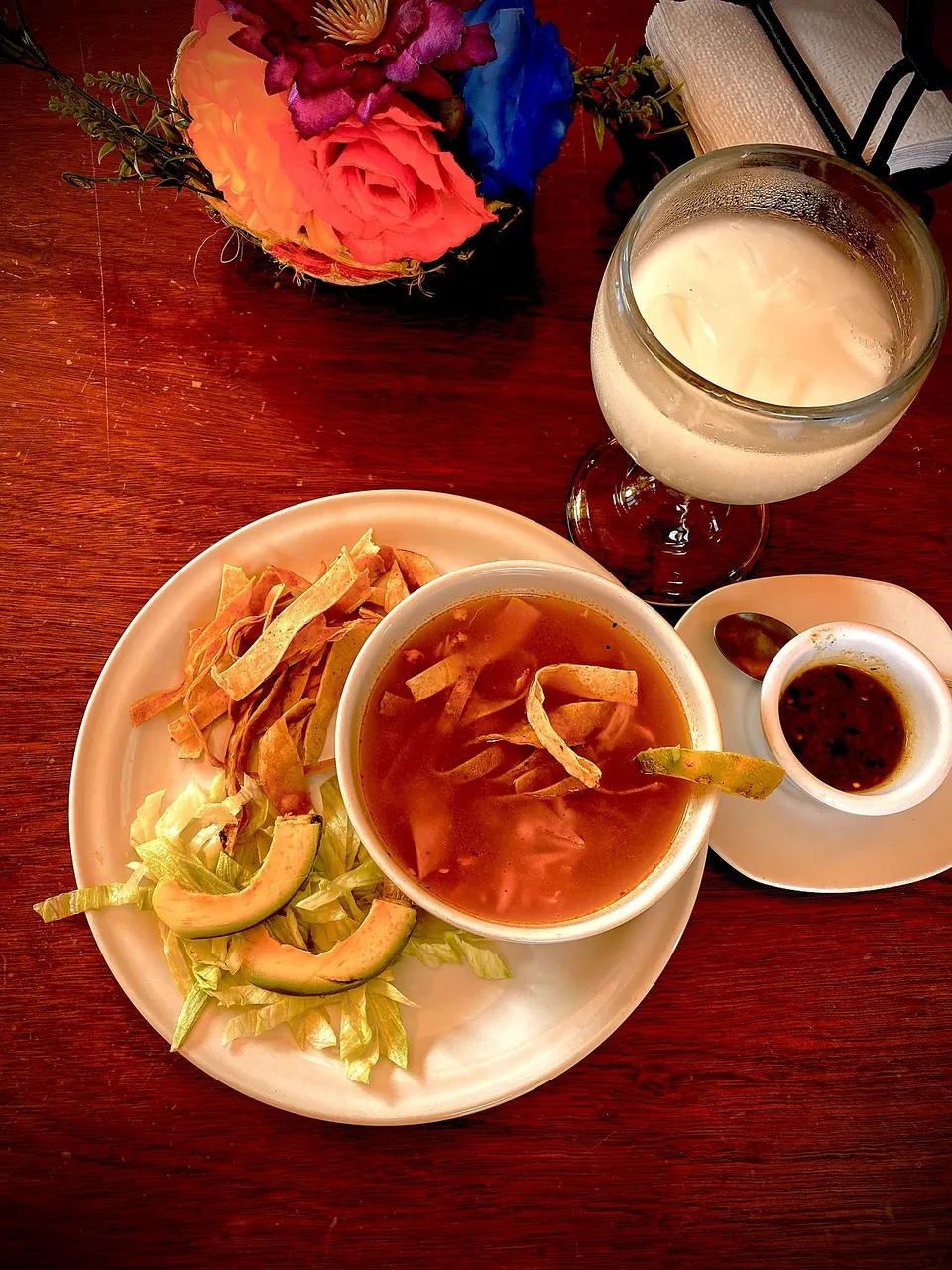
A bright lime soup that stands for the Yucatán table. Yet the citrus that gives it that brightness, so seemingly local, is in fact a fruit from the Old World that crossed the sea.
Verification highlight popular claim → verdict → evidence
Both chicken and the citrus lima arrived in Yucatán only after the Spanish conquest, so the dish is a colonial-era fusion of native Maya turkey with Spanish-introduced chicken and citrus. A popular story crediting a cook named Katún with inventing the soup in 1946 traces back to a single unsupported municipal tourism page and is treated as an unverified legend rather than the dish's origin.
The three gates
- Ingredient-supply gate
- Chicken and the citrus lima both reached Yucatán only after the Spanish arrival; both are limiting factors.
- Cooking-technique gate
- Simmering the soup and serving it with fried tortilla strips.
- Venue gate
- Home kitchens and eateries in Yucatán.
Overview
Sopa de lima is a dish of the Yucatán Peninsula in Mexico. Chicken or turkey is simmered into a broth sharpened with the sourness of a citrus called lima agria, and crisp fried tortilla strips are scattered over the top. Layering the tang of citrus onto a rich poultry stock, seasoned with garlic and oregano, it has settled into homes and eating houses as a dish that tastes distinctly of the Yucatán.
The Maya raised turkeys and ate their meat from ancient times; the bird was a food rooted in this land. The soup's other lead, the chicken, and the lima that decides its flavor both arrived here in the sixteenth century with the Spanish. To the native turkey were added chicken, citrus, garlic, and oregano brought across the sea, and the present form took shape. This blend of the native and the foreign is a trait shared by Yucatecan cooking as a whole.
The faintly bitter fragrance of the fried tortilla against the keen sourness of the lima: that pairing has fixed the soup as an everyday dish of the region.
How we know
Sopa de lima trails a suitably storied anecdote. 'Today's lime soup was first made in 1946 by a cook called Katún, a name that means warrior in Maya.' Cookbooks and blogs have repeated the tale.
But trace it to its source, and it comes down to a single tourism page from the city of Mérida. The many introductions that seem to exist are, in the end, only copying that one entry, and no contemporary record or local history supports it. The substance of the story does not sit right either. Both the chicken and the lima, that is lima agria, were brought to this land by the Spanish in the sixteenth century, and a sour soup pairing them with the native turkey was already part of Yucatecan food throughout the colonial period. The claim that one cook invented it in 1946 is a much later feat of credit, out of step with the dish's own history.
The citrus itself carries a second misunderstanding. Lima agria is sometimes said to be a fruit native to the Yucatán, but this does not match the plant's history. The citrus was born in the Old World; Spanish voyagers carried it to the Caribbean in the age of exploration, and from there it spread to the Yucatán. Even now that it stands for the taste of the land, its roots lie across the sea.
The true parentage of sopa de lima is not the invention of any one person. The Maya turkey and the chicken and citrus that came over the sea melted together into a single bowl over the long span of the colonial period — that is this soup's certain history.
The full set of origin theories and the detailed verification log — traceable all the way to their sources — are available on the Japanese edition.
See the full origin theories and verification log (Japanese) →
Related dishes
Shares the key ingredient
- Chicken tikka masalaUnited KingdomC
- Wat (pre-chili Ethiopian stew, earlier layer)Ethiopian HighlandsC
- AjiacoBogotá, ColombiaB
- Jerk chickenJamaicaC
- Soto ayamJava (Indonesia)C
- ShkmeruliGeorgiaB
- Khao man gaiThailandB
- Hainanese chicken riceHainan (China) → SingaporeC
- MoambeCongo (Central Africa)C
- Nyembwe chicken (Poulet nyembwe)Gabon (Central Africa)C
- Chicken yassaSenegalC
- Chicken KievKyiv (Ukraine)C
- Circassian chicken (Çerkez tavuğu)Turkey (Ottoman court) / CaucasusB
- White cut chickenGuangdong (China)C
- Ohn no khao swèMyanmarC
- Kedjenou layer (canari steam-braise)Côte d'IvoireC
- WaterzooiFlanders (Belgium)C
- Soup currySapporo (Japan)B