All dishes / サブサハラ・アフリカ
Chicken yassa Period BOrigin theory CVerified
Some fields (dish name, region and gates) are shown from the Japanese-edition data.
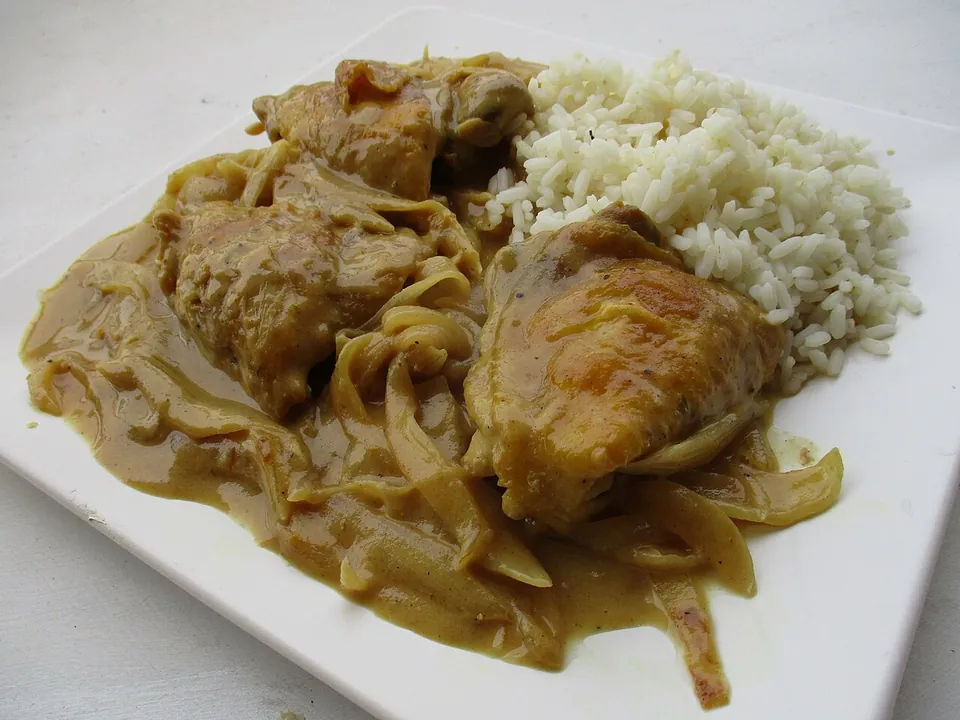
Chicken yassa, one of Senegal's best-known dishes, is chicken marinated in lemon and onion, then browned and braised. Where it comes from and where its name comes from are both still unsettled.
Verification highlight popular claim → verdict → evidence
The dish's origin is well placed in the Casamance region of southern Senegal among the Jola (Diola) people, corroborated by archaeological food-history research, but its name has no single settled etymology: candidates include Wolof yaxa ('cooked with onions'), Mandinka yasso ('to grill'), and a Casamance Creole borrowing of Portuguese assar ('to roast'). The dish's heavy use of onions and citrus marinade also reflects colonial-era trade networks rather than a single point of invention. Key sources: PLOS One (2023) archaeological study of Lower Casamance foodways; Jessica B. Harris, The Africa Cookbook (1998).
The three gates
- Ingredient-supply gate
- Chicken, onions, and lemons were all Old World ingredients, so no single ingredient was limiting. Still, the dish's heavy use of onions and citrus marinade spread through colonial-era trade.
- Cooking-technique gate
- Marinating in lemon and onion, then grilling or braising.
- Venue gate
- Senegalese home cooking, later spreading across West Africa.
Overview
Chicken yassa is a Senegalese home dish of chicken marinated at length in lemon and onion, then browned and braised. The tangy marinade tenderizes the chicken while the onions cook down sweet, and a version made with Dijon mustard is widely known as well.
It is generally held to have taken form in the Casamance region of southern Senegal. The dish reflects a land where citrus and onions grow well. A peer-reviewed archaeological study of a settlement in Lower Casamance (PLOS One, 2023) found that in the early twentieth century people there cooked mostly by braising, ate chicken and fish, and raised local vegetables. The time and place where yassa settled in as a regional dish line up with what came out of the ground.
Today's form, generous with onions and citrus, is thought to have spread once colonial trade made those ingredients widely available. From the home kitchen, yassa carried across Senegal and then out across West Africa.
How we know
On where yassa comes from and what its name means, researchers differ.
One view holds that it took form as a regional dish of the Jola (Diola) people of the Casamance region of southern Senegal in the early twentieth century. In a land where lemons and onions ripen abundantly, the practice of marinating meat and fish in acid to tenderize them is said to have developed. A multidisciplinary, peer-reviewed archaeological study of a settlement site in Lower Casamance (PLOS One, 2023) unearthed a way of life centered on rice and braised cooking, with chicken, fish, and cattle on the table in the early twentieth century, lending weight to the idea that yassa took root in this place and time.
Another view stresses the colonial-era making of the dish, on both name and ingredients. The name "yassa guinar" (guinar meaning chicken) goes back to Wolof, and this view holds that Wolof culture joined with the ingredients and techniques of the French colonial period (1659 to 1960), the generous onion-and-citrus marinades and the Dijon mustard, to spread the dish's present form. The first view leans on place of origin; the second, on colonial-era supply and cooking style.
The name's own origin has not settled on one answer either. Three readings stand side by side: Wolof yaxa, for cooking with onions; Mandinka yàsso, meaning to grill; and, by way of a Casamance creole, the Portuguese assar, to roast. None has won out. The early work that introduced the dish widely in the English-speaking world was Jessica B. Harris's The Africa Cookbook (1998), and no firm trace has been found earlier than that.
The full set of origin theories and the detailed verification log — traceable all the way to their sources — are available on the Japanese edition.
See the full origin theories and verification log (Japanese) →
Related dishes
Shares the key ingredient
- Chicken tikka masalaUnited KingdomC
- Wat (pre-chili Ethiopian stew, earlier layer)Ethiopian HighlandsC
- AjiacoBogotá, ColombiaB
- Jerk chickenJamaicaC
- Soto ayamJava (Indonesia)C
- ShkmeruliGeorgiaB
- Khao man gaiThailandB
- Hainanese chicken riceHainan (China) → SingaporeC
- MoambeCongo (Central Africa)C
- Nyembwe chicken (Poulet nyembwe)Gabon (Central Africa)C
- Chicken KievKyiv (Ukraine)C
- Circassian chicken (Çerkez tavuğu)Turkey (Ottoman court) / CaucasusB
- Sopa de limaYucatán (Mexico)C
- White cut chickenGuangdong (China)C
- Ohn no khao swèMyanmarC
- Kedjenou layer (canari steam-braise)Côte d'IvoireC
- WaterzooiFlanders (Belgium)C
- Soup currySapporo (Japan)B