All dishes / 南アジア
Chapli kebab Period COrigin theory CVerified
Some fields (dish name, region and gates) are shown from the Japanese-edition data.
A flat minced-meat kebab born in Peshawar. It is sometimes said to trace back to the court of Emperor Akbar, but that pedigree is betrayed by the Mughal sources themselves.
Verification highlight popular claim → verdict → evidence
Myth: the Mughal administrative record Ain-i-Akbari (1590s) lists Chapli Kebab, implying a Mughal court origin. Verdict: refuted—the primary source's own kitchen recipe list (Blochmann's 1873 translation) names dishes like Biryan, Yakhni, and Kabab but contains no entry called 'chapli'; the Pashto-derived name could not appear in a Persian Mughal court text anyway. The dish's actual roots are 19th-to-20th-century Peshawar/Pashtun street food, named either for its flat shape (Pashto chaprikh) or its resemblance to a sandal (Urdu/Hindi chappal). Key source: Ain-i-Akbari, tr. H. Blochmann (1873), Vol. 1.
The three gates
- Ingredient-supply gate
- Mutton and beef are locally available; chile peppers had already arrived in earlier centuries.
- Cooking-technique gate
- The meat is shaped into a flat patty and cooked on a griddle.
- Venue gate
- Pashtun street stalls and tea houses.
Overview
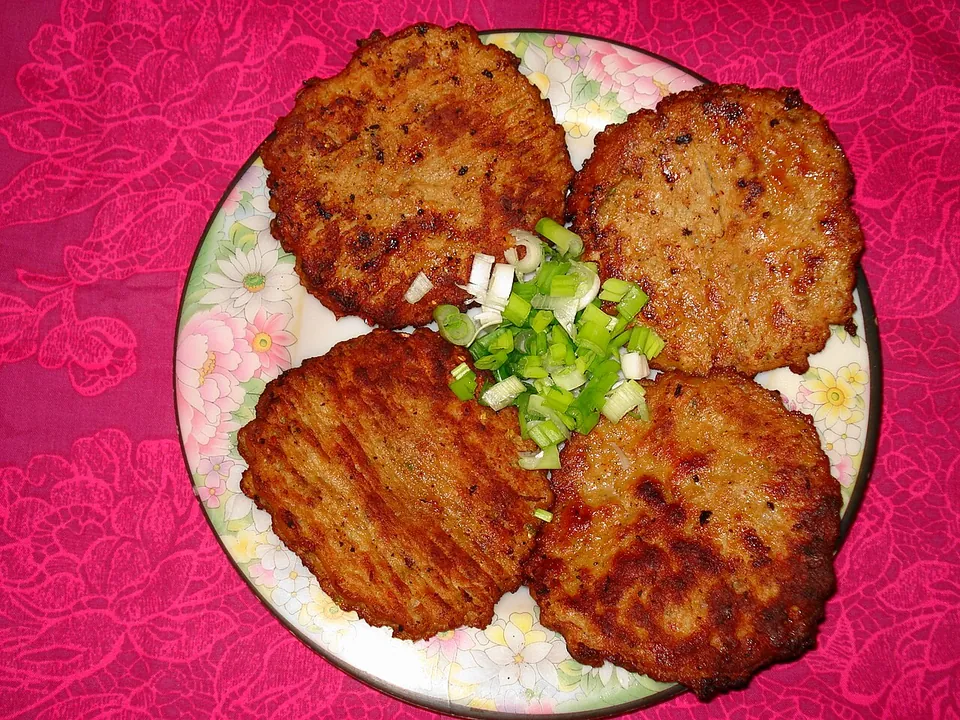
Chapli kebab is made from minced beef or mutton mixed with chili and other spices, shaped flat, and cooked on a griddle. It has long been a favorite of the Pashtun streets and tea houses of northwestern Pakistan, centered on Peshawar and Takht Bhai in Mardan District.
Mutton and beef have been staple meats of the region for a long time, and chili, which gives the kebab much of its character, had already reached South Asia in the early modern period. Along with the method of flattening the minced meat and searing it on a griddle, the dish is thought to have taken shape as a Pashtun specialty between the late nineteenth and early twentieth centuries. Sources that would pin down a precise year of origin are scarce; the dish's name first appears in written records of Peshawar street food around the mid-twentieth century, and its date is spoken of only in broad terms.
The flat kebab griddled at street corners has become one of the signature dishes of the Khyber Pakhtunkhwa region.
How we know
The dish is often given a distinguished pedigree. The Ain-i-Akbari (1589–96), the administrative treatise compiled during Emperor Akbar's reign, is said to record the chapli kebab by name—so claim various blogs and roundup articles that push the dish up into the sixteenth-century Mughal court.
Open that source, however, and the name chapli is nowhere to be found. In Blochmann's 1873 English translation, the list of dishes from the imperial kitchen runs to biryan, yakhni, kabab (as a general term), musamman, dopiaza, dampukht and the like—not a single entry reads chapli. And chaprikh, the word from which the name is said to derive, is Pashto; it has no business appearing in the Persian-language records of the Mughal court. This was a distinguished past pasted on after the fact—a familiar bid to lend the dish borrowed authority.
The origin of the name itself is still contested by two accounts. One derives it from the Pashto chaprikh (flat), describing the flattened shape; the other from chappal, the Urdu and Hindi word for sandal, because the kebab's shape and size resemble a sandal's sole. The newspaper DAWN and the columnist Mohammad Taqi favor the Pashto origin. However the etymology splits, both accounts agree that the dish was born in the Pashtun country of Peshawar and Mardan. Peel away the courtly legend and what remains is the true lineage of a dish griddled at the street corners of the northwest.
The full set of origin theories and the detailed verification log — traceable all the way to their sources — are available on the Japanese edition.
See the full origin theories and verification log (Japanese) →
Related dishes
Shares the key ingredient
- KimchiSouth KoreaC
- Mapo tofuSichuan (China)C
- Doro watEthiopian HighlandsB
- Indigenous molli (chilmolli, pre-Old-World-spice chili sauce proto-layer)MexicoC
- RendangMinangkabau, West Sumatra (Indonesia)C
- Tom yum goongThailandC
- SambalMalay Archipelago (Indonesia)C
- TteokbokkiKorean PeninsulaC
- Tandoori chickenNorth India (Punjab / Delhi)C
- LaksaPenang (Straits Settlements)C
- MuhammaraAleppo, SyriaC
- VindalooGoa (India)C
- Piri piri chickenMozambique (Portuguese colonial sphere)C
- HarissaTunisiaC
- BibimbapSouth KoreaC
- Twice-cooked pork (huiguorou)Sichuan (China)C
- LarbLaos / Isan (Thailand)C
- Chili con carneTexas, USA (San Antonio)C
- Dan dan noodlesChengdu, Sichuan (China)C
- General Tso's chickenNew York (USA)C
- Pol sambolSri LankaB
- ShiroEthiopian HighlandsB
- Hiroshima soupless dandan noodlesHiroshima (Japan)B
- Kung pao chickenSichuan (China)C
- Fuqi feipianSichuan (China)D
- Nasi lemakMalaysiaC
- LampraisSri LankaC
- Nigerian pepper soupNigeria (West Africa)C
- MerguezMoroccoB