All dishes / 東アジア
Mapo tofu Period AOrigin theory CVerified
Some fields (dish name, region and gates) are shown from the Japanese-edition data.
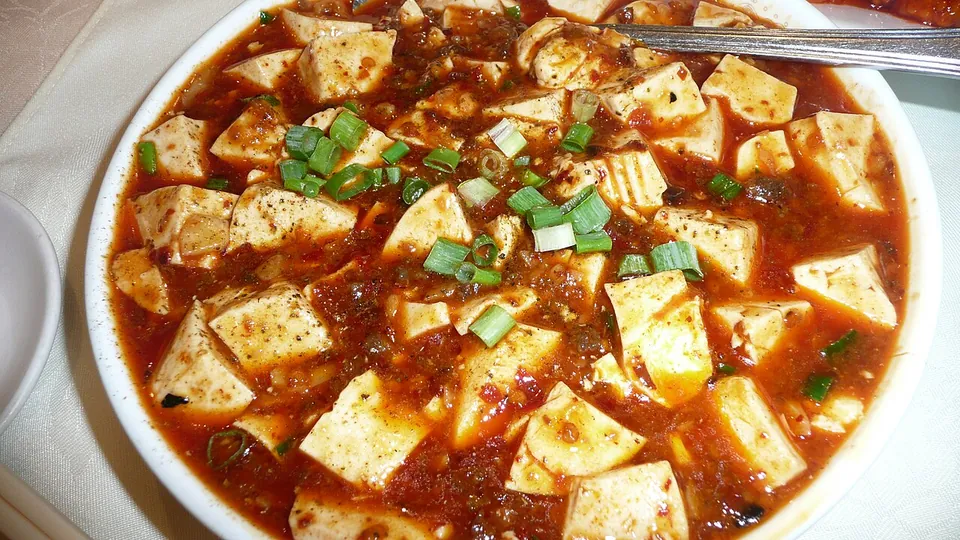
Tofu with minced meat and a fierce chili-numbing heat, the pride of Chengdu in Sichuan. That red, tingling flavor had no way of existing until the New World chile crossed the sea and reached China.
Verification highlight popular claim → verdict → evidence
Popular claim (common in Japan): chef Chen Kenmin, father of "Iron Chef" Chen Kenichi, invented mapo tofu. Verdict: refuted -- Chen Kenmin opened his Tokyo restaurant in 1958 and adapted the dish for Japanese tastes, popularizing it there, but the dish itself originated nearly a century earlier, around 1862 in Chengdu, credited to Chen Liu-shi at Wanfu Bridge. Key sources: Fu Chongju, Chengdu Tonglan (1909); Zhou Xun, Furong Huajiu Lu.
The three gates
- Ingredient-supply gate
- Tofu plus chili pepper (Sichuan's spicy-numbing style postdates the Ming-Qing transition)
- Cooking-technique gate
- (none recorded)
- Venue gate
- Chengdu eateries
Overview
Mapo tofu is a Sichuan dish from Chengdu built on tofu, dressed with beef, chili, and Sichuan pepper. It took shape in Chengdu in the late nineteenth century, in the last decades of the Qing. What makes the dish itself is the layering of là—the burning heat of chili—over má, the tingling numbness of Sichuan pepper.
Tofu, the main ingredient, has been in China since ancient times, and it puts no limit on the dish's age. The date turns on the supporting player, the chile. The chile is native to the New World and was simply not in China to begin with. Following the sources, it reached Sichuan in the mid-eighteenth century—the first local gazetteer notice is from 1749, and by a route through Hunan the earliest trace is 1684—so a red, chili-hot dish could only appear on a Sichuan table after that. The date given for its emergence, 1862, falls more than a century after the chile's arrival.
The setting was the row of eateries at the foot of Wanfu Bridge in Chengdu's northern outskirts. Porters carrying loads across the river and ordinary people nearby came for a cheap dish to fill the stomach. The chile that had crossed the sea met the tofu and Sichuan pepper long rooted in the land, together in one pot, and the red, tingling mapo tofu known today came to be.
How we know
Mapo tofu carries a well-known origin story. A woman with a pockmarked face (má) named Chen Liu is said to have made it at her shop by Wanfu Bridge in the first year of the Tongzhi era (1862), and so it is called Chen Mapo tofu—Pockmarked Old Chen's tofu. How much of this is history?
On the core of its emergence—that in late-nineteenth-century Chengdu the shop of Mrs. Chen won a reputation and a chili-and-numbing tofu dish took hold—three different kinds of source point to the same time and place. Zhou Xun's Fúróng huàjiù lù, a contemporary record of customs, notes the shop's reputation and even its prices. Fu Chongju's Chéngdū tōnglǎn (1909), a survey of famous Qing-era shops, lists "Chen Mapo's tofu" among twenty-three renowned food shops of Chengdu. And Feng Jiaji's zhuzhici verses on Chengdu scenes, Jǐnchéng zhúzhīcí bǎi yǒng, work in both the dish's name and the place: "Mapo tofu, still passing on its name... by Wanfu Bridge the curtain shadows stir." When a record of customs, a catalogue of famous shops, and a poem—three sources of quite different grain—converge on Wanfu Bridge in Chengdu at the end of the Qing, it is firm that the dish was born and spread there.
What should be read with caution are the details that color the telling. The naming—that customers teasingly called the shop after the pockmarked mistress—and the anecdote that porters brought their own oil and meat are tellings smoothed over in later shop lore and gazetteers, and are thin in contemporary records. Chen Mapo as a single individual cannot be pinned down as the sole originator. That a founding shop existed and that the tales about its proprietor are historical are two separate matters.
There is also a confusion that mistakes Chen Jianmin—the chef who popularized mapo tofu in Japan—for its originator, but the two belong to different times and different places. That the mistress's shop by Wanfu Bridge arose in late-nineteenth-century Chengdu, and that this dish could only have come after the arrival of the chile, remains the sure frame the sources support.
The full set of origin theories and the detailed verification log — traceable all the way to their sources — are available on the Japanese edition.
See the full origin theories and verification log (Japanese) →
Related dishes
Shares the key ingredient
- KimchiSouth KoreaC
- Doro watEthiopian HighlandsB
- Indigenous molli (chilmolli, pre-Old-World-spice chili sauce proto-layer)MexicoC
- RendangMinangkabau, West Sumatra (Indonesia)C
- Tom yum goongThailandC
- SambalMalay Archipelago (Indonesia)C
- TteokbokkiKorean PeninsulaC
- Tandoori chickenNorth India (Punjab / Delhi)C
- LaksaPenang (Straits Settlements)C
- MuhammaraAleppo, SyriaC
- VindalooGoa (India)C
- Piri piri chickenMozambique (Portuguese colonial sphere)C
- HarissaTunisiaC
- BibimbapSouth KoreaC
- Twice-cooked pork (huiguorou)Sichuan (China)C
- LarbLaos / Isan (Thailand)C
- Chili con carneTexas, USA (San Antonio)C
- Dan dan noodlesChengdu, Sichuan (China)C
- General Tso's chickenNew York (USA)C
- Pol sambolSri LankaB
- Chapli kebabPeshawar (Pakistan)C
- ShiroEthiopian HighlandsB
- Hiroshima soupless dandan noodlesHiroshima (Japan)B
- Kung pao chickenSichuan (China)C
- Fuqi feipianSichuan (China)D
- Nasi lemakMalaysiaC
- LampraisSri LankaC
- Nigerian pepper soupNigeria (West Africa)C
- MerguezMoroccoB