All dishes / 東アジア
Kimchi Period AOrigin theory CVerified
Some fields (dish name, region and gates) are shown from the Japanese-edition data.
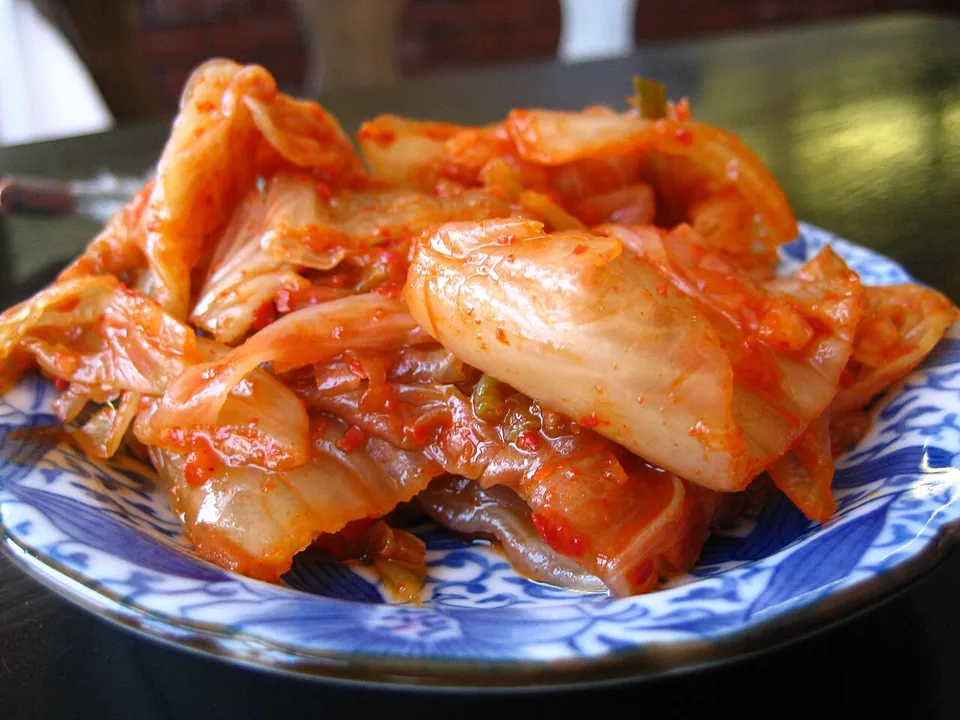
The blazing red of kimchi is often taken for an ancient Korean tradition, yet the chili that gives it that color is a New World plant that reached Korea only in the seventeenth century. The red kimchi we know today did not take its familiar shape until the eighteenth century.
Verification highlight popular claim → verdict → evidence
Popular claim: today's red kimchi is a food of ancient or Goryeo-era origin. Verdict: refuted for the current form -- chili pepper is a New World crop that reached Korea around the turn of the seventeenth century, by way of Japan or of Portuguese trading ships. The 1614 Jibong yuseol enters it under the heading nammancho (南蠻椒), the southern barbarians' pepper, says it first came from Japan and that people therefore called it waegyeoja (倭芥子), Japanese mustard; the same entry warns of its strong poison and notes that taverns were already growing it and blending it into distilled liquor for sale -- cultivated and traded by then, that is, but going into drink rather than pickles. Chili-based kimchi appears in cookbooks by 1766 (Jeungbo sallim gyeongje), and the now-standard napa-cabbage version settles only in the late 19th century, when napa cabbage itself entered Korea. The dish's ancestor, a chili-free salted pickle, is indeed ancient, but the modern red kimchi is early modern. Key sources: Jibong yuseol (1614); Journal of Ethnic Foods (2014, 2023).
The three gates
- Ingredient-supply gate
- Chili pepper (a New World crop) is the gating ingredient
- Cooking-technique gate
- —
- Venue gate
- Home kitchens / preserved food
Overview
Kimchi as a preserved vegetable—salted and fermented (chimchae, 沈菜)—is genuinely old. But the red, spicy kimchi that comes to mind today differs from its forerunner in both color and heat. Both come from gochu, the chili pepper, a New World crop native to Central and South America.
Until the chili crossed the ocean and reached the Korean peninsula, red kimchi had no way of coming into being. Its arrival falls between the close of the sixteenth century and the opening of the seventeenth. The 1614 Jibong Yuseol (芝峰類説) of Yi Su-gwang enters the plant under the heading nammancho (南蠻椒), the southern barbarians' pepper, a name for something that had come from outside; it had first arrived from Japan, the entry says, and for that reason people commonly called it waegyeoja (倭芥子), Japanese mustard. The same entry warns that the pepper carries a strong poison, and notes that taverns were by then planting it and blending its fierce heat into distilled liquor for sale, with many of those who drank it dying. The plant was already grown and traded, then, but what it went into was liquor rather than pickles, and its rise to the main ingredient of kimchi still lay some way off.
The later cookbooks show clearly how the chili took root in pickling. The 1766 Jeungbo sallim gyeongje (增補山林經濟) of Yu Jung-rim describes a range of chili-based kimchi, including chonggak kimchi, marking the stage at which the pepper had become the pickle's leading ingredient. By the late nineteenth century, the Siuijeonseo (是議全書) presents a whole-head napa cabbage kimchi close to today's form. Napa cabbage (baechu) entered Korea in the late nineteenth century, and the modern style standardized alongside it.
Kimchi thus reached its present red form through stages: the chili becoming the main pickling ingredient in the eighteenth century, its wide spread through the nineteenth, and the settling of cabbage kimchi at the century's close. The antiquity of pickling itself sits comfortably with this path. What can be dated is the chili-based modern form; the history of its pale, chili-less forerunner runs older still.
How we know
Two stubborn misconceptions cling to kimchi. One holds that the chili is a native Korean plant rather than a New World import; the other treats today's red kimchi as an unbroken line reaching back to Goryeo and antiquity.
The first sits at odds with the settled understanding of food history and plant geography, in which the chili is native to the New World. The second confuses two different things: the genuine antiquity of pickling (chimchae) with the far later date of red kimchi, which presupposes the chili. That the genre of pickles is old, and when red kimchi came into being, are separate questions.
Between the chili's arrival and the settling of red kimchi, three sources of different dates survive. Yi Su-gwang's encyclopedic miscellany of 1614, the Jibong Yuseol, records the pepper as a plant come from abroad and gives its use as drink. Yu Jung-rim's cookbook of 1766, the Jeungbo sallim gyeongje, lines up several kinds of chili kimchi, chonggak kimchi among them. The late-nineteenth-century cookbook Siuijeonseo shows whole heads of napa cabbage packed and fermented, a kimchi close to the one eaten today. Reviews in food history (Journal of Ethnic Foods, Springer 2023; ScienceDirect 2014) lay out the same sequence, from the chili's arrival to the settling of the modern form. No source has been brought forward in support of either the native-chili claim or the ancient-continuity claim.
How and when the chili made the crossing, though, has yet to settle into a single account. The Jibong Yuseol names where it came from, saying that it first came from Japan, and the common name waegyeoja, Japanese mustard, mirrors how Koreans of that generation took the plant to be a Japanese arrival. The most widely held view has it entering by way of Japan, or through the trading network of Portuguese ships; but the year of the crossing, the hands that carried it, and how far the Portuguese ships were involved cannot be traced in contemporary sources, and more than one account still stands.
The full set of origin theories and the detailed verification log — traceable all the way to their sources — are available on the Japanese edition.
See the full origin theories and verification log (Japanese) →
Related dishes
Lineage Family, predecessor, variants
Shares the key ingredient
- Mapo tofuSichuan (China)C
- Doro watEthiopian HighlandsB
- Indigenous molli (chilmolli, pre-Old-World-spice chili sauce proto-layer)MexicoC
- RendangMinangkabau, West Sumatra (Indonesia)C
- Tom yum goongThailandC
- SambalMalay Archipelago (Indonesia)C
- TteokbokkiKorean PeninsulaC
- Tandoori chickenNorth India (Punjab / Delhi)C
- LaksaPenang (Straits Settlements)C
- MuhammaraAleppo, SyriaC
- VindalooGoa (India)C
- Piri piri chickenMozambique (Portuguese colonial sphere)C
- HarissaTunisiaC
- BibimbapSouth KoreaC
- Twice-cooked pork (huiguorou)Sichuan (China)C
- LarbLaos / Isan (Thailand)C
- Chili con carneTexas, USA (San Antonio)C
- Dan dan noodlesChengdu, Sichuan (China)C
- General Tso's chickenNew York (USA)C
- Pol sambolSri LankaB
- Chapli kebabPeshawar (Pakistan)C
- ShiroEthiopian HighlandsB
- Hiroshima soupless dandan noodlesHiroshima (Japan)B
- Kung pao chickenSichuan (China)C
- Fuqi feipianSichuan (China)D
- Nasi lemakMalaysiaC
- LampraisSri LankaC
- Nigerian pepper soupNigeria (West Africa)C
- MerguezMoroccoB