All dishes / ラテンアメリカ
Asado Period BOrigin theory CVerified
Some fields (dish name, region and gates) are shown from the Japanese-edition data.
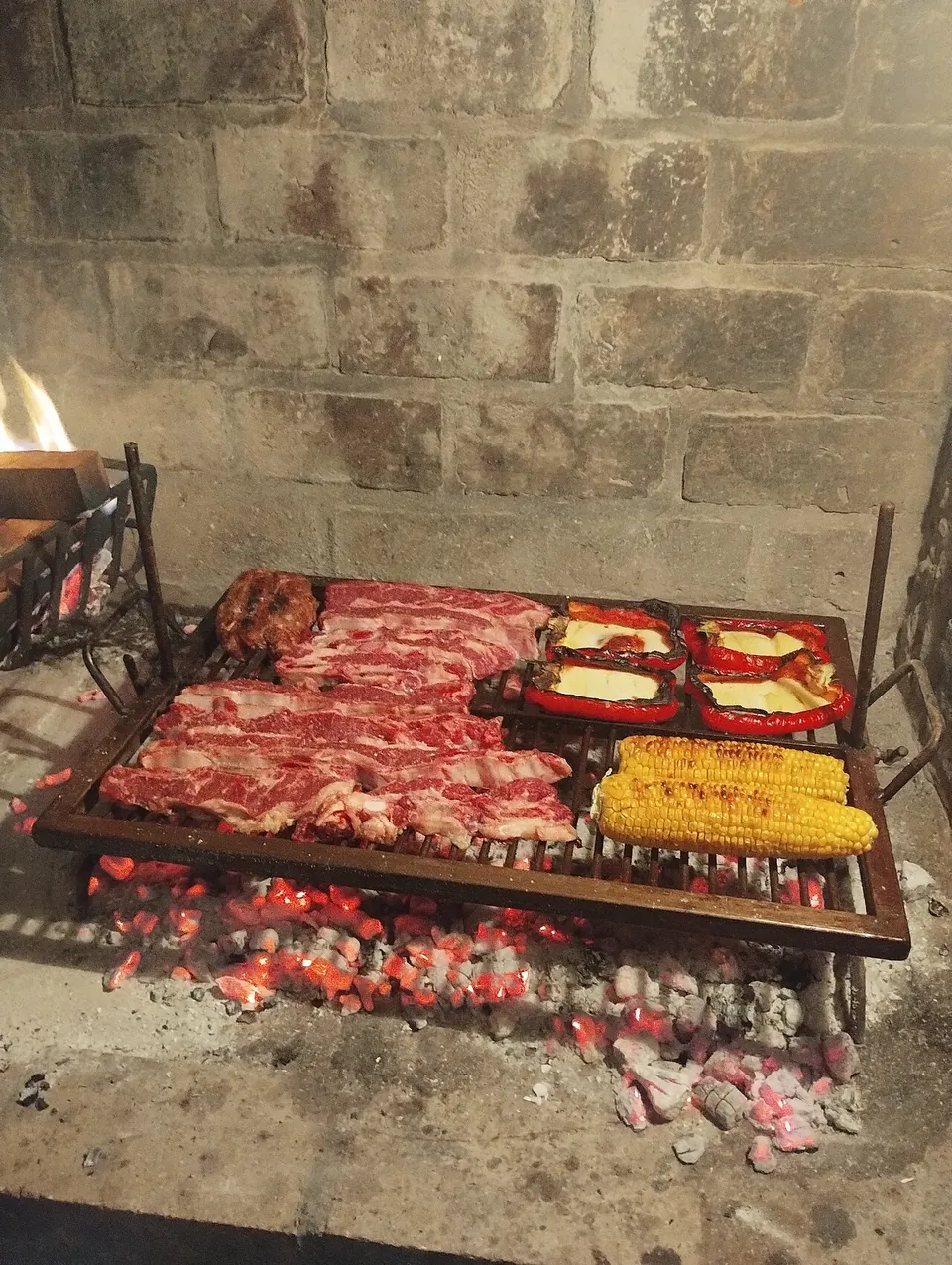
Asado, the open-fire beef of the South American pampas, is not an ancient local tradition. Cattle came with the Spanish, went feral on the grasslands, and the gauchos who chased those herds cooked them over live coals with nothing but salt. The tidy claims that Asado "was born the year the first cattle arrived," or that Argentina and Uruguay can settle which of them invented it, both run past what the records actually say.
Verification highlight popular claim → verdict → evidence
Myth: asado is sometimes said to have originated in 1556, the year cattle first arrived in the Río de la Plata. Verdict: refuted — this conflates cattle's arrival, which only made beef locally available, with the dish's actual formation. The earliest primary record of the salt-and-open-fire practice dates to 1773, and its status as a national dish only solidified in the late 19th century. Main sources: Concolorcorvo (1773); Oxford Research Encyclopedia of Latin American History.
The three gates
- Ingredient-supply gate
- Cattle were an Old World animal, brought to South America through Spanish colonial trade; they then ran wild and multiplied across the pampas, and that proliferation sets the earliest possible date for the dish.
- Cooking-technique gate
- Grilling over open flame and charcoal, either on a parrilla grate or with the meat splayed on a cross-shaped stake set up beside the fire.
- Venue gate
- Cooked outdoors over the fire, it was food for herders and ordinary people, eaten when the community came together, and it belonged to the gauchos of the pampas.
Overview
Asado is the charcoal-grilled beef that defines the Río de la Plata region straddling Argentina and Uruguay. But the animal at its center did not belong to South America. The story of Asado begins with how cattle came to fill the pampas in the first place.
The Spanish brought them. Cattle crossed to South America through sixteenth-century colonial trade, spreading by way of expeditions such as Mendoza's (1536) and Garay's settlements (1573 and 1580). Animals that escaped multiplied on their own across the open grassland, and by the seventeenth century feral cattle—cimarrones—had bred into vast herds. Fattened cattle were recorded around Buenos Aires by about 1719, and a practice called vaquería, driving and hunting the wild herds, took hold. With beef available in effectively limitless supply, a food culture built on cheap, plain, open-fire cooking had its foundation.
The people who followed those herds were the gauchos. Appearing on the pampas in the early eighteenth century as hunters of wild cattle, they cooked with startling simplicity: salt the meat, and set it over embers or open flame. The beef went onto an iron grate, the parrilla, or was splayed on a cross and stood before the fire. No elaborate seasoning, no special equipment—this was the cooking of a land where cattle were everywhere.
Through the nineteenth century this plain outdoor roasting grew into a gathering. Asado was never a dish of the court or the fine restaurant; it took root as a communal event, people circling a fire on the grasslands and sharing the meat. What is now treated as a national ritual of sociability in both Argentina and Uruguay came from an imported animal and the lives of the herders who chased it.
How we know
Take Asado for an ancient, native tradition of the pampas and you miss the crucial point: the beef that made the dish was no local species but a domestic animal carried across the sea.
Cattle arrived through sixteenth-century Spanish colonial trade in the Río de la Plata; escaped animals bred as feral herds on the pampas; and the gaucho practice of grilling them over coals settled into place. The earliest first-hand source for that cooking is a 1773 travel account written by Alonso Carrió de la Vandera under the pen name Concolorcorvo, El Lazarillo de ciegos caminantes. In it the gauderios—forerunners of the gauchos—hunt wild cattle and roast the meat over open fire seasoned with salt alone. By the later eighteenth century, that record shows, salt-and-fire beef was already an everyday practice on the pampas. The line of descent—imported cattle gone feral, gauchos grilling and spreading the custom—rests on scholarly encyclopedias of Latin American history, on Britannica, and on that contemporary travelogue, and it is by now settled.
One often-repeated claim deserves a plain answer. The story that "Asado was born in 1556, when the first cattle reached the Río de la Plata" confuses the year the ingredient became available with the time the dish settled in as a national food. The arrival of cattle was only the starting point at which the ingredient was in hand; salt-and-fire beef appears in a first-hand source in 1773, and it becomes a national occasion for sociability in the later nineteenth century. Pinning the dish's making to a single year has no documentary support.
And one question stays unsettled. Just when the Asado style became a national dish, and whether Argentina or Uruguay came first, the records do not decide. Gaucho culture spread broadly across the eighteenth-century pampas—today's Argentina, Uruguay, and southern Brazil—and the 1773 travelogue records the fire-roasting as a custom across a wide territory that included the Banda Oriental, present-day Uruguay. No old record can be assigned to a single country or a single year. So the claim of one nation's "origin" of Asado is not settled fact but a dispute to be presented side by side. When the cattle arrived is firm; where the culture first flowered is open—and holding those two apart, the hard and the soft, is the honest state of Asado's history.
The full set of origin theories and the detailed verification log — traceable all the way to their sources — are available on the Japanese edition.
See the full origin theories and verification log (Japanese) →
Related dishes
Shares the key ingredient
- PhoVietnamC
- Beef StroganoffRussiaC
- Chicago Italian beefChicago (USA)C
- Salt beef (the layer before canning)Ireland (Cork / Dublin)C
- Lomo saltadoLima (Peru)C
- BulgogiKorean Peninsula (South Korea)B
- ĆevapčićiBalkans (Serbia, etc.)C
- Proto-bulgogi (native grilled-meat proto-layer)Korean PeninsulaC
- Proto-goulash (pre-paprika herdsmen's meat stew proto-layer)HungaryC
- KharchoGeorgia (Caucasus)B
- Proto-rendang (pre-chili merendang proto-layer)West Sumatra (Minangkabau), IndonesiaC
- Nyama chomaEast Africa (Kenya, Tanzania)C
- Philly cheesesteakPhiladelphia (USA)B
- Pastel de chocloChileC
- NihariNorth India (Delhi / Awadh)C
- NikujagaJapanC
- Australian meat pieAustraliaC
- FajitasRio Grande Valley, Texas (USA)B
- Loco mocoHilo, Hawaii (USA)B
- KitfoGurage (Ethiopia)C
- Ropa viejaCubaC
- MachacaNorthern Mexico (Sonora / Sinaloa)C
- Ropa vieja (Iberian prototype)Canary Islands, SpainB
- TibsEthiopian HighlandsB
- BiltongSouth AfricaC
- Lok lakPhnom Penh (Cambodia)C
- Carne asadaNorthern Mexico (Sonora)C
- Hamburg steakHamburg (Germany)B
- Bò lúc lắc (Vietnamese shaking beef)Southern VietnamC
- Montreal-style smoked meatQuebec (Canada)D
- Kare-karePhilippinesC
- PastramiNew York (USA)D
- BraaiSouth AfricaC
- French dip sandwichLos Angeles, California (USA)C