All dishes / 東南アジア
Bò lúc lắc (Vietnamese shaking beef) Period BOrigin theory CVerified
Some fields (dish name, region and gates) are shown from the Japanese-edition data.
Cubes of beef tossed hard over a roaring flame: a dish born in Saigon. The modern claim that a Vietnamese restaurant in America invented it collapses under the words of that restaurant's own owner. Bo luc lac is a genuine classic, one that grew up in a colonial-era city.
Verification highlight popular claim → verdict → evidence
Myth: bo luc lac was invented in 1995 by the Slanted Door restaurant in San Francisco as a Vietnamese-American dish. Verdict: refuted by the restaurant's own owner, Charles Phan, who called it 'a very classic Vietnamese dish' that he tasted in a hotel lobby during a 1992 trip to Vietnam, saying he only upgraded the cut of meat used. The true inventor, place, and year remain undocumented, though beef only became an everyday Saigon food after French colonization established it in the local diet by around 1880.
The three gates
- Ingredient-supply gate
- Native cattle were mainly draft animals and rarely eaten; the conditions for this dish fell into place only once French-colonial Saigon introduced beef-eating.
- Cooking-technique gate
- Cubed beef is tossed and seared over high heat (lúc lắc means 'to shake').
- Venue gate
- Urban food of French-colonial Saigon.
Overview
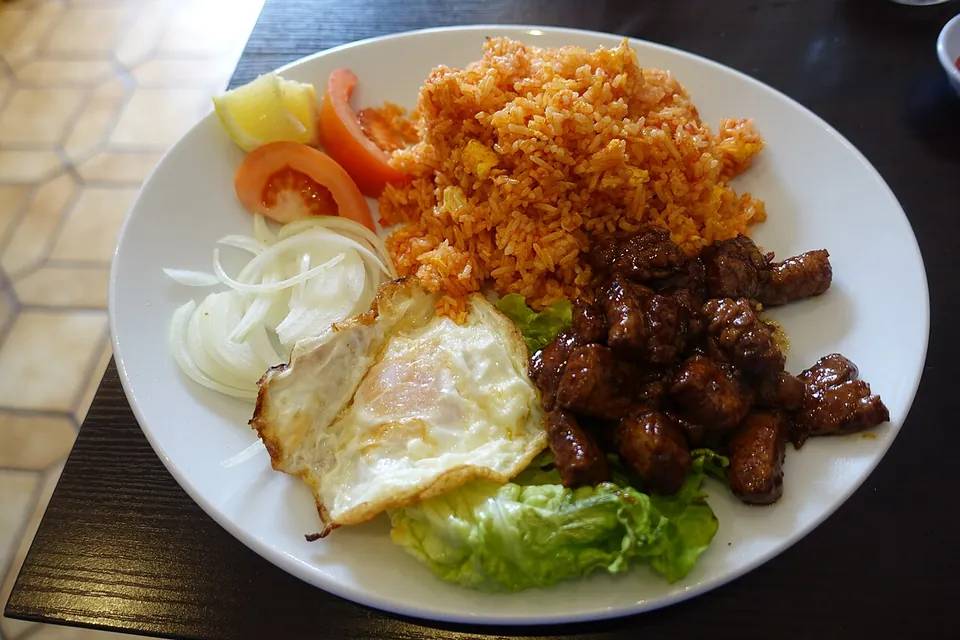
Bò lúc lắc, usually written Bo luc lac in English, is a southern Vietnamese dish of cubed beef seared quickly over high heat while the pan is kept in constant motion. The name lúc lắc means "to shake," and one leading account traces it to that shaking of the wok, which the cook keeps moving so the cubes brown evenly.
The dish took shape in Saigon during the French colonial period in Cochinchina (1862–1954). In Vietnam before colonial rule, cattle were mainly draft animals that pulled the plough. Their meat rarely reached the table and was tasted only on special occasions. Beef did not become an everyday urban ingredient until the taste for it that the French brought took hold, toward the end of the nineteenth century. The food historian Erica Peters, in her study of Vietnamese foodways across the long nineteenth century, places this shift alongside the arrival of milk, bread and coffee, and the appearance of beef pho in the early twentieth century; the change was of a piece with all of these. Once beef became plentiful in the city, it met the French techniques of the sauté and the sear on one side, and the local hand skill of tossing food in the pan on the other. Out of that meeting, in the late nineteenth and early twentieth centuries, the dish arose.
Having grown up in Saigon, it later crossed into neighbouring Cambodia. There it is called lok lak (also loc lac), a name borrowed directly from the Vietnamese lúc lắc. Within the wider frame of French Indochina, the trace of a Saigon dish carried across a border survives in the name itself.
How we know
The most striking thing about Bo luc lac may be a false label pinned to it in recent times: that it is a Vietnamese-American creation, invented in 1995 at the San Francisco restaurant The Slanted Door.
That claim collapses under the testimony of the restaurant's own owner, Charles Phan. He calls the dish "a very classic Vietnamese dish," and recounts that when he went back to Vietnam in 1992 he ate a local version in a hotel lobby. All he did at his own restaurant, he says, was substitute a better cut of beef. Far from inventing it, he was one more cook who carried an old dish home and polished it (from an interview in Saveur).
So who really invented it, and when, and in which kitchen? The sources do not reach that far. What survives is the setting — the ordinary eating houses of colonial Saigon — and no further: no single inventor, no opening year. Even the origin of the name lúc lắc remains unsettled. Some say the diced meat resembles dice (in Vietnamese, hột lúc lắc); some point to the shaking of the pan to sear the meat evenly; some to the way the pieces jostle as they cook. Each explanation stands alongside the others without independent confirmation. A late-nineteenth-century Vietnamese dictionary, Huỳnh Tịnh Của's Đại Nam Quấc Âm Tự Vị (1895), records lúc lắc in the sense of rattling dice in a gambling game, which fixes the meaning of the word by that date — but that is the earliest trace of the word, not of the dish. Having set aside the single tidy origin story, the honest answer is that the true beginning stays open.
What does stand firm is that the dish could not have existed before colonial Saigon. Beef became an everyday urban ingredient only around 1880 — a date that an encyclopaedia and a scholarly book (Erica Peters, Appetites and Aspirations in Vietnam, 2012) give from separate directions. Not American, and not ancient: a dish born on the street corners of Saigon after the French brought the eating of beef.
The full set of origin theories and the detailed verification log — traceable all the way to their sources — are available on the Japanese edition.
See the full origin theories and verification log (Japanese) →
Related dishes
Cross-links Sister dishes & same-name dishes (separate lineage)
Shares the key ingredient
- PhoVietnamC
- Beef StroganoffRussiaC
- Chicago Italian beefChicago (USA)C
- Salt beef (the layer before canning)Ireland (Cork / Dublin)C
- AsadoRío de la Plata (Argentina / Uruguay)C
- Lomo saltadoLima (Peru)C
- BulgogiKorean Peninsula (South Korea)B
- ĆevapčićiBalkans (Serbia, etc.)C
- Proto-bulgogi (native grilled-meat proto-layer)Korean PeninsulaC
- Proto-goulash (pre-paprika herdsmen's meat stew proto-layer)HungaryC
- KharchoGeorgia (Caucasus)B
- Proto-rendang (pre-chili merendang proto-layer)West Sumatra (Minangkabau), IndonesiaC
- Nyama chomaEast Africa (Kenya, Tanzania)C
- Philly cheesesteakPhiladelphia (USA)B
- Pastel de chocloChileC
- NihariNorth India (Delhi / Awadh)C
- NikujagaJapanC
- Australian meat pieAustraliaC
- FajitasRio Grande Valley, Texas (USA)B
- Loco mocoHilo, Hawaii (USA)B
- KitfoGurage (Ethiopia)C
- Ropa viejaCubaC
- MachacaNorthern Mexico (Sonora / Sinaloa)C
- Ropa vieja (Iberian prototype)Canary Islands, SpainB
- TibsEthiopian HighlandsB
- BiltongSouth AfricaC
- Carne asadaNorthern Mexico (Sonora)C
- Hamburg steakHamburg (Germany)B
- Montreal-style smoked meatQuebec (Canada)D
- Kare-karePhilippinesC
- PastramiNew York (USA)D
- BraaiSouth AfricaC
- French dip sandwichLos Angeles, California (USA)C