All dishes / 西欧
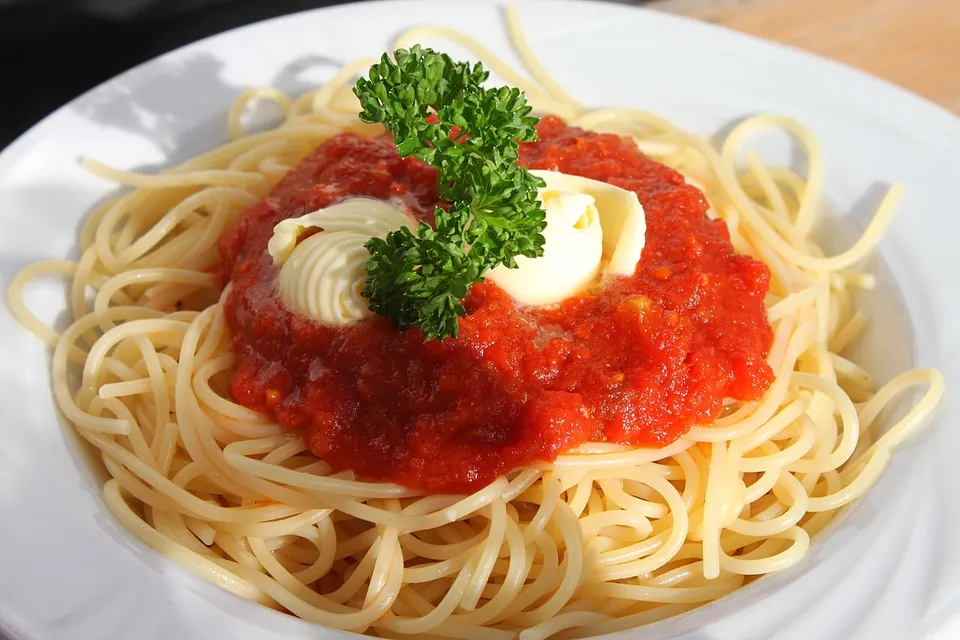
Pasta al pomodoro Period AOrigin theory BVerified
Some fields (dish name, region and gates) are shown from the Japanese-edition data.
Pasta with tomato feels like an ancient Italian taste. But the tomato is a crop from the New World that did not reach Italian tables until the eighteenth century. Tomato pasta is a far younger dish than it looks.
Verification highlight popular claim → verdict → evidence
Popular claim: pasta with tomato sauce is an ancient or medieval Italian dish. Verdict: established as a post-Columbian, 18th-19th century Neapolitan dish -- tomatoes were only adopted as food in Italy in the 18th century, the first printed pairing of pasta with tomato appears in France in 1807, and the first printed Italian recipe is Cavalcanti's Cucina teorico-pratica (1837). Key sources: David Gentilcore, Pomodoro! A History of the Tomato in Italy (2010); Cavalcanti (1837).
The three gates
- Ingredient-supply gate
- The culinary adoption of the New World tomato (introduced in the 16th century, adopted as food in the 18th century).
- Cooking-technique gate
- Urbanization and the growth of eating out.
- Venue gate
- Cities such as Naples.
Overview
Tomato pasta was born in Naples, in southern Italy, between the late eighteenth and the nineteenth century.
The tomato is a New World plant, brought across the Atlantic in the exchange of crops set off by the voyages of Columbus, and it reached Italy in the sixteenth century. The earliest record of it on Italian ground is a herbal of 1544, in which the physician Pietro Andrea Mattioli wrote that the fruit turns golden as it ripens and is fried in oil with salt and pepper and eaten, in the same way as eggplant. A 2022 study of sixteenth-century tomatoes in Europe reads that passage as a sign that the plant was already being tried as food rather than kept merely for show. The year 1548 is often given as the tomato's arrival in Italy, but it is the date of a letter reporting a basket of tomatoes sent from a Medici estate to Cosimo I, Duke of Florence, which the same study takes as the earliest known record of the Italian word pomidoro. Mattioli's note speaks for Italy at large, not for Naples or the south. The tomato came into wide use as food only from the end of the seventeenth century into the eighteenth, and until it had taken root on southern tables, a pasta made with it had no way of coming into being.
Eighteenth-century Naples, where the tomato had settled in as an ingredient, was a large city where people gathered and a culture of eating out had grown up. In the first half of the nineteenth century, street stalls selling pasta—the maccheronai—carried tomato-sauced pasta to ordinary people. Boiled pasta tossed with a reduced red sauce: this quick, cheap plate took hold in the bustle of Naples and, by the end of the nineteenth century, spread across the whole of Italy. A single fruit from the New World became, by a long roundabout road, one of the tastes that define Italy.
How we know
The history of tomato pasta turns out to be more tangled than expected once you follow the pages of a few old cookbooks.
The earliest instance of a tomato sauce in the written record is in Lo scalco alla moderna, written in 1692 by the Neapolitan cook Antonio Latini. The passage recording a Spanish-style tomato sauce (salsa di pomodoro alla spagnuola) is the oldest known. In the later eighteenth century, the Neapolitan Vincenzo Corrado dealt with tomato dishes for the noble table in Il cuoco galante (first edition 1773, expanded 1778).
Yet the first written record of a dish combining pasta and tomato was, surprisingly, not in Italy. The earliest is from 1807, when the French gastronome Grimod de la Reynière proposed an autumn dish of vermicelli garnished with tomato. The first tomato-pasta recipe printed in Italy came later, in 1837, as the "vermicelli con lo pommodoro" in the Neapolitan-dialect appendix to Ippolito Cavalcanti's Cucina teorico-pratica. A cookbook's first appearance is only a marker meaning "it existed by at least this year," not the moment the dish was born. Together these records sketch the outline: tomato pasta took its shape in Naples between the late eighteenth and the early nineteenth century.
This history has its unraveled folk tales too. The famous story that Marco Polo brought pasta back from China is a legend about pasta itself and has nothing to do with the origin of tomato pasta. There is also a claim that traces the first tomato pasta to Leonardi's L'Apicio Moderno of 1790, but as a record of tomato sauce, Latini's 1692 comes earlier, so it is not accurate as a first date. Apart from such storylines, that tomato pasta is a dish that came together in modern Naples is borne out by the research of the food historian David Gentilcore (Columbia University Press, 2010).
The full set of origin theories and the detailed verification log — traceable all the way to their sources — are available on the Japanese edition.
See the full origin theories and verification log (Japanese) →
Related dishes
Shares the key ingredient
- Pizza MargheritaNaples (Italy)D
- ShakshukaMiddle East / North AfricaC
- Jollof riceWest AfricaC
- Butter chickenDelhi (India)C
- Khao SoiB
- GazpachoAndalusia (Spain)C
- LecsóHungaryC
- Chana masalaNorth India (Punjab)C
- RatatouilleProvence, France (Nice)C
- Thieboudienne (ceebu jën)SenegalC
- ChakalakaSouth AfricaC
- KedjenouIvory CoastB
- Caprese saladCapri (Italy)C
- SaloonaPersian Gulf (Bahrain and Kuwait)C
- Shan khauk hswè (Shan noodles)Myanmar (Shan State)C
- American pizzaUnited StatesC
- FrancesinhaPorto (Portugal)D
- ChakhokhbiliGeorgia (Caucasus)C
- KachumberGujarat (Western India)C
- SalmorejoAndalusia (Spain)C
- Greek salad (horiatiki)GreeceC
- Shopska saladBalkans (Bulgaria)B
- Melanzane alla parmigianaItalyC