All dishes / 東南アジア
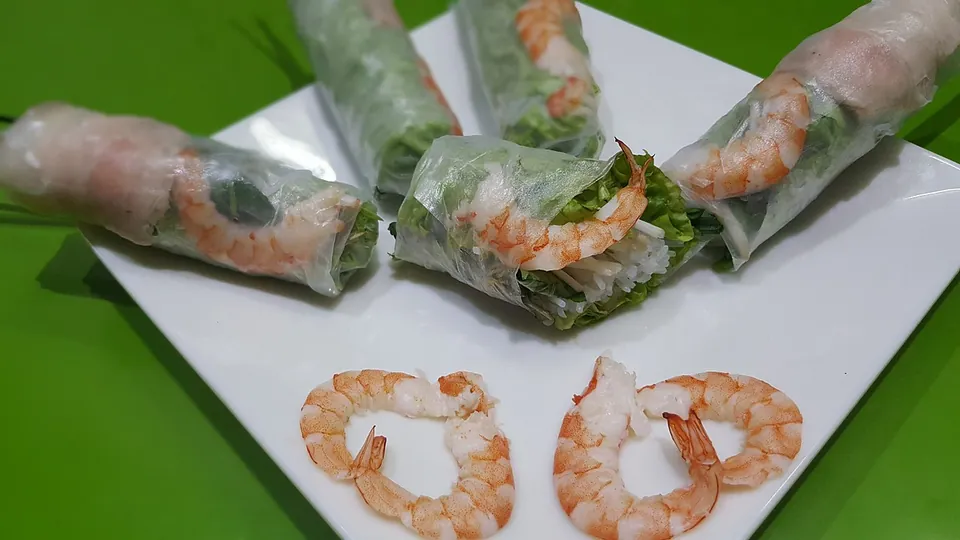
Gỏi cuốn (Vietnamese fresh rolls) Period BOrigin theory CVerified
Some fields (dish name, region and gates) are shown from the Japanese-edition data.
Gỏi cuốn is a southern Vietnamese snack that wraps raw vegetables, shrimp, pork, and rice noodles in rice paper softened in water. It has been said to have been devised by a Tây Sơn emperor as a marching ration, or to have been born as a delicacy in the Nguyễn court — but both are later inventions. What made the dish was neither a hero nor a dynasty, but the southern way of wrapping the skin without ever putting it to the fire.
Verification highlight popular claim → verdict → evidence
A 1920 Saigon cookbook already lists two versions of goi cuon made by dipping rice paper in water, the earliest print record found for the dish.
The three gates
- Ingredient-supply gate
- Rice, rice paper, shrimp, and pork were all native ingredients; no limiting ingredient.
- Cooking-technique gate
- Softening banh trang (rice paper) in water and rolling the filling in raw, without cooking.
- Venue gate
- A home- and street-stall snack of southern Vietnam.
Overview
The mainstay of gỏi cuốn is bánh tráng, rice paper made by spreading rice thin and drying it. The rice, the shrimp, and the pork were all local ingredients long rooted in the waters and fields of the south, always to be had at market. The fillings were on hand in southern life from the start.
What gives the dish its face is the way of dipping the dried rice paper into water to make it supple and wrapping the filling without cooking it. Fry that same skin in oil and you get chả giò, the fried spring roll. Gỏi cuốn stops just short of that step, showing fresh vegetables, boiled shrimp, and steamed pork through the translucent skin. In the hot, humid south, a snack rolled cool and fresh, without added heat, made good sense.
The skin itself has a history. Bánh tráng is said to have been made in Bình Định province in central Vietnam, spreading south in the eighteenth century as people migrated during the Tây Sơn period. The rooting of this raw-wrapping food culture in the south is what set the ground on which gỏi cuốn could arise. Once the skin culture had moved south, the dish settled into southern homes and street stalls as a snack of that skin, wrapped raw rather than cooked.
How we know
Two spirited origin stories have circulated about gỏi cuốn. In one, Emperor Quang Trung of the Tây Sơn, in the thick of a campaign, had a cool, fireless ration devised for soldiers taking turns to rest. In the other, it was created in the Nguyễn court as a delicacy to grace royal banquets.
But the two stories contradict each other. One calls it the field ration of soldiers on the march; the other, a lavish dish of the palace. That the same food was both a commoner's marching ration and a courtly banquet dish does not follow. And neither story has any contemporary record to stand on. Both fit the mold of a later origin tale that pins the credit for invention on a particular hero or a particular dynasty.
What survives on paper instead is a household cookbook. Diệp Nhược Lan's Sách dạy nấu ăn, published in Saigon in 1920, lists "Gỏi cuốn" as the seventh of its numbered recipes and "Gỏi cuốn, another way" as the eighth, spelling out the wrap itself: dip a thin sheet of bánh tráng in water just as one does for nem, spread it out, and lay down rice noodles (bún), sweet potato, stems, boiled white shrimp, and meat. The same book pairs bún, bánh tráng, raw vegetables, sauce, and peanuts in several other entries. What is there is not an emperor's tale but instructions for the kitchen. That the skin culture happened to move south during the Tây Sơn period may have invited the marching-ration legend after the fact. But that is the story of the skin spreading, not evidence that the dish itself sprang from anyone's idea.
Set the heroic tales aside and gỏi cuốn's parentage looks plainer. The dish has a fried sibling: chả giò, the fried spring roll. Both are products of the same house — the Chinese idea of "wrapping fillings in a skin," received in the local Vietnamese rice paper — one fried in oil, the other wrapped fresh and left uncooked. Neither is the elder; they are equal siblings, branched at the fork of cooking method. Gỏi cuốn is the roll along the branch where the skin is wrapped fresh.
The full set of origin theories and the detailed verification log — traceable all the way to their sources — are available on the Japanese edition.
See the full origin theories and verification log (Japanese) →