All dishes / ラテンアメリカ
Chicharrón Period COrigin theory BVerified
Some fields (dish name, region and gates) are shown from the Japanese-edition data.
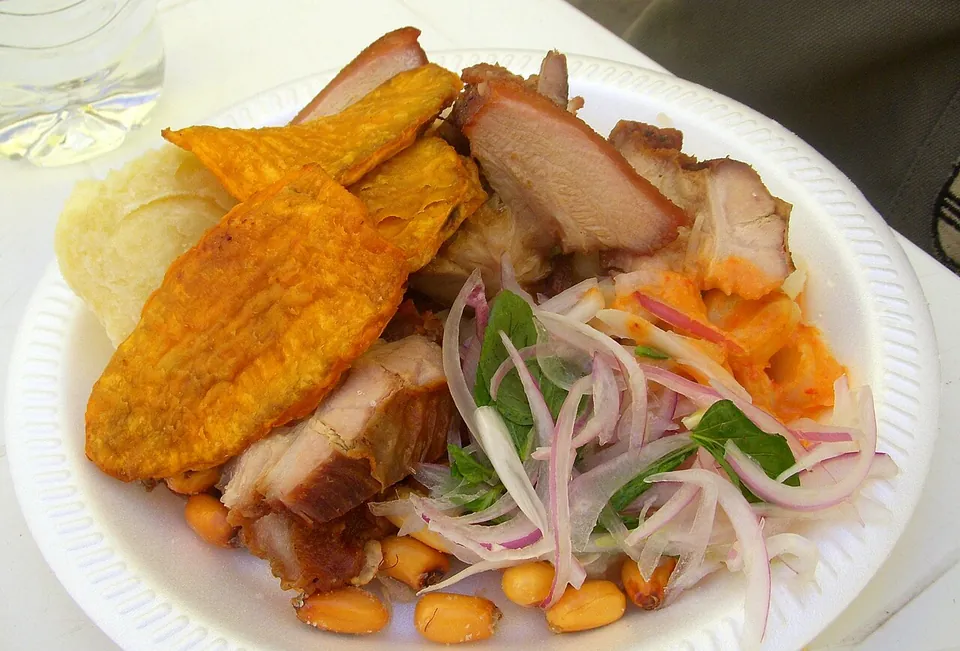
A familiar dish across Latin America: pork fried in its own fat. But until the pig had crossed the ocean, this dish had no way of existing in the New World. The origin tale of "one farmer's pig happened to invent it" is a fiction that came after the word itself.
Verification highlight popular claim → verdict → evidence
A folk tale claims chicharron began in 18th-century Spain when a farmer's pig scratched its back on a tree, tearing off skin that then dried and smoked in the sun. But the word and concept predate that story -- Covarrubias (1611) records the root 'chicha', and the Diccionario de Autoridades (1729) already defines chicharron -- and frying skin-on pork itself goes back to Roman-era cooking (Apicius, De Re Coquinaria, Book 7's Ofellae). The well-supported account: chicharron derives from Andalusian pork-fat rendering and frying technique, carried to Latin America through Spanish colonization after pigs arrived via the Columbian Exchange.
The three gates
- Ingredient-supply gate
- Pork reached the Americas via the Columbian Exchange; Pizarro brought it to Peru from 1531, and it was the first meat weighed after Lima's founding (1535) -- pork is the limiting ingredient, setting a lower bound of 1531-1535.
- Cooking-technique gate
- Frying in the pig's own rendered fat (Peru simmers the ribs first, then fries in its own fat, without skin) -- derived from Spanish (Andalusian) fat-rendering and frying technique.
- Venue gate
- Colonial markets and streets/homes -- Andalusian home and market cooking carried into colonial cities.
Overview
From Spain to the New World
Chicharrón is pork fat rendered, with the skin or belly fried. It comes from the cooking of Andalusia and the Canary Islands in Spain, and rests on the craft of rendering and frying pork fat. Francisco Martínez Montiño's Arte de cocina (1611), a court cookbook of the Spanish Golden Age, already records a system of cooking built on pork fat.
The dish crossed to Latin America in the 16th century, with Spanish colonization. The pig was not a New World animal; it came across the ocean through the Columbian exchange. Into Peru the conquistador Francisco Pizarro brought pigs from 1531, and after the founding of Lima in 1535 pork is recorded as the first meat to be weighed. Only once the pig had settled into the land could chicharrón be made there.
As it spread, chicharrón took on the ingredients and tastes of each place. In Peru the rib meat is first simmered down, then fried in its own fat, with no skin used. In Mexico skin and belly are used; in Colombia fried skin-on belly is set alongside beans and meats in the bandeja paisa platter. In colonial markets, on the street, and in home kitchens, the Andalusian cooking took root in the cities of the New World.
How we know
Chicharrón carries an origin tale of its own. In 18th-century Spain, a farmer's pig rubbed its back against a tree and scraped off its skin; the skin baked in the sun and gave off a bacon-like scent—and that, the story goes, is how the dish began.
But no contemporary record supports the anecdote. Its source is an untraceable folk tale, and the dates do not fit. The word and the concept chicharrón appear in the literature well before then. Sebastián de Covarrubias's etymological dictionary Tesoro de la lengua castellana (1611) records the root chicha, and the Spanish Royal Academy's Diccionario de Autoridades (1729) defines it as "the dry, well-browned residue left after rendering and pressing fat for manteca, especially from pork." Both the craft and the concept were already fixed in books before the 18th-century farmer ever appears. The tale of an accidental discovery collapses here.
There is another thing easily overlooked. Because frying pork is so plain a thing, chicharrón seems as if it must have been everywhere from long ago. But the pig was not native to the New World. In Peru, Pizarro brought pigs from 1531, and only after Lima's founding in 1535 was pork weighed as meat. Before the pig had crossed the ocean, chicharrón was never made in this land.
Food-history scholarship traces chicharrón to Andalusia in Spain, carried to Latin America with colonization and varied from region to region. Cynthia Bertelsen's After Pizarro: Food in Colonial Peru and Today describes how the pig became a food in post-Pizarro Peru. The broad line of origin and spread is settled. What remains unsettled is the finer question—when each regional version, in Peru, Mexico, and Colombia, took on its local face.
The full set of origin theories and the detailed verification log — traceable all the way to their sources — are available on the Japanese edition.
See the full origin theories and verification log (Japanese) →
Related dishes
Lineage Family, predecessor, variants
Shares the key ingredient
- TonkatsuJapanC
- Tacos al pastorMexicoB
- FeijoadaBrazilB
- Barbecue ribsSouthern United StatesC
- CurrywurstBerlin (Germany)B
- Twice-cooked reheated pork (Huiguorou precursor)Sichuan, ChinaC
- BaoziChinaC
- Chop sueyUSA (Cantonese diaspora) / Guangdong (China)C
- Cochinita pibilYucatán (Mexico)C
- LechonCebu (Philippines)C
- SaloUkraineC
- Bak kut tehSingaporeC
- GolonkaPolandC
- GyrosGreeceB
- EisbeinBerlin (Germany)C
- SchweinshaxeBavaria (Germany)C
- Japanese-style twice-cooked porkJapanB
- ManchamantelesPuebla (Mexico)C
- PernilPuerto RicoC
- ChoripánRío de la Plata (Argentina)C
- Char siuGuangdong (China)C