All dishes / 南アジア
Vindaloo Period COrigin theory CVerified
Some fields (dish name, region and gates) are shown from the Japanese-edition data.
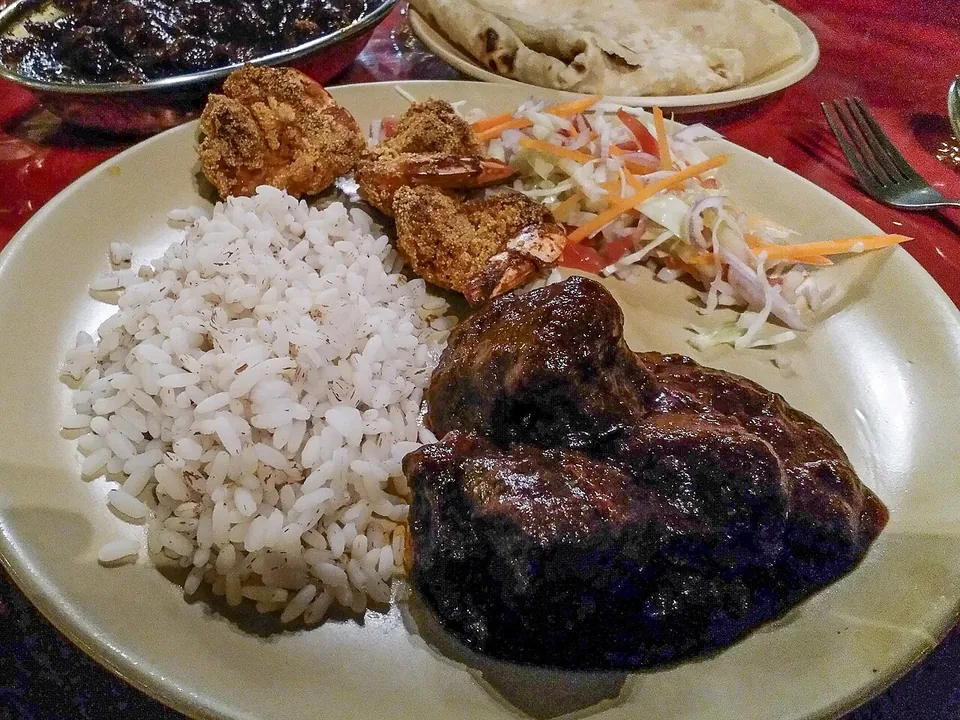
Vindaloo, a byword for fiery curry, is often taken for a potato dish because the '-aloo' of its name resembles the Hindi word for potato (आलू). But that is a mistake born of a chance likeness of sound: neither the name nor the origin has anything to do with potatoes. What it really is, is the 'meat pickled in wine vinegar and garlic' that the Portuguese brought to Goa in India.
Verification highlight popular claim → verdict → evidence
Vindaloo descends from the Portuguese dish carne de vinha d'alhos (meat marinated in wine and garlic), which Goan cooks localized by swapping in palm vinegar and New World chili once it reached Goa in the 1500s. Despite the name's sound, it has no real connection to the Hindi word for potato -- that's a coincidence later cooks took literally.
The three gates
- Ingredient-supply gate
- Limiting factor: New World chili pepper. It reached South Asia (Goa) via the Portuguese from 1510 onward (fall of Goa 1510; cultivated on the Malabar Coast by 1528), which sets the physical lower bound for the chili-based dish as known today. Pork is permissible because it is eaten by Goan converts to Christianity.
- Cooking-technique gate
- The limiting technique is an acidic marinade using palm vinegar (a local substitute for wine vinegar). It can be replaced with indigenous fermented vinegar, so there is no equipment bottleneck.
- Venue gate
- home cooking of the Goan Catholic community / Social common people / market and home / Goan Catholic converts
Overview
The name vindaloo comes from the Portuguese carne de vinha d'alhos (meat in wine vinegar and garlic), carried over into Konkani as विंदालू. In the first half of the sixteenth century, this preserving marinade was brought to Goa, on India's western coast, which had become Portuguese territory. Local Goan cooks replaced the hard-to-get wine with palm vinegar, the fermented vinegar of the coconut palm, added spices, and remade it into a dish of their own. That is the path of its localization; Franciscan friars, it is said, brewed from palm toddy the vinegar that stood in for wine.
The fierce heat of the dish comes from chili, but chili is a New World crop, and it did not exist in South Asia to begin with. The Portuguese carried it along the trade routes of their great voyages, and until the chili crossed the sea and took root in Goa, the fiery vindaloo of today had no way of coming into being. Once in Goa, the chili spread across India under the name 'Gowai Mirchis,' the chilies of Goa. The reckoning of its formation is that all of this followed Portugal's seizure of Goa in 1510.
The heart of the making lies in the sour marinade. The Portuguese original used wine vinegar; in Goa this was replaced with the local palm vinegar. It was not a step demanding any special equipment, but a substitution that could be reproduced directly in the local kitchen.
Who could cook the dish is not to be overlooked either. With pork among its main ingredients, vindaloo took root not among Hindus or Muslims, who avoid pork, but among the Catholic Goans converted to Christianity, as a food of the home and the market. Religion and dietary rule drew the outline of who the makers were.
How we know
A widely circulated story ties the '-aloo' of vindaloo to the Hindi aaloo (आलू, potato) and makes it a dish that must have potatoes. But the sound is a coincidence, and the source of a word is not the source of a dish. The root of the name is Portuguese vinha d'alhos — vinho (wine) and alho (garlic) — with no thread leading to the potato at all. Both the Oxford English Dictionary and Wiktionary note plainly that the two words only sound alike and are not related. The potato's entry into vindaloo is a secondary habit that arose later in India out of that accidental match of sound, not a ground of the dish's name or origin.
Trace the name to its source and the line of Goan localization from the Portuguese carne de vinha d'alhos stands out sharply. The agreement of the etymology, the history of the chili's arrival in Goa, the swap from wine vinegar to palm vinegar — several threads run together, and it is the scholarly consensus that Lizzie Collingham's Curry: A Tale of Cooks and Conquerors (Oxford University Press) treats in a chapter of its own. Vindaloo first appears in English writing in 1888, in Dawe's The Wife's Help to Indian Cookery (per the OED), where it is already noted as a 'Portuguese Karhi.' But the first time a dish is written down is not the moment it was born; that 1888 is only the earliest year it was set down in English, a separate thing from the sixteenth-century Goan origin itself.
There is another view. The food writer Pat Chapman holds that the vindaloo served in British restaurants does not descend from the Portuguese original but is a plain medium curry with vinegar, potato, and a great deal of chili added. It sets up a separate lineage from the Goan localization, but most of the sources reach back to the Portuguese original, and it has not overturned the consensus. How far the British curry-house vindaloo is continuous with the Goan original remains an open question.
The full set of origin theories and the detailed verification log — traceable all the way to their sources — are available on the Japanese edition.
See the full origin theories and verification log (Japanese) →
Related dishes
Shares the key ingredient
- KimchiSouth KoreaC
- Mapo tofuSichuan (China)C
- Doro watEthiopian HighlandsB
- Indigenous molli (chilmolli, pre-Old-World-spice chili sauce proto-layer)MexicoC
- RendangMinangkabau, West Sumatra (Indonesia)C
- Tom yum goongThailandC
- SambalMalay Archipelago (Indonesia)C
- TteokbokkiKorean PeninsulaC
- Tandoori chickenNorth India (Punjab / Delhi)C
- LaksaPenang (Straits Settlements)C
- MuhammaraAleppo, SyriaC
- Piri piri chickenMozambique (Portuguese colonial sphere)C
- HarissaTunisiaC
- BibimbapSouth KoreaC
- Twice-cooked pork (huiguorou)Sichuan (China)C
- LarbLaos / Isan (Thailand)C
- Chili con carneTexas, USA (San Antonio)C
- Dan dan noodlesChengdu, Sichuan (China)C
- General Tso's chickenNew York (USA)C
- Pol sambolSri LankaB
- Chapli kebabPeshawar (Pakistan)C
- ShiroEthiopian HighlandsB
- Hiroshima soupless dandan noodlesHiroshima (Japan)B
- Kung pao chickenSichuan (China)C
- Fuqi feipianSichuan (China)D
- Nasi lemakMalaysiaC
- LampraisSri LankaC
- Nigerian pepper soupNigeria (West Africa)C
- MerguezMoroccoB