All dishes / 南アジア
Idli Period COrigin theory CVerified
Some fields (dish name, region and gates) are shown from the Japanese-edition data.
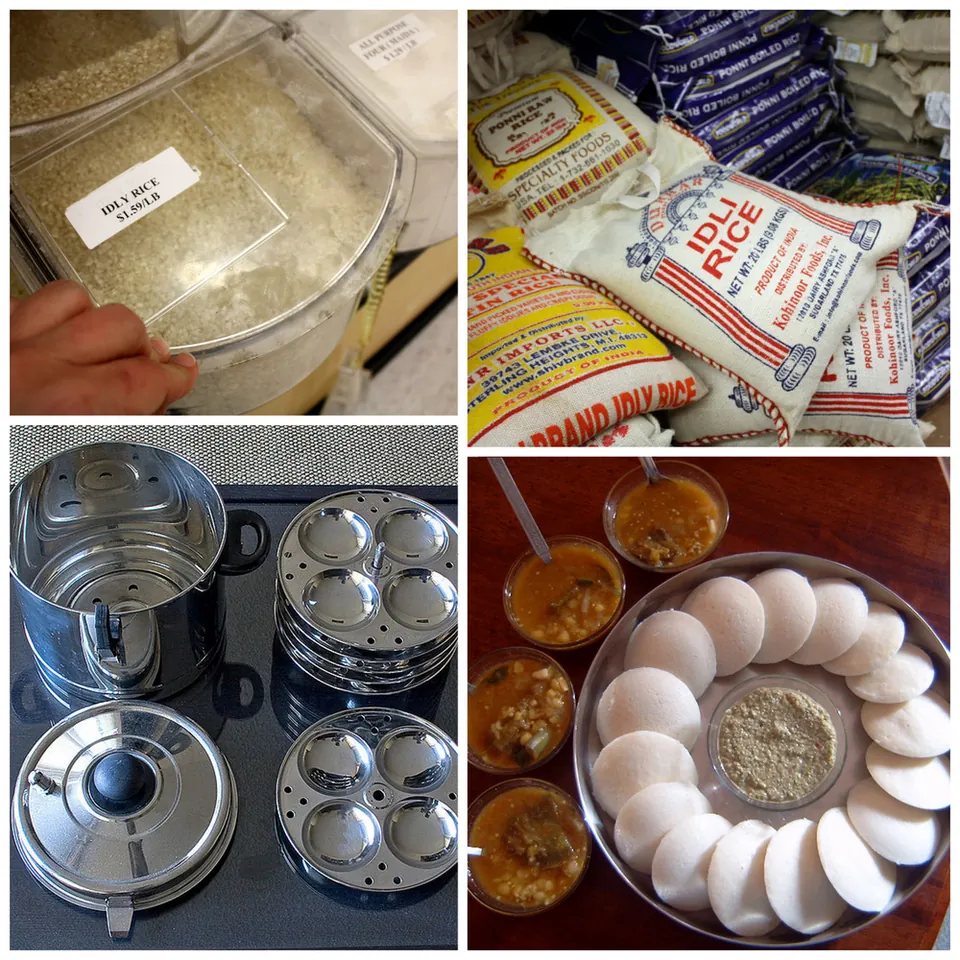
The idli of South India is a soft, white steamed cake made from a fermented batter of rice and urad dal (black gram). Where and when it took its present shape is a matter of competing views—and, strikingly, the food that carries the same name in the oldest records looked quite different from today's idli.
Verification highlight popular claim → verdict → evidence
Popular lore ties idli to an Indonesian steaming technique (K. T. Achaya's "kedli" hypothesis), but the supposed dish name kedli cannot be verified (Janaki Lenin). Medieval Kannada/Sanskrit texts -- Vaddaradhane (920), Lokopakara (c.1025), Manasollasa (1130) -- show a continuous local lineage of black-gram preparations, and the current rice-plus-long-fermentation-plus-steaming form was established only after 1250. Verdict: indigenous, independent origin is the leading account; the Indonesian-influence theory is noted as a competing but weakly sourced view. Key sources: Colleen Taylor Sen, Feasts and Fasts; Manasollasa (Gaekwad's Oriental Series edition).
The three gates
- Ingredient-supply gate
- Both rice and urad dal are native to South Asia; there is no limiting ingredient (only indigenous foods are involved).
- Cooking-technique gate
- Steaming of fermented batter, using a steamer or mold.
- Venue gate
- Spread through South Indian households and temple / ascetic (satvik) cuisine.
Overview
An idli is a light South Indian cake: rice and urad dal (black gram) are ground, the batter is left to ferment, poured into moulds, and steamed.
Both the rice and the urad dal are crops long rooted in South Asia, on everyday tables from early on. This is a dish made entirely from local materials.
What defines the idli we know is the method: a fermented batter steamed in a mould. Yet the food of the same name in the old records did not yet have this method. The early form that appears in medieval texts was a batter based on urad dal, without rice mixed in, without a long fermentation, and without steaming to finish. The present form—rice added, fermented slowly, steamed in a mould—does not come together in the written record until after the mid-thirteenth century. The name is old, but its contents changed over time.
Steamed rather than fried, the idli suited a vegetarian diet well. It found a place in South Indian homes and as a temple offering, and spread as everyday food.
The dosa, which shares the same fermented batter in the same South India, is a sister dish descended from the same root as the idli. But where the idli is steamed into a cake, the dosa is spread thin and cooked into a crêpe. The preparation differs, so it is treated as a separate dish.
How we know
The beginnings of the idli hold several views side by side, and the evidence does not yet allow one to be singled out. What makes the story worth reading is the gap between when the name appears in the records and what that name actually referred to.
The name itself shows up early. A Kannada text of around the tenth century has iddalige; a work of the eleventh century, and a Sanskrit text of the twelfth, have iddarika—similar words recorded without a break through the medieval period. But the food they name was that early form: based on urad dal, lacking rice, fermentation, and steaming. Same name, different substance. The age of the name cannot simply be read as the age of the idli we eat today.
On this footing, two views face each other. One holds that the idli arose independently in South India, reading the continuous run of medieval references as the trace of a local development. The food historian Colleen Taylor Sen supports a native origin, arguing that fermentation is discovered independently in nearly every culture, so there is no need to suppose it was carried in from outside.
The other view holds that it came from Indonesia. Its proponent, the food historian K. T. Achaya, took as his clues the absence of rice, long fermentation, and steaming in the early Indian texts, and the note by the seventh-century traveller Xuanzang that he saw no steaming vessel in India. From these he reasoned that between the eighth and twelfth centuries, cooks who had served Indonesian kings brought the techniques of fermentation and steaming back to South India, and he named a local dish there as the prototype.
But the proper name on which this diffusion theory stands is shaky. Later researchers such as Janaki Lenin point out that the Indonesian dish said to be the prototype cannot be confirmed to have existed, so the foothold of a theory built on that name is unsteady. That said, this does not erase the possibility that the technique came from outside. The independent-origin and diffusion views remain undecided, set down side by side. An Arab-trade route and a Gujarat origin are also raised alongside them, but neither is decisive.
The full set of origin theories and the detailed verification log — traceable all the way to their sources — are available on the Japanese edition.
See the full origin theories and verification log (Japanese) →
Related dishes
Lineage Family, predecessor, variants
Cross-links Sister dishes & same-name dishes (separate lineage)
Shares the key ingredient
- BiryaniSouth Asia (Deccan / Mughal)C
- PaellaValencia, SpainC
- Risotto alla milaneseMilan (Lombardy, Italy)C
- Nasi gorengIndonesia (Java)C
- JambalayaNew Orleans (Louisiana, USA)C
- MujaddaraLevant (Syria, Lebanon, Palestine)B
- DoriaYokohama, JapanB
- MaqlubaPalestine / LevantC
- White mixed rice (hondonban / goldongban — Bibimbap precursor)Korean PeninsulaC
- MandiHadhramaut (Yemen)C
- Rice and native-grain upma layer (sada upma, pre-semolina)South IndiaC
- KiribathSri LankaD
- KabsaSaudi ArabiaC
- PlovUzbekistan (Samarkand / Fergana)C
- MachboosPersian Gulf (Bahrain / Kuwait)B
- Gallo pintoCosta Rica / NicaraguaC
- Dal bhatNepalB
- KoshariEgyptC
- PilauEast Africa (Swahili Coast)C
- Rice-and-lentil koshari base layer (pre-pasta, pre-tomato)EgyptC
- Bánh cuốnVietnamB
- MahshiEgyptB
- PolowIranC
- PulaoNorth IndiaC
- PilavAnatoliaC
- Kabuli palawAfghanistanC
- Pilaf (French)FranceC
- Pilaf (Japanese-style)JapanC
- TahdigIranC
- Arroz de mariscoAlgarve (Portugal)C
- CasadoCosta RicaC
- Nan gyi thokeMyanmarC
- Mont diMyanmarC
- AranciniSicily (Italy)C
- Mazbi (madhbi)Yemen (Hadhramaut)C