All dishes / 南アジア
Puri Period BOrigin theory BVerified
Some fields (dish name, region and gates) are shown from the Japanese-edition data.
Puri, the puffed fried bread of North India, comes trailing a splendid origin legend in which an epic heroine invents it. But the moment a New World potato slips into that story, the tale can no longer be history. Puri's real ancestry is quieter, and far older.
Verification highlight popular claim → verdict → evidence
The fried-wheat-dough lineage recorded in a 12th-century Sanskrit encyclopedia, and its Bengali sibling luchi, both trace back to an 11th-century medical text describing three variants of a dish called shaskuli.
The three gates
- Ingredient-supply gate
- Wheat (atta, whole-wheat flour) is native to South Asia; no limiting ingredient.
- Cooking-technique gate
- Rolling unleavened wheat dough thin and deep-frying it so it puffs up.
- Venue gate
- A fried bread eaten at festivals, as an offering, and in everyday meals.
Overview
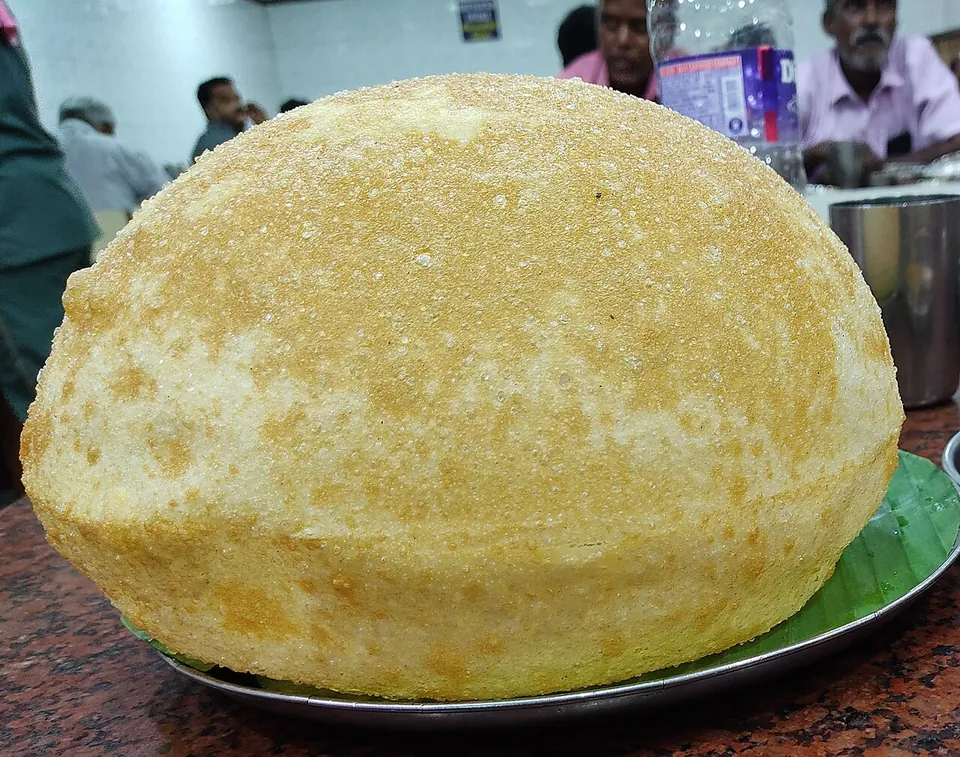
Puri is an unleavened fried bread: whole-wheat dough rolled thin and round, then dropped into hot oil where it puffs up in an instant. It has long been loved across North India, as a festival offering and as an everyday plate alike.
The frame of this dish is a pair of plain materials—whole-wheat flour and cooking fat. Wheat, the main ingredient, is an old crop rooted deep in the soil of South Asia, on hand since ancient times and on everyday tables from early on. The materials were always there. What was still needed was the craft to turn this flour into a single fried bread.
Roll the dough thin, lower it into hot oil, and the steam trapped inside swells the thin skin into a round dome—this frying craft is what raised puri into a dish. And the craft itself was worked out in South Asia long ago. The knack of kneading wheat dough with fat, rolling it thin, and frying it reaches back to the dynasty that flourished in medieval Bengal. In that age fried wheat breads came in several forms, and one of them grew into what would become North India's puri. From the same source another line branched off, giving Bengal its sister fried bread of refined flour, luchi. Whole-wheat puri and refined-flour luchi are thus equal sisters, sharing one old lineage as their parent.
How we know
Puri comes dogged by a splendid origin legend. A queen from one of the great ancient epics, the story runs, made a fried bread from the little wheat and the potatoes she had left during her years of exile—and that was the beginning of puri. As a tale it is charming, but there is a decisive tear in it. The potato is a New World crop, and it joined Indian tables only much later. In the distant past the epic describes, there was no potato at all. One ingredient has wandered into the heroine's anecdote from a far later age.
And when you follow the firm traces of fried wheat bread as a real dish, they surface not in the epic age but far downstream, in the medieval period. Nothing survives to show that a character from the epic invented this plate. The origin legend, in other words, is a founding tale knotted on afterward to lend the dish an old and glorious pedigree—a thing apart from its actual history.
Yet setting this story aside does not make puri a young dish. Quite the reverse. Once the heroic legend is put to one side, what emerges from behind it is a quiet, sure, old lineage that runs back to the fried wheat breads of the medieval period. Strip away the glamour of myth and puri loses none of its age. Only the source of its luster shifts—from legend to the historical record.
The full set of origin theories and the detailed verification log — traceable all the way to their sources — are available on the Japanese edition.
See the full origin theories and verification log (Japanese) →