All dishes / 北米
Sopaipilla Period BOrigin theory CVerified
Some fields (dish name, region and gates) are shown from the Japanese-edition data.
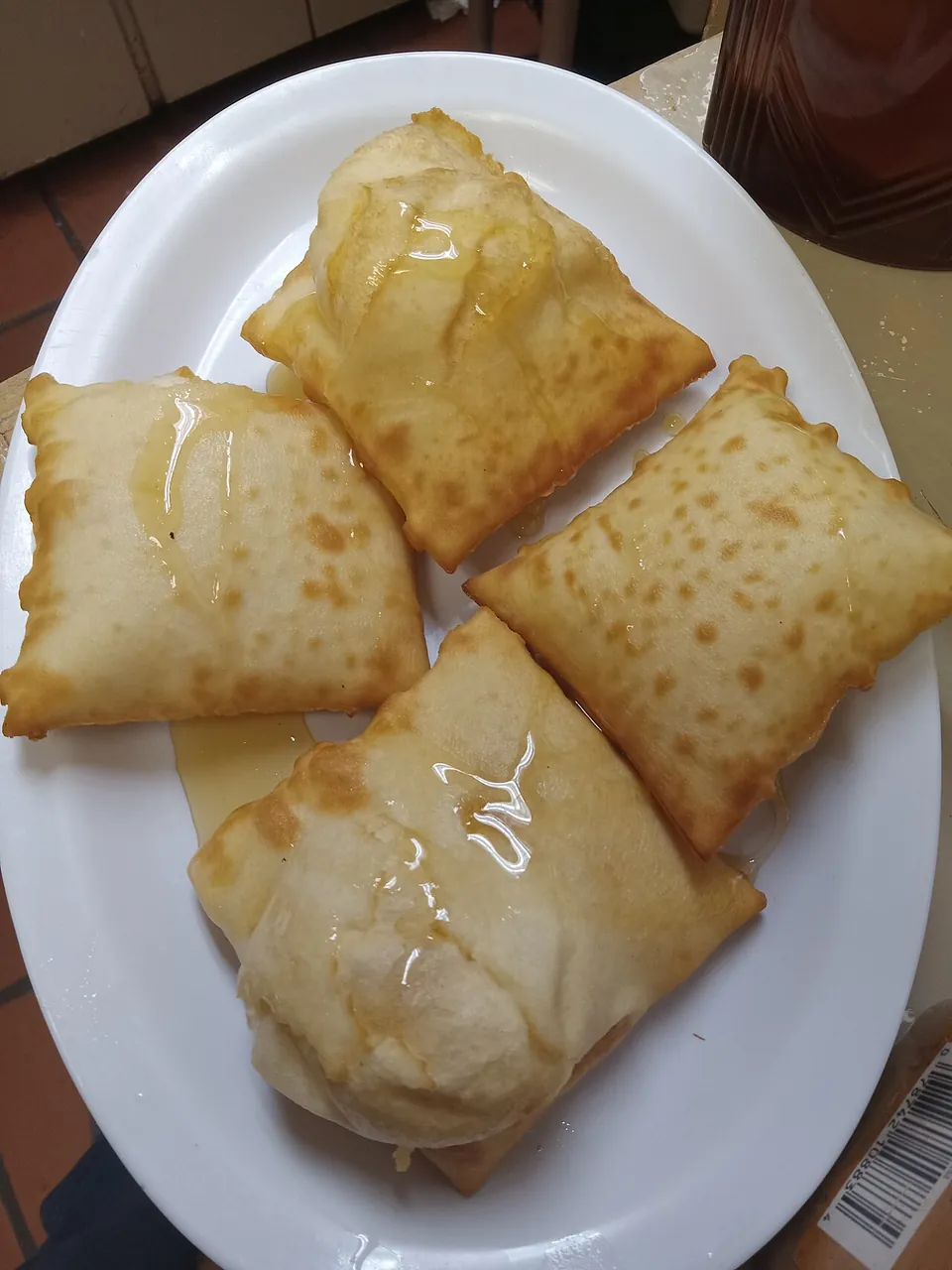
The sopaipilla, a puffed, pillow-shaped fried bread. The pitch that it was born in Albuquerque centuries ago is a story built by tourism and the restaurant trade; the pastry's real name reaches back across the ocean, to a fried bread of al-Andalus.
Verification highlight popular claim → verdict → evidence
Tourism and restaurant lore often claims sopaipillas were invented in Albuquerque two or three hundred years ago, but no primary source backs that specific city or timeframe -- the earliest documented New Mexican record is a 1931 cookbook. The better-supported lineage traces the name and frying technique to Andalusian sopaipa (from Mozarabic Xopaipa, 'bread soaked in oil'), which spread through Spanish colonization to New Mexico, where it combined with local wheat and lard into today's pillow-shaped fried bread.
The three gates
- Ingredient-supply gate
- Wheat and lard (from pigs) are Old World foods that could reach New Mexico only after Spanish colonial trade; wheat arrived with the Onate colony in 1598.
- Cooking-technique gate
- Dough is puffed and deep-fried.
- Venue gate
- A staple bread served in New Mexican homes and restaurants.
Overview
A sopaipilla is made by cutting rolled wheat dough thin and dropping it into hot oil, where the moisture inside flashes to steam, pushes the surface up, and leaves the bread hollow, puffed like a small pillow. In the American Southwest, and above all in New Mexico, it is baked as a staple bread in homes and diners, drizzled with honey or split open and stuffed with beans or meat.
What rooted this dish in the land was wheat carried in from the Old World. New Mexico was not originally wheat country. In 1598, Juan de Onate's colonizing party brought wheat and barley from Spain and began growing them, watering the fields from the first settlements through acequias (irrigation ditches). Only once wheat flour could be had here could this puffed, pillow-shaped bread be fried at all. The lard it fries in likewise comes from the pigs the Spanish brought with them. Both the flour and the oil at its heart crossed the sea to get here, and the dish belongs to the colonial period and after, once those ingredients had settled into New Mexican fields and kitchens.
The technique of puffing dough in oil was itself old across the Mediterranean world. The sopaipilla is that technique remade with New Mexican wheat and lard. The smallness in its name (sopaipilla means little sopaipa) is itself a miniature of its origin.
How we know
Born in Albuquerque sounds venerable enough. The pitch that the sopaipilla has been made in this city for two or three hundred years has been repeated for years in tourist guides and the restaurant trade. But this origin story, which fixes on one city and cites a specific span of centuries, has no contemporary source to support it. The earliest written record of the sopaipilla in New Mexico comes only in the twentieth century, in Fabiola Cabeza de Baca Gilbert's cookbook Historic Cookery (1931) and in later cookbooks. A claim of Albuquerque alone, several hundred years back, does not square with that first record. Where and by whom it was truly first made remains unknown.
The lineage of the pastry itself, though, is old, and the clue survives in its name. Sopaipilla is the diminutive of sopaipa, and that sopaipa reaches back to the Mozarabic Xopaipa of medieval Iberia, meaning bread soaked in oil, and further to the Germanic suppa. The oil-fried sopaipa of al-Andalus traveled with Spanish colonization through New Spain to New Mexico, where it settled into a pillow-shaped fried bread made with local wheat and lard. Etymological dictionaries (the Online Etymology Dictionary) and food history offer this as one of the stronger threads among the competing accounts. A fried bread of the same lineage also reached South America; in Chile there is a record of it being eaten by at least 1726.
So the sopaipilla is not the closed-off local invention the city's anecdote makes it out to be, but the Southwestern version of a long lineage that spans the Old World and the New. The real provenance is written into the name of the bread, not the name of the city.
The full set of origin theories and the detailed verification log — traceable all the way to their sources — are available on the Japanese edition.
See the full origin theories and verification log (Japanese) →
Related dishes
Shares the key ingredient
- PierogiPolandC
- EmpanadaRío de la Plata (Argentina)C
- BliniRussiaB
- PirozhkiRussiaB
- CheburekiCrimea (Crimean Tatar)C
- BelyashiVolga-Ural (Tatar / Bashkir)C
- JalebiNorthern IndiaB
- Fortune cookieCalifornia (USA)C
- StroopwafelGouda (Netherlands)C
- LamingtonQueensland (Australia)C
- ChimichangaTucson, Arizona (USA)C
- BuuzMongoliaB
- YantıkCrimea (Crimean Tatar)C
- VarenykyUkraineC
- MandaziEast Africa (Swahili Coast)C
- LángosHungaryC
- Daoxiaomian (knife-cut noodles)Shanxi (China)C
- KhuushuurMongoliaB
- Dobos torteHungaryB
- SambusaEast Africa (Swahili Coast)B
- SarburmaCrimea (Crimean Tatars)B
- ThenthukTibet / NepalB
- ShumaiGuangzhou (China)B
- Jiaozi (gyoza)ChinaC
- Hohhot shaomaiHohhot (China)B
- OliebollenNetherlandsC
- MarquesitaYucatán (Mexico)D
- Halwa puriLahore (Pakistan)D
- Roti prataSingaporeB
- CoyotaSonora (Northern Mexico)C
- RunzaMidwestern United StatesB
- BanshMongoliaC
- Kashyk-ash (къашыкъ-аш, Crimean Tatar spoon-dumpling soup)Crimea (Crimean Tatar)C
- KulebyakaRussiaB
- Spring roll (Chinese)ChinaC
- ChuchvaraUzbekistan (Samarkand / Fergana)C
- DamperAustraliaC
- SamsaCentral AsiaC
- HalushkyUkraineC
- BanitsaBalkans (Bulgaria)C
- Har gowGuangzhou (China)C