All dishes / サブサハラ・アフリカ
Mandazi Period COrigin theory CVerified
Some fields (dish name, region and gates) are shown from the Japanese-edition data.
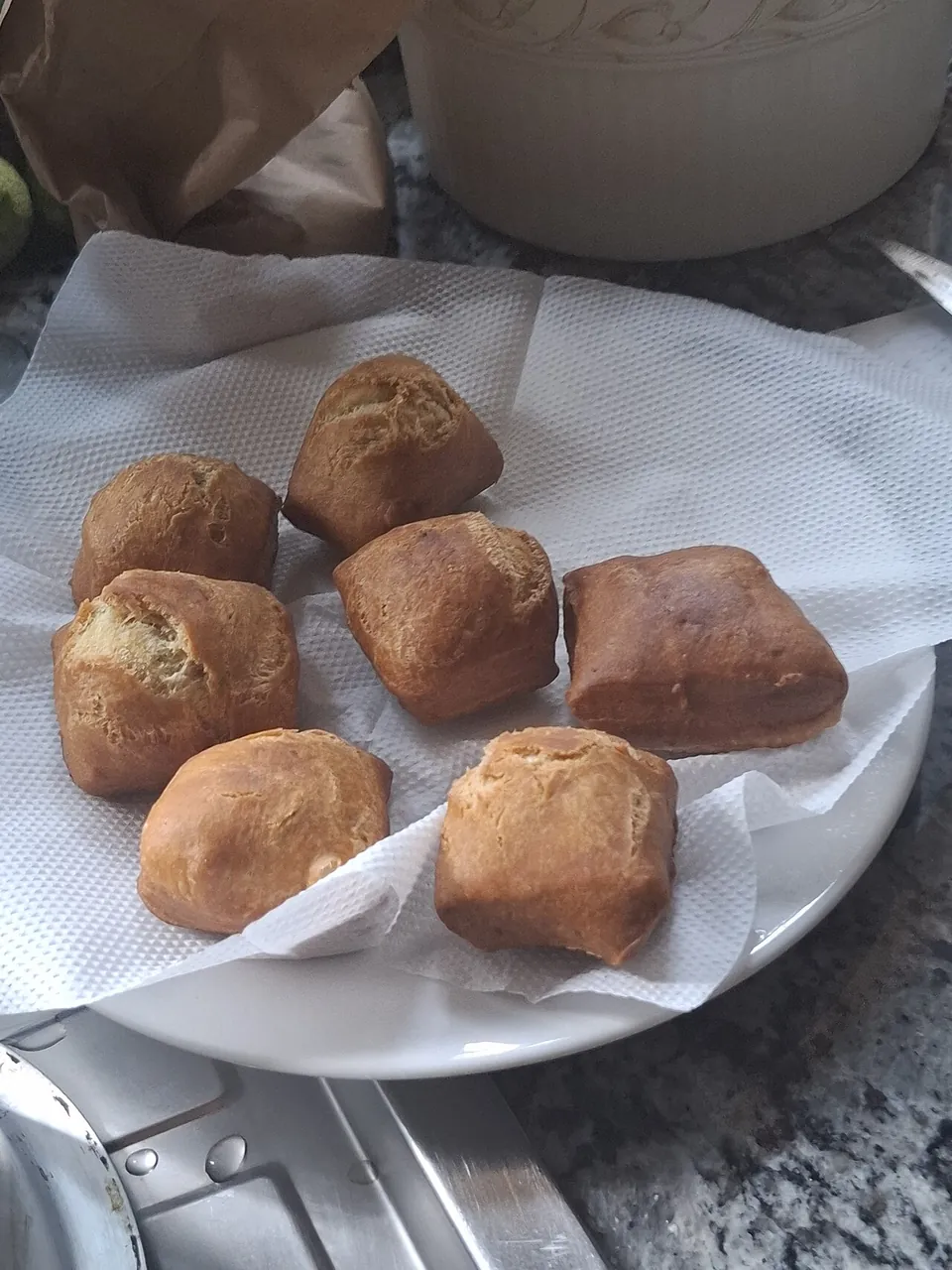
Mandazi is a fried pastry born where wheat, sugar, and cardamom carried by the Indian Ocean trade met the coconuts of the East African coast. It is often said that its name comes from an Arabic word meaning to hold fat, yet mandazi, the word for the core pastry itself, was from the start a local Bantu term.
Verification highlight popular claim → verdict → evidence
A folk etymology claiming 'mandazi is Arabic for having fat' is unsupported; Wiktionary instead traces the core name to a native Bantu root, while the coconut version's name mahamri (from Arabic muhammar, 'fried/browned') reflects a later Arab-influenced layer. This two-layer naming pattern supports the account that mandazi is a Swahili Coast localization of an Indian-Ocean-trade fried-dough tradition, fusing imported technique and spices with native wheat flour and coconut milk.
The three gates
- Ingredient-supply gate
- Wheat flour, sugar, and cardamom circulated to the Swahili Coast via Indian Ocean trade, making the trade route a candidate limiting factor.
- Cooking-technique gate
- The technique of frying leavened dough.
- Venue gate
- Established as a fried snack for breakfast and with tea in Swahili households and street stalls.
Overview
Where and when it took shape
Mandazi is a fried pastry of the Swahili coast, the Indian Ocean shoreline running from present-day Kenya to Tanzania. The dough is cut into triangles or squares, left to rise, and fried in oil until it puffs up soft. As a breakfast dish or a companion to tea, it has been enjoyed in homes and at street stalls alike.
Pinning down the year it was born is difficult. The phrase that it "arose on the Swahili coast about four hundred years ago" is often repeated, but no contemporary record or scholarly source supports it. What is certain is that the outline of this dish took shape during the modern Indian Ocean trade, when Arab and Indian merchants moved along the coast with the monsoon winds.
What the sea carried, and what the land grew
The Swahili coast was long a hub of trade where Arab, Persian, and Indian merchants met. Wheat flour, sugar, and spices such as cardamom were all things their ships brought to the coastal markets. Excavation has likewise shown that in the pre-modern Swahili towns, wheat and spices brought across the sea were joined at the table with local ingredients. The technique of deep-frying dough in oil also came to coastal kitchens through this same traffic.
To these the land added its own. Coconut grows abundantly along the shore. Kneading the dough with pressed coconut milk lends it faint sweetness and fragrance and leaves it soft once fried. When the wheat and spices carried by the sea joined with local coconut, the flavor we recognize as mandazi emerged. The version made with coconut milk is called, in some areas, mahamri (or mamri), and it has taken root as a distinctly coastal preparation.
Merchants coming and going, ingredients and technique and the land's own produce meeting in one kitchen: mandazi is a pastry that took form within this life of the Swahili coast.
How we know
What the name unravels about its origin
An origin story built on the name circulates for mandazi: that mandazi derives from an Arabic word meaning to hold fat, and so this must be an Arab fried pastry passed down whole. Since it is a fried pastry that uses plenty of oil, it can sound plausible.
But trace the etymology and the thread breaks. Mandazi (andazi), the word for the core pastry, is not Arabic; it reaches deep into the Bantu languages of East Africa as a local term. If the name itself is local, then the picture of an Arab pastry moving over intact, name and technique together, does not hold.
Where, then, does the element from across the sea remain? It survives in the other name. Mahamri, the version kneaded with coconut milk, is a likely borrowing tied to the Arabic root meaning to fry or to brown. The local word mandazi and the Arabic-derived word mahamri: this two-layered naming itself tells, in language, that mandazi was not transplanted whole from a single homeland but is a synthesis in which elements from across the sea dissolved together with local ingredients on one coast.
Rather than asking which single homeland it came from, it fits the mandazi we know better to see several currents meeting on this coast to become one pastry.
The full set of origin theories and the detailed verification log — traceable all the way to their sources — are available on the Japanese edition.
See the full origin theories and verification log (Japanese) →
Related dishes
Shares the key ingredient
- PierogiPolandC
- EmpanadaRío de la Plata (Argentina)C
- BliniRussiaB
- PirozhkiRussiaB
- CheburekiCrimea (Crimean Tatar)C
- BelyashiVolga-Ural (Tatar / Bashkir)C
- JalebiNorthern IndiaB
- Fortune cookieCalifornia (USA)C
- StroopwafelGouda (Netherlands)C
- LamingtonQueensland (Australia)C
- ChimichangaTucson, Arizona (USA)C
- BuuzMongoliaB
- YantıkCrimea (Crimean Tatar)C
- VarenykyUkraineC
- LángosHungaryC
- Daoxiaomian (knife-cut noodles)Shanxi (China)C
- KhuushuurMongoliaB
- Dobos torteHungaryB
- SambusaEast Africa (Swahili Coast)B
- SarburmaCrimea (Crimean Tatars)B
- ThenthukTibet / NepalB
- ShumaiGuangzhou (China)B
- Jiaozi (gyoza)ChinaC
- Hohhot shaomaiHohhot (China)B
- OliebollenNetherlandsC
- MarquesitaYucatán (Mexico)D
- Halwa puriLahore (Pakistan)D
- Roti prataSingaporeB
- SopaipillaNew Mexico (USA)C
- CoyotaSonora (Northern Mexico)C
- RunzaMidwestern United StatesB
- BanshMongoliaC
- Kashyk-ash (къашыкъ-аш, Crimean Tatar spoon-dumpling soup)Crimea (Crimean Tatar)C
- KulebyakaRussiaB
- Spring roll (Chinese)ChinaC
- ChuchvaraUzbekistan (Samarkand / Fergana)C
- DamperAustraliaC
- SamsaCentral AsiaC
- HalushkyUkraineC
- BanitsaBalkans (Bulgaria)C
- Har gowGuangzhou (China)C