All dishes / 東アジア
Tonkatsu Period BOrigin theory CVerified
Some fields (dish name, region and gates) are shown from the Japanese-edition data.
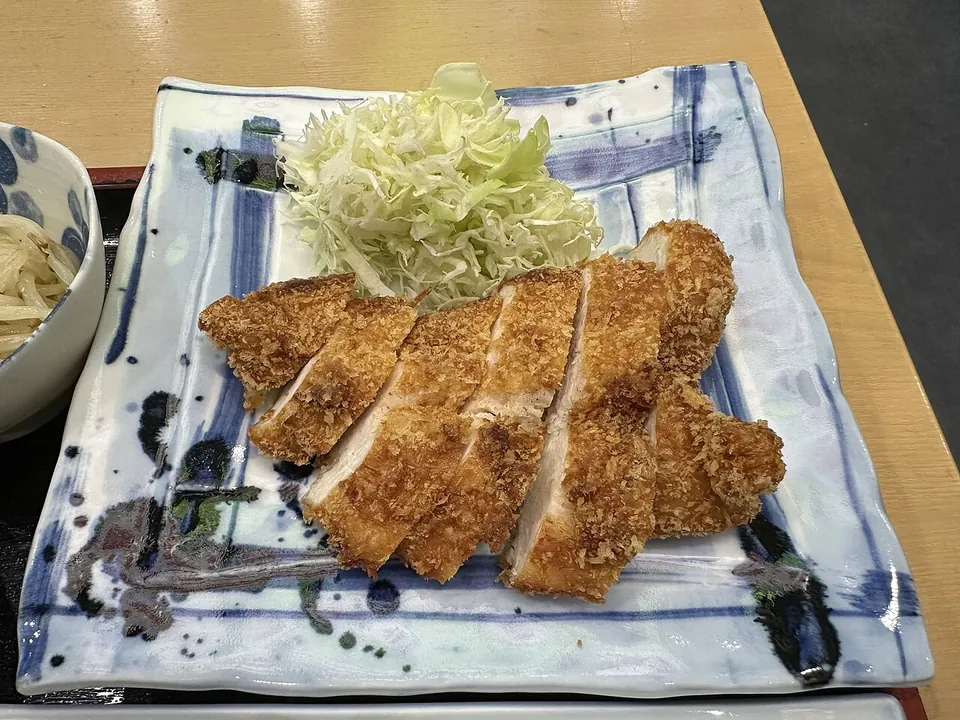
Tonkatsu is a Western-style Japanese dish that reworked the French-derived cutlet into a set meal of thick-cut pork, deep frying, and pre-sliced portions. The well-known origin tale—that Rengatei in Ginza invented the pork cutlet in 1899—clashes with what the primary sources of the Meiji era actually show. It is a story that arose after the war.
Verification highlight popular claim → verdict → evidence
Popular claim: Tokyo's Rengatei invented the deep-fried pork cutlet (tonkatsu) in 1899. Verdict: refuted -- Meiji-era sources show pork cutlets were already a common menu item at Tokyo eateries by 1890, and the Rengatei invention story itself first surfaces only in 1952, more than fifty years later. The thick-cut, deep-fried, pre-sliced style now called tonkatsu came together between 1921 (Oroji in Shinjuku) and 1929 (Ponchiken in Okachimachi); which shop served it first cannot be singled out from the surviving sources. Key sources: Okada Tetsu, Tonkatsu no Tanjo (2000); research by the Kindai Shokubunka Kenkyukai.
The three gates
- Ingredient-supply gate
- Pork, unlocked by the Meiji-era lifting of Japan's meat-eating taboo (1872)
- Cooking-technique gate
- Japanization of the French cutlet (cotelette) into a thick-cut, deep-fried style
- Venue gate
- Western-style restaurant (yoshokuya) / urban common people / market distribution / general public
Overview
Several conditions had to come together before tonkatsu took its present form. The first thing it could not do without was its lead ingredient, pork. Meat-eating had long been shunned in Japan, but when the Meiji government lifted the ban on eating meat in 1872, pork came onto the market and became available as an ingredient for frying. Before that, a dish of deep-fried pork simply had no way of coming into being.
Next came the culinary work of remaking the French-derived cutlet (from the French cotelette) into something Japanese. The original cutlet is a dish of thin-sliced meat finished by pan-searing it in a little oil. What makes tonkatsu its own style is the turn to a thick loin cut of 2.5 to 3 centimeters, deep-fried in plenty of oil. The gesture of slicing the fried cutlet into bite-sized pieces beforehand, so it can be eaten with chopsticks, is another part of this Japanization, unlike Western dishes eaten with a knife.
And there was a place where the dish was served. Tonkatsu was put out in the Western-style restaurants of city districts such as Ginza, Okachimachi, and Shinjuku, using market-traded pork, aimed at the urban public. Built into the form of a Japanese set meal with rice, miso soup, and pickles, it spread as a plate that, though Western, fit within Japanese ways of eating.
The present style—thick-cut, deep-fried, pre-sliced, served as a Japanese set meal—came together between 1921 and 1929. At Ponchiken in Okachimachi, Shimada Shinjiro, a Western-cuisine chef formerly of the Imperial Household Ministry, brought this style close to its finished form, and in 1932 a boom saw specialist tonkatsu shops opening one after another in Ueno and Asakusa. The dating rests on firm ground close to the standard scholarly view, with Okada Tetsu's The Birth of Tonkatsu and reference materials from the National Diet Library confirming this window of years. The question of who first made it, however, must be handled with a different degree of certainty.
How we know
The most widely told account of tonkatsu's origin is that in 1899 (Meiji 32) the Western-style restaurant Rengatei in Ginza invented a deep-fried 'pork cutlet.' But once the sources are followed, this origin tale does not hold.
According to primary sources cited by the society for the study of modern food culture, the pork cutlet had already spread through Tokyo before the 1899 date at which Rengatei is said to have invented it. The Tokyo Ryuko Saikenki of 1885 mentions a 'cutlet' at Fujimiken, and the Jiji Shinpo of 1890 (Meiji 23) records that the pork cutlet had become a commonplace item at 'most restaurants' in Tokyo. Before Rengatei brought it out, the dish was already about the streets.
Where, then, did the Rengatei invention story come from? It first appears in print in 1952 (Showa 27), some forty-five years after the invention is said to have taken place, and it leans on the 'trust' placed in the successive owners of the shop, with no independent third-party testimony and no prewar material behind it. It is best read as a postwar legend, in which the story arrived late while no fact of invention stands behind it; the record does not bear the claim out. Rengatei is an old example of the genre, but it is not the birthplace.
Where, then, is the true birthplace? Here too there is no primary source, and no single answer settles the matter. One account holds that in 1921 (Taisho 10) Oroji in Shinjuku put out a thick-cut loin, sliced up, for sale; another that in 1929 (Showa 4) Ponchiken in Okachimachi established the style of thick cut, plenty of oil, and Japanese set meal. Ponchiken comes closest to the finished form of the present style, but Oroji's earlier example blocks any single attribution. The making of tonkatsu was a continuous process—a shift from the thin-sliced cutlet to the thick-cut style—and cannot be reduced to a single invention at a single shop. What is certain is rather the other side: that the story crediting Rengatei alone is not supported by the sources.
The full set of origin theories and the detailed verification log — traceable all the way to their sources — are available on the Japanese edition.
See the full origin theories and verification log (Japanese) →
Related dishes
Shares the key ingredient
- Tacos al pastorMexicoB
- FeijoadaBrazilB
- Barbecue ribsSouthern United StatesC
- CurrywurstBerlin (Germany)B
- Twice-cooked reheated pork (Huiguorou precursor)Sichuan, ChinaC
- ChicharrónPeru / Latin AmericaB
- ChicharrónMexicoB
- ChicharrónColombiaB
- BaoziChinaC
- Chop sueyUSA (Cantonese diaspora) / Guangdong (China)C
- Cochinita pibilYucatán (Mexico)C
- LechonCebu (Philippines)C
- SaloUkraineC
- Bak kut tehSingaporeC
- GolonkaPolandC
- GyrosGreeceB
- EisbeinBerlin (Germany)C
- SchweinshaxeBavaria (Germany)C
- Japanese-style twice-cooked porkJapanB
- ManchamantelesPuebla (Mexico)C
- PernilPuerto RicoC
- ChoripánRío de la Plata (Argentina)C
- Char siuGuangdong (China)C