All dishes / 東欧
Belyashi Period COrigin theory CVerified
Some fields (dish name, region and gates) are shown from the Japanese-edition data.
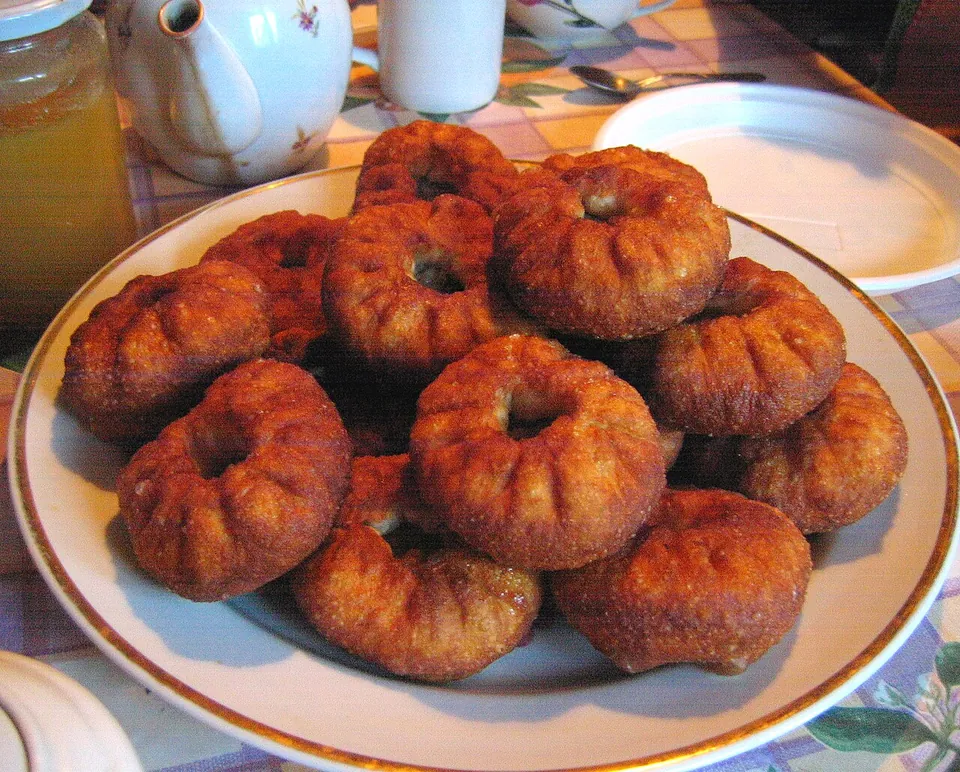
A round fried pie from the Tatar and Bashkir kitchens of the Volga and Urals, with a small window opening at its center. In Russia it became popular street food under the name belyash, but its original name is the Tatar word peremech (пәрәмәч).
Verification highlight popular claim → verdict → evidence
Myth: the dish was transmitted from Uyghur/Chinese (mantou-type) cooking. Verdict: unsupported -- this rests only on a folk etymology (par-myan-chi) and a visual resemblance to steamed buns, sourced from Russian-language blogs, with no primary or academic backing. The academic source (Petits Propos Culinaires 132, 2025) instead treats it as native to the Volga Tatar/Bashkir tradition (peremech/paramats), with the name derived from beles (a large baked pie). Earliest print attestation is a 1958-59 Tatar cookbook. Key sources: Stahlberg & Svanberg (2025), The Oxford Companion to Food.
The three gates
- Ingredient-supply gate
- Wheat and both mutton and beef are Eurasian staples; there is no limiting ingredient, so the physical floor is loose.
- Cooking-technique gate
- Ground meat (with onion) is wrapped in leavened or plain dough, shaped into a round with a hole in the center, and deep-fried; the adoption of this frying technique is the limiting factor.
- Venue gate
- Volga Tatar/Bashkir home cooking, markets, and street food, later spreading as a popular food across the whole Soviet sphere.
Overview
A Tatar dish of the Volga-Urals turned everyday food
Belyash is made by wrapping ground meat and onion in a wheat dough, shaping it into a round with a small window opening at the center, and frying it in oil. Russian calls it belyash, but the dish itself is peremech (пәрәмәч, вак бәлеш) in Tatar, a food of the Tatar and Bashkir peoples of the Volga river and the Urals. The dough is sometimes leavened and sometimes not.
Both the wheat of the crust and the mutton or beef of the filling are long-established local foods, present across Eurasia and on the tables of this region from early on. Enclosing meat in dough, frying it in oil, and leaving a small window open at the center of a round shape is handwork that the Tatar kitchen developed over generations. Baked at home, it came to be loved as a snack in markets and at street stalls.
The name peremech is said to descend either from the Tatar word bäleş, meaning a large baked pie, or from the verb peremech, meaning to turn over. Either way, the dish is rooted in the long tradition of Tatar cooking. In time it spread across the Soviet sphere, and under its Russian name, belyash, it became a popular food that crossed regional and ethnic lines.
How we know
You cannot pin down the year belyash was born.
Wheat, mutton, and beef were all long present in this land, and frying in oil was handwork the Turkic kitchen had known for a long time. That makes it hard to fix a founding year from old records. As "belyash," the Russian name, it appears in writing only in the second half of the twentieth century; the earliest known mention goes back to a 1949 catering-formula collection. As the Tatar dish peremech, it was made well before that. The first precise recipe in a cookbook is recorded as peremech in Yunus Akhmetzyanov's Tatar National Dishes (Kazan, 1958-59). Speaking of it across a range from the early modern to the modern period fits what the evidence now allows.
There is another story about where it comes from. A dish resembling peremech, it is said, first appeared in Uyghur or Chinese cooking and reached the Tatars through intermediaries. The one support for this is a punning etymology from "par-myan-chi" (meaning steamed noodles), but this is a tale spread by Russian-language cooking blogs such as LiveJournal, with no old records or scholarly backing. A peer-reviewed article (Ståhlberg and Svanberg, Home Is Where Tatars Eat Pärämäts, Petits Propos Culinaires 132, 2025) and the second edition of the Oxford Companion to Food both treat peremech and bäleş as dishes proper to the Tatars, and do not accept any single foreign origin, Uyghur included. The view that it is a local dish of the Tatar and Bashkir lands is the settled one today.
The full set of origin theories and the detailed verification log — traceable all the way to their sources — are available on the Japanese edition.
See the full origin theories and verification log (Japanese) →
Related dishes
Cross-links Sister dishes & same-name dishes (separate lineage)
- Sister dish (shared ancestor)CheburekiCrimea (Crimean Tatar)C
- Sister dish (shared ancestor)KhuushuurMongoliaB
Shares the key ingredient
- PierogiPolandC
- EmpanadaRío de la Plata (Argentina)C
- BliniRussiaB
- PirozhkiRussiaB
- JalebiNorthern IndiaB
- Fortune cookieCalifornia (USA)C
- StroopwafelGouda (Netherlands)C
- LamingtonQueensland (Australia)C
- ChimichangaTucson, Arizona (USA)C
- BuuzMongoliaB
- YantıkCrimea (Crimean Tatar)C
- VarenykyUkraineC
- MandaziEast Africa (Swahili Coast)C
- LángosHungaryC
- Daoxiaomian (knife-cut noodles)Shanxi (China)C
- Dobos torteHungaryB
- SambusaEast Africa (Swahili Coast)B
- SarburmaCrimea (Crimean Tatars)B
- ThenthukTibet / NepalB
- ShumaiGuangzhou (China)B
- Jiaozi (gyoza)ChinaC
- Hohhot shaomaiHohhot (China)B
- OliebollenNetherlandsC
- MarquesitaYucatán (Mexico)D
- Halwa puriLahore (Pakistan)D
- Roti prataSingaporeB
- SopaipillaNew Mexico (USA)C
- CoyotaSonora (Northern Mexico)C
- RunzaMidwestern United StatesB
- BanshMongoliaC
- Kashyk-ash (къашыкъ-аш, Crimean Tatar spoon-dumpling soup)Crimea (Crimean Tatar)C
- KulebyakaRussiaB
- Spring roll (Chinese)ChinaC
- ChuchvaraUzbekistan (Samarkand / Fergana)C
- DamperAustraliaC
- SamsaCentral AsiaC
- HalushkyUkraineC
- BanitsaBalkans (Bulgaria)C
- Har gowGuangzhou (China)C