All dishes / 東南アジア
Khao man gai Period COrigin theory BVerified
Some fields (dish name, region and gates) are shown from the Japanese-edition data.
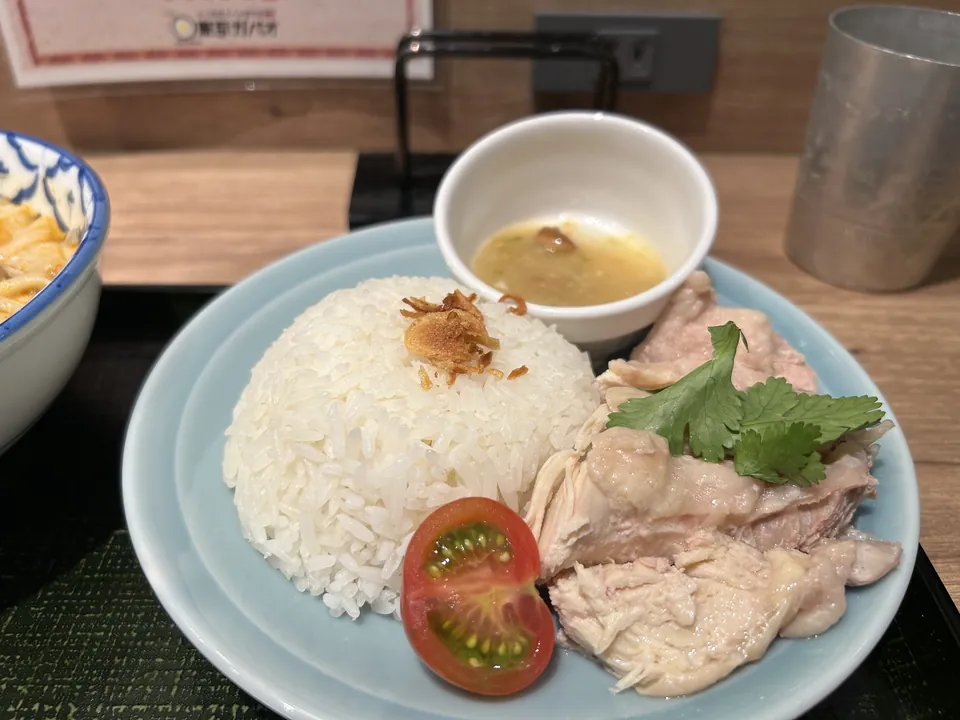
Glossy poached chicken over fragrant rice cooked in chicken fat: Thailand's beloved khao man gai. A founding legend boasts of "five hundred years of history," but the sources point to something more recent—a cooking method brought by migrants from Hainan Island.
Verification highlight popular claim → verdict → evidence
A widely repeated tale claims a '500-year history', tracing back to a Ming-dynasty official presenting Wenchang chicken to the emperor -- but it names no emperor, date, or primary source, and conflates the age of the chicken breed's reputation with the dish's actual formation date. The well-supported account: khao man gai is a Thai localization of Hainanese chicken rice, brought by Hainanese migrants from the late 19th to early 20th century -- an established consensus.
The three gates
- Ingredient-supply gate
- Both chicken and rice were long available in Southeast Asia early on, so ingredient availability was never what held the dish back.
- Cooking-technique gate
- Cooking rice in the chicken's own poaching broth (fat) -- the technique of Hainanese chicken rice, brought by Hainanese migrants from Wenchang-style chicken rice; this cooking method is the limiting gate (native chicken and rice alone do not account for the dish).
- Venue gate
- Stalls and eateries of Hainanese Chinese migrants, established in urban centers like Bangkok from the late 19th to early 20th century.
Overview
Khao man gai is gently poached chicken served over rice cooked in the chicken's own broth and fat. The Thai name means "chicken-fat rice," and it is a fixture of street stalls and casual eateries.
Chicken and rice are both long native to Southeast Asia, so on the ingredient side the makings were there early. What arrived later was the technique of cooking rice in the chicken's poaching liquid and fat. The bird is poached whole and gently, and the rice drinks up the savory fat and broth as it cooks. Once that method took root, chicken and rice settled into the single dish we call khao man gai.
The technique was carried by Chinese migrants from Hainan Island. They brought the way of cooking Hainanese chicken rice as they had eaten it at home (with Wenchang chicken rice as its ancestor), and from the late nineteenth into the early twentieth century they established it at stalls and eateries in Bangkok and other cities. Adapted to local Thai birds—capons fattened to carry more fat, among other touches—it became the khao man gai of today. It is the Thai branch of the broader movement that carried Hainanese chicken rice on to Singapore and Malaysia.
How we know
Khao man gai is trailed by a bold origin legend that claims "five hundred years of history." Some Thai food articles tell of a Ming-era official from Wenchang presenting a Wenchang-chicken dish to the emperor, who savored it—lifting the dish's pedigree into the distant past. But no emperor is named, no date or figure is fixed, and no contemporary record carries the tale. Nothing supports the number five hundred.
What the legend confuses is the antiquity of the Wenchang chicken's reputation with the age of the present khao man gai—rice cooked in chicken fat. That the bird itself was long famous does not mean the chicken-fat rice now sold at stalls dates back that far.
The real history is more recent. The Thai version of Hainanese chicken rice—brought by Chinese migrants from Hainan Island, with Qing-era Wenchang chicken rice as its ancestor—took shape from the late nineteenth into the early twentieth century. The Michelin Guide, food-culture accounts, Thai food writing, and reporting in the Bangkok Post trace how, over roughly a century and a half of migration from Hainan (from the mid-nineteenth century on), chicken rice spread to Singapore, Malaysia, Vietnam, and Thailand, where it came to be called khao man gai, "chicken-fat rice." Specialists do not dispute the Hainanese origin; it is the settled account today. Set against it, the five-hundred-year legend comes apart.
The full set of origin theories and the detailed verification log — traceable all the way to their sources — are available on the Japanese edition.
See the full origin theories and verification log (Japanese) →
Related dishes
Cross-links Sister dishes & same-name dishes (separate lineage)
Shares the key ingredient
- Chicken tikka masalaUnited KingdomC
- Wat (pre-chili Ethiopian stew, earlier layer)Ethiopian HighlandsC
- AjiacoBogotá, ColombiaB
- Jerk chickenJamaicaC
- Soto ayamJava (Indonesia)C
- ShkmeruliGeorgiaB
- MoambeCongo (Central Africa)C
- Nyembwe chicken (Poulet nyembwe)Gabon (Central Africa)C
- Chicken yassaSenegalC
- Chicken KievKyiv (Ukraine)C
- Circassian chicken (Çerkez tavuğu)Turkey (Ottoman court) / CaucasusB
- Sopa de limaYucatán (Mexico)C
- White cut chickenGuangdong (China)C
- Ohn no khao swèMyanmarC
- Kedjenou layer (canari steam-braise)Côte d'IvoireC
- WaterzooiFlanders (Belgium)C
- Soup currySapporo (Japan)B