All dishes / 西欧
French fries Period BOrigin theory BVerified
Some fields (dish name, region and gates) are shown from the Japanese-edition data.
Are French fries really French—or secretly Belgian? It is one of the most argued-over questions in food, and the best-known answer is wrong. The famous claim that a Belgian village in the Meuse valley was frying potatoes before 1680 falls apart the moment you check it: the old document it rests on describes something else, and the potato had not even reached that valley yet. When a Belgian food historian went through the primary sources, the trail led to the street stalls of Paris.
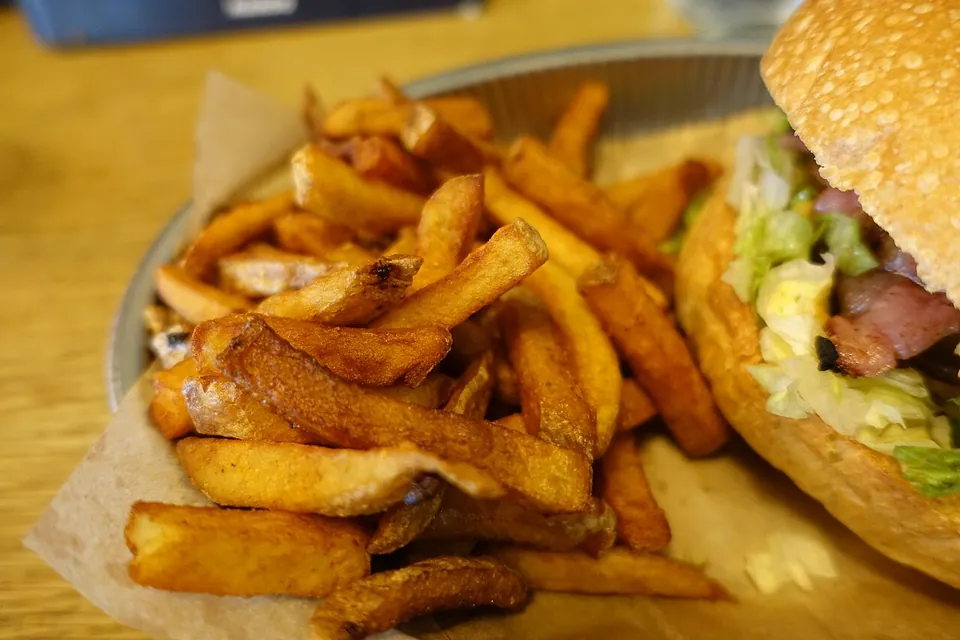
Verification highlight popular claim → verdict → evidence
Belgium's claim to have invented the frite before 1680 - villagers of the Meuse valley frying potatoes cut like little fish when the river froze and the fishing stopped - was put into circulation in 1984 by the journalist Jo Gérard, who cited a family manuscript of 1781. Pierre Leclercq of the University of Liège went back to that manuscript and found it describing thin slices browned in the least possible fat, not batons cooked in a bath of oil. The potato settles the rest: it did not reach the Meuse valley until the 1730s, half a century after the date the story requires, and a poor farming village could hardly have spared the fat for deep frying in any case. What Leclercq found in the archives instead runs through Paris. Vendors around the Pont Neuf were selling fried potatoes from the 1780s, frying in a bath of oil by about 1800, and the baton shape was established by 1840, about ten years before the cookbooks caught up. Belgium came to the dish in 1844, when the Bavarian-born vendor Frédéric Krieger advertised pommes de terre frites à l'instar de Paris, potatoes fried Paris-style, in Le Constitutionnel of 21 May 1844 and the Journal de Verviers of 19 October 1845; the double frying is first written down in Le ménage populaire, published at Verviers in 1889. Belgium was not where the dish was invented, but where it was taken up and made famous.
The three gates
- Ingredient-supply gate
- Getting hold of potatoes was not what held this dish back. The potato came from the Americas, but by the middle of the eighteenth century it was established as food in France, with Parmentier campaigning for it through the 1770s and 1780s, so by the time fried potatoes were being sold from Paris stalls in the 1780s the supply was no constraint. It does rule out one thing: the potato reached the Meuse valley only in the 1730s, so nobody there was frying one before 1680.
- Cooking-technique gate
- This is what sets the date. What had to exist first was the frying itself: potatoes cut into batons and lowered into a bath of hot fat. Vendors around the Pont Neuf were selling an earlier form, closer to thin slices, in the 1780s; frying in a bath of oil settled in around 1800; and by 1840 the baton shape the dish is known by was established in Paris (Leclercq), a decade ahead of the cookbooks. The words pommes de terre frites are older - they appear in an inquest of 1760 in Burgundy, printed in a collection of court cases in 1775 - but what is described there is slices browned in a little fat, not batons cooked in oil. Belgium received the dish in 1844, later than Paris.
- Venue gate
- Street stalls on the bridges and in the markets of Paris, and later the street food of Belgian townspeople: a public, commercially sold food of ordinary city dwellers from the start.
Overview
French fries are potatoes cut into batons and fried in hot oil—a street food that grew up in France and Belgium. They are eaten everywhere today, but the form we recognize took shape only between the end of the eighteenth century and the middle of the nineteenth. Pierre Leclercq, a food historian at the University of Liège, reconstructed that timeline by combing archives and libraries, and it is his account that now stands as the settled one.
The potato came to Europe from the New World, and for a long time after it arrived Europeans grew it as an ornamental plant or as fodder rather than food. In the Low Countries it settled onto the table over the course of the eighteenth century; in the villages of the Meuse valley it turned up only around the 1730s. In France, after the promotional campaign led by Parmentier in the 1770s and 80s, the potato itself was no longer scarce or unfamiliar by the 1780s, when fried potatoes began to be sold from stalls in Paris. What actually set the lower bound on this street food was something else: the establishment of the cooking technique itself—cutting the potato into batons and submerging them in a bath of hot oil.
The dish appeared in the street. In Paris, from the 1780s, vendors set up at the foot of the Pont Neuf, the bridge across the Seine, cut potatoes, fried them on the spot, and sold them there. The phrase pommes de terre frites is older than those stalls: it turns up in the inquest report on an attempted poisoning at the abbey of Percy in Burgundy in 1760, printed in 1775 in a collection of celebrated court cases, Causes célèbres, curieuses et intéressantes. What that report describes, though, is thin slices browned in a little fat—not the baton cooked in a bath of oil that the name means today. The oldest recipe anyone has so far been able to point to is in the 1794/95 cookbook La cuisinière républicaine—and what that book describes is thin slices fried, not the thick baton familiar today. Deep-frying in a bath of oil spread around 1800, and the iconic baton shape settled in Paris around 1840, roughly a decade ahead of what the cookbooks recorded. It reached Belgium in 1844, brought by Frédéric Krieger, a Bavarian who billed it as à l'instar de Paris, "in the Paris manner." Belgium was the country that took it in and raised it into a national dish. This fried potato put down roots not at grand tables but as street food—something people bought at bridge-side and market stalls and ate standing up as they passed.
How we know
The Belgian claim is the one most people have heard. The journalist Jo Gérard popularized it in 1984: the people of the Meuse valley around Namur, unable to fish once the river froze in winter, are said to have cut potatoes into the shape of small fish and fried them instead—and to have done so before 1680.
The whole story hangs on a single 1781 family document. When Pierre Leclercq, the food historian at the University of Liège, read it closely, it described a different scene: potato slices lightly browned in a very small amount of oil, not batons submerged in a bath of hot oil. The line was never an account of inventing the French fry. The same measure applies on the French side. The words pommes de terre frites appear as early as 1760, in the inquest on a poisoning case at Percy in Burgundy that was printed in a collection of court cases in 1775—but what is cooked there is again slices browned in fat, not batons. An old name for a thing is not the same as the thing itself.
And the dates fail even earlier. The potato only took hold as a crop in the Meuse valley around the 1730s; before 1680 there was no frying potato to be had in that country at all. It is also hard to picture a poor farming village of the period sparing the quantity of fat that deep-frying demands.
What the sources point to instead is the French account. The line runs from the potatoes fried and sold at the stalls of the Pont Neuf in Paris from the 1780s, through the recipe of 1794/95 and the bath of oil that became standard around 1800, to the baton shape that settled in Paris around 1840. The neat irony is that Leclercq, the man who confirmed the French origin, is himself Belgian. So the name does not lie the way the popular counter-story insists: when the potato became food, and when it was first fried into batons, tell the beginning of this dish far more accurately than the proud national legend does.
The full set of origin theories and the detailed verification log — traceable all the way to their sources — are available on the Japanese edition.
See the full origin theories and verification log (Japanese) →
Related dishes
Similar dishes Overlapping ingredient, period or region
More debunked origins
Other famous dishes whose popular origin story doesn't survive the sources.