All dishes / 西欧
Paella Period BOrigin theory CVerified
Some fields (dish name, region and gates) are shown from the Japanese-edition data.
The love story that reads the name paella as a slurring of "para ella" (for her), and the claim that it is a medieval Moorish Arab dish, both lack any support in the sources. The real paella was a midday meal that farmhands working the rice paddies by the Albufera lagoon in Valencia cooked in the open in the mid-nineteenth century, and its name simply comes from the Latin word for a flat pan.
Verification highlight popular claim → verdict → evidence
Two romantic myths are often repeated: that paella comes from "para ella" ("for her") as a suitor's dish, or that it is a Moorish invention from the 8th-10th centuries. Both are contradicted by the record: the word first appears as a dish name only in an 1840 Valencian newspaper, and its etymology traces to Latin patella ("pan"), not Arabic. Historian Lynne Olver's research places the dish's true origin among 19th-century farmworkers on the Albufera wetlands.
The three gates
- Ingredient-supply gate
- Rice was introduced to Iberia by the Moors in the 8th-10th centuries and became native there (the bottleneck ingredient). Pimenton (paprika) and beans arrived later, after the Columbian Exchange, and are part of today's recipe.
- Cooking-technique gate
- Even heating over an open wood fire in a shallow, dedicated paella pan, producing the crisped bottom layer (socarrat).
- Venue gate
- outdoors/rural / common people / everyday, extending to festive occasions / the Valencia region
Overview
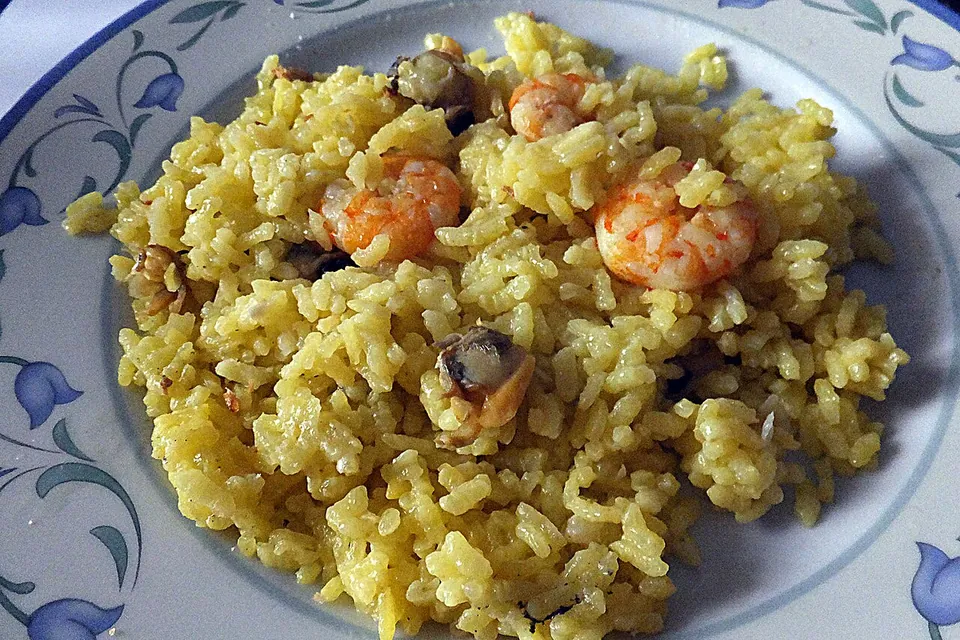
Paella is a Valencian one-pan dish in which rice is cooked in a shallow, wide pan made for the purpose.
The rice at its center is taken for granted today, but it was not originally a crop of the Iberian peninsula. The Moors, who ruled the peninsula from the eighth to the tenth century, brought rice cultivation and put down its roots here. The marshes around the Albufera lagoon in southern Valencia, rich in water, grew early into rice country. That old crop, established in this soil since the Middle Ages, still sits at the center of the dish.
To it, new ingredients were added from across the sea. Paprika (pimenton) and green beans, brought through trade with the New World, would in time become the color and the filling of paella. The old rice and the vegetables that reached Spain in the early modern period share a single pan in the paella of today.
The dish took its form in the Albufera paddies of the mid-nineteenth century. Between spells of fieldwork, farmhands cooked whatever was at hand - rice, snails, waterfowl, green beans - all at once in a flat pan set over a wood fire. Managing the heat to cook the rice evenly and to build a browned crust (socarrat) on the bottom of the pan is the knack that sets paella apart from other rice dishes. A plain lunch eaten out in the fields, paella would later rise in standing to a festive dish of the townsfolk and become a dish that stands for Valencia.
How we know
Two origin tales trail after paella.
One is a love story tied to the name. Paella, it says, is a corruption of "para ella" (for her), and the dish began with a suitor cooking for his sweetheart or bride-to-be. Because in Spain it is the custom for men to cook paella, the story fits oddly well and has been told for a long time. But the thread of the word points elsewhere. As the etymologist Joan Coromines traced, paella comes from the Latin patella, meaning "pan," by way of the Old French paelle, into the Catalan paella. Several dictionaries - the Oxford English Dictionary, the Online Etymology Dictionary, and others - point to this same path together. The name of the dish was, from the start, a word for a flat pan, not a word for "her." The romantic derivation is only a later invention born of a chance resemblance in sound.
The other tale runs deeper. It takes paella for a medieval Moorish Arab dish and places its origin in the Islamic period of the eighth to tenth centuries. It is true that the introduction of rice into Iberia and the use of saffron both go back to the age of the Moors. But that is the old layer of the broad genre of "dishes made with rice," not paella as a particular dish. The word paella as the name of a dish appears in writing only in the nineteenth century - according to the food historian Lynne Olver, a local newspaper first used the word for the dish rather than the pan in 1840 - and it enters English between 1879 and the 1890s. Moreover, the paprika and green beans that make its color and filling are ingredients that reached Spain from the New World and did not exist before the sixteenth century. An eighteenth-century Barcelona cookery manuscript (ms. 204) lists rice dishes such as "Arros magre," but the dish-name paella is not yet to be found. Counting from the age of the Moors leaves a gap of more than six centuries, and the stumble of this claim lies in mistaking the age of rice-growing for the making of the dish.
Set the two legends aside, and what remains is a plain fact. In the rice-growing country by the Albufera lagoon of southern Valencia, today's form came together as a paddy-field lunch in the mid-nineteenth century. A blunt etymology meaning "flat pan," and a starting point as a farmhand's one-pan meal - that is the true history of paella.
The full set of origin theories and the detailed verification log — traceable all the way to their sources — are available on the Japanese edition.
See the full origin theories and verification log (Japanese) →
Related dishes
Cross-links Sister dishes & same-name dishes (separate lineage)
Shares the key ingredient
- BiryaniSouth Asia (Deccan / Mughal)C
- DosaSouth India (Tamil Nadu / Karnataka)C
- Risotto alla milaneseMilan (Lombardy, Italy)C
- Nasi gorengIndonesia (Java)C
- JambalayaNew Orleans (Louisiana, USA)C
- MujaddaraLevant (Syria, Lebanon, Palestine)B
- DoriaYokohama, JapanB
- IdliSouth IndiaC
- MaqlubaPalestine / LevantC
- White mixed rice (hondonban / goldongban — Bibimbap precursor)Korean PeninsulaC
- MandiHadhramaut (Yemen)C
- Rice and native-grain upma layer (sada upma, pre-semolina)South IndiaC
- KiribathSri LankaD
- KabsaSaudi ArabiaC
- PlovUzbekistan (Samarkand / Fergana)C
- MachboosPersian Gulf (Bahrain / Kuwait)B
- Gallo pintoCosta Rica / NicaraguaC
- Dal bhatNepalB
- KoshariEgyptC
- PilauEast Africa (Swahili Coast)C
- Rice-and-lentil koshari base layer (pre-pasta, pre-tomato)EgyptC
- Bánh cuốnVietnamB
- MahshiEgyptB
- PolowIranC
- PulaoNorth IndiaC
- PilavAnatoliaC
- Kabuli palawAfghanistanC
- Pilaf (French)FranceC
- Pilaf (Japanese-style)JapanC
- TahdigIranC
- CasadoCosta RicaC
- Nan gyi thokeMyanmarC
- Mont diMyanmarC
- AranciniSicily (Italy)C
- Mazbi (madhbi)Yemen (Hadhramaut)C