All dishes / 西欧
Sangria Period BOrigin theory BVerified
Some fields (dish name, region and gates) are shown from the Japanese-edition data.
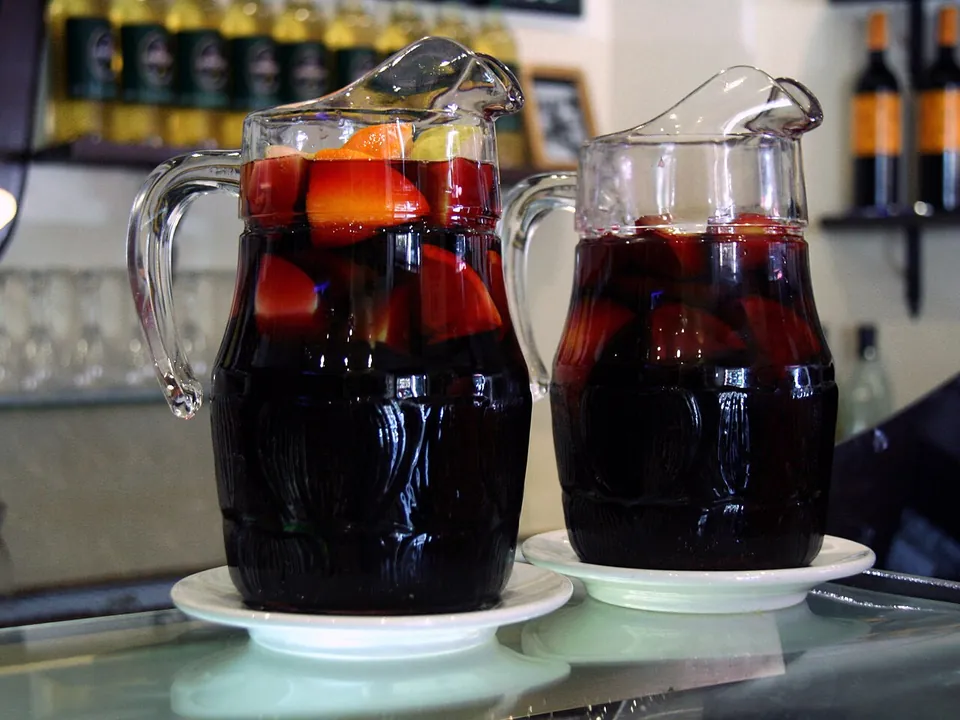
Sangria, sweet red wine steeped with fruit, is often taken as "a drinking tradition unbroken since ancient Rome." The record does not support that. Cutting wine with fruit is old, but the category we call sangria took shape only in modern times.
Verification highlight popular claim → verdict → evidence
The claim that sangria is a millennia-old Roman tradition is refuted. The established view is that it is a comparatively modern category: the name is recorded in 18th-century Spain, it was popularized in the US at the 1964 New York World's Fair, and it was legally defined by EU Regulation 251/2014. Key source: EU Regulation 251/2014.
The three gates
- Ingredient-supply gate
- Wine, citrus, and sugar were all established in Spain well before modern times; no tight ingredient constraint.
- Cooking-technique gate
- Steeping wine with fruit and sweeteners.
- Venue gate
- Southern European custom of diluting wine with water, later commercialized as a tourist-famous drink.
Overview
Sangria is a sweet wine punch: red wine with citrus such as orange, other fruit, and sugar. Its home is Spain, and it is now known around the world as a drink of tourist resorts.
Its ingredients had long been easy to obtain in Spain. Wine, citrus and sugar were all established before the early modern period, and nothing on the ingredient side pins the drink's date down hard. The habit of cutting wine with water and adding fruit or spice to drink it was itself old in southern Europe. So the story of how this drink came to be turns not on when the ingredients were available, but on when the particular category, sweet red wine punch steeped with fruit and citrus, took on its outline.
The word sangria as the name of a drink is recorded in eighteenth-century Spain, and in the nineteenth century it spread as a drink of high society and aristocratic parties. What carried it abroad was the 1964 New York World's Fair: served at the Spanish pavilion, sangria spread into the United States, and the English word is recorded from 1961.
More recently the category was given a legal outline as well. Regulation (EU) No 251/2014 restricted the name sangria to products made in Spain and Portugal and defined what it contains. The age of the older habits, watered wine and fruit steeping, is not denied, but the category we now call sangria is a comparatively recent frame that took shape in modern times.
How we know
A common belief holds sangria to be a drinking tradition thousands of years old, descending directly from the Romans mixing water into wine on the Iberian peninsula.
It is true that cutting wine with water, fruit or spice reaches back to antiquity. But that does not mean the particular drink sangria had taken shape in ancient times. The name and the frame of the category, a sweet red wine punch steeped with fruit and citrus, are far newer. No independent source establishes it as an unbroken tradition from antiquity. Here again, the age of a habit and the making of a particular drink are two different things; first attestation is not origin, and an old habit is not the making of a particular category.
The name sangria appears in eighteenth-century Spain and spread as a social drink in the nineteenth. The turn toward international fame came at the 1964 New York World's Fair, and the English word is recent too, recorded in 1961. Then Regulation (EU) No 251/2014 limited the name to products of Spain and Portugal and set its definition. The recorded name, the international spread, the legal definition, the events that shaped the category sangria, all line up in the modern era and after. Faithful to the record, it is better understood not as a tradition running unbroken from antiquity, but as a new category that took on its outline in modern times.
The full set of origin theories and the detailed verification log — traceable all the way to their sources — are available on the Japanese edition.
See the full origin theories and verification log (Japanese) →