All dishes / 東アジア
Thukpa Period BOrigin theory BVerified
Some fields (dish name, region and gates) are shown from the Japanese-edition data.
Thukpa, the warming noodle soup of the Tibetan and Nepali highlands. Yet the word behind it, thug, once meant not a noodle at all but a kind of porridge.
Verification highlight popular claim → verdict → evidence
The dish's history has two layers that are sometimes conflated. 'Thuk' originally meant a porridge-like dish, attested in the 8th-century Four Medical Tantras with barley and rice versions but no wheat noodles. The wheat-noodle version now called thukpa is believed to have reached Tibet from China via Mongolia and Qinghai along trade routes, becoming established around the late Ming to Qing period (17th century).
The three gates
- Ingredient-supply gate
- Wheat and meat were both locally available.
- Cooking-technique gate
- Hand-pulled noodles simmered in a soup.
- Venue gate
- A warm staple soup suited to high-altitude life.
Overview
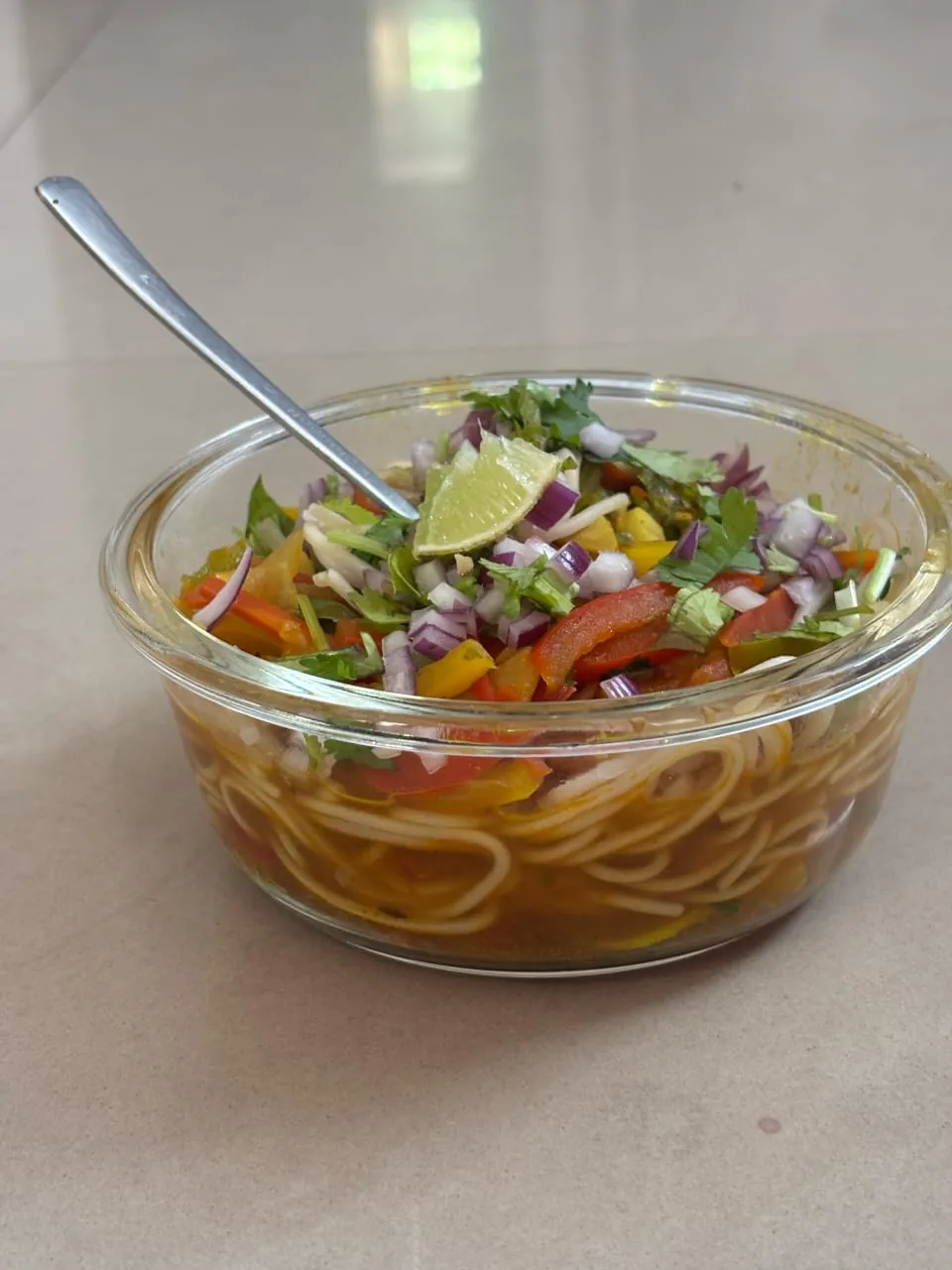
Thukpa is a hot noodle soup of the high country of Tibet and Nepal, made with hand-pulled wheat noodles cooked with meat and vegetables. In the cold of the highlands it took hold as a warming staple that filled the belly.
Wheat itself was long established here, and the meat and vegetables were local ingredients too. So when did thukpa emerge as a noodle dish? The clue lies in the craft of drawing wheat out into thin hand-pulled noodles and simmering them into a soup. That noodle craft reached Tibet around the late Ming and Qing periods in Chinese terms, roughly the seventeenth century. The noodles came from China, travelling the trade routes through Mongolia and Qinghai up into the highlands.
When they first arrived, noodles were not something everyone could eat. They were limited to the upper ranks who could hire a Chinese cook and the well-off who could buy dried noodles. Only later did noodles spread to the tables of ordinary Tibetans.
How we know
In Tibetan, one kind of noodle thukpa is called gyathuk (rgya-thug). The word means, quite literally, Chinese noodles: the prefix rgya points to China and to great foreign powers beyond (it is the same rgya found in rgya-nag for China and rgya-gar for India). The memory of a crossing from China is carried in the very word for the food.
The name thukpa itself descends from an older dish, thug, which originally meant a porridge. The Tibetan medical treatise the Four Tantras records a thug of green barley and a thug of rice. The whole genre of the warm staple soup, then, is quite old in this land. But reading the Four Tantras as the eighth-century work of the elder Yuthok is a matter of tradition; the text as it survives is the version revised and expanded in the twelfth century by the younger Yuthok Yonten Gonpo (1126-1202) (Dorje 2022; Frontiers in Pharmacology 2025). Its firm first appearance as a document reaches back to that twelfth century.
And the dietary chapter of that treatise lists rice, wheat, barley, oats, and beans, along with grain dishes such as barley porridge, but no wheat noodle appears among them. The hand-pulling craft that a noodle depends on had not yet reached the highlands. Ishige Naomichi's Cultural History of Noodles traces how the wheat-noodle thukpa came from China by way of Mongolia and Qinghai and took shape between the late Ming and the Qing. That reading is supported by a peer-reviewed study (Frontiers in Pharmacology 2025) that independently confirmed the absence of wheat noodles from the dietary chapter of the Four Tantras. The old porridge-like thug stands as the earlier layer from which today's noodle dish grew.
The age of the warm-soup genre and the making of the noodle dish as it now exists need to be kept apart. Even if the porridge thug reaches back to a twelfth-century document, the wheat-noodle thukpa appeared only after the Chinese craft of the noodle had travelled up into the highlands.
The full set of origin theories and the detailed verification log — traceable all the way to their sources — are available on the Japanese edition.
See the full origin theories and verification log (Japanese) →
Related dishes
Lineage Family, predecessor, variants
Shares the key ingredient
- Mie gorengIndonesiaC
- Tantanmen (Japanese dan dan noodles)JapanB
- JajangmyeonSouth KoreaC
- SaiminHawaii (USA)C
- PancitManila (Philippines)B