All dishes / 東南アジア
Pancit Period COrigin theory BVerified
Some fields (dish name, region and gates) are shown from the Japanese-edition data.
Pancit, the noodle dish indispensable to Filipino tables, carries two competing Hokkien etymologies for its name, neither yet settled. But the origin of the dish itself can be traced clearly to the Chinese quarter of colonial-era Manila.
Verification highlight popular claim → verdict → evidence
Noodle dishes brought by Hokkien Chinese traders and settlers took root in Manila's Chinese quarter under Spanish colonial rule, becoming the basis for pancit. The name is usually traced to a Hokkien term for a quick, convenient meal, though a rival theory instead derives it from a term for wonton.
The three gates
- Ingredient-supply gate
- Wheat noodles were brought by Hokkien Chinese traders and migrants (Sangley) and were reliably available in Manila's Chinese quarter (Binondo, from 1594)
- Cooking-technique gate
- Stir-fried noodles (Fujianese style)
- Venue gate
- Chinese immigrant community, later street and festival food
Overview
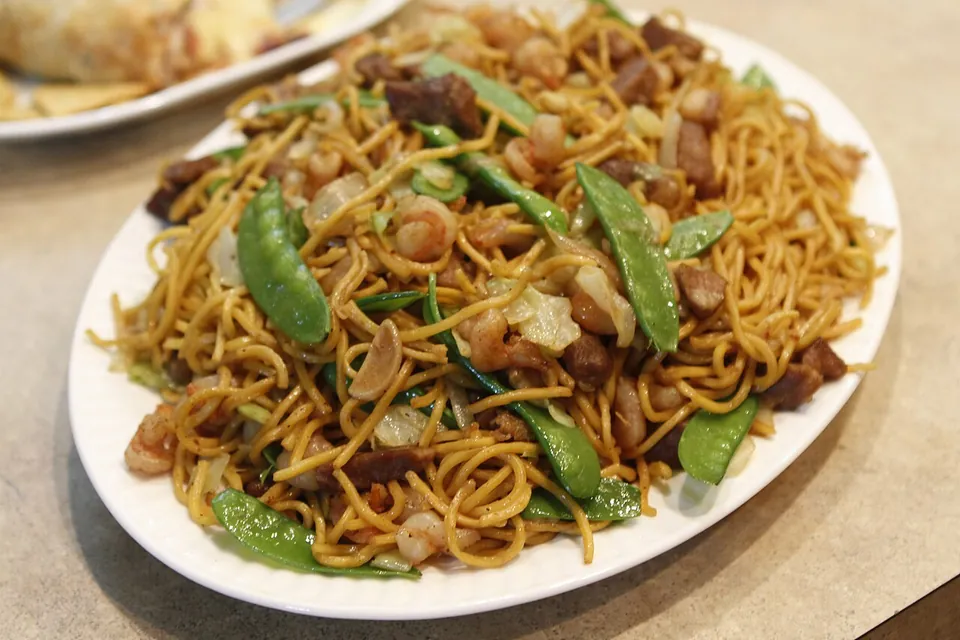
Pancit is the general term for stir-fried noodles eaten widely across the Philippines, at festivals and in everyday meals alike. The main ingredient is wheat noodles, seasoned with soy sauce and brightened at the table with a squeeze of calamansi (a small citrus). Both the stir-frying method and the noodle itself descend from the Hokkien (Minnan) noodle cooking of southern China.
The setting where this dish became Filipino was the Chinese quarter of colonial-era Manila, the Parian and later Binondo. Binondo's Chinese quarter was established in 1594. Hokkien Chinese merchants, then called Sangleys, brought Chinese wheat noodles to the city through trade and migration and rooted them there as a constantly available ingredient. The Hokkien technique of stir-frying noodles, joined to local seasonings such as soy sauce and calamansi, turned pancit into a local dish.
It was this transplanting of wheat noodles that let the dish take hold. Once noodles could be procured day to day in the Chinese quarter, stir-fried noodles spread from the immigrant community out to the streets and into festive occasions. The soy-sauce seasoning, the tang of calamansi, and the freedom of the fillings mark how Chinese noodle cooking settled into the Philippine setting.
How we know
The name pancit is often traced to the Hokkien pian i sit, meaning a quick or convenient food. Because the dish is easy to carry and fast to prepare, this is the most widely circulated etymology. But the Chinese characters are a later phonetic fitting, and how faithfully they capture the sound cannot be verified. A rival account that does not converge with it traces the name instead to the Hokkien bian sit (wonton or dumpling), holding that it was transferred from a word for a filled dumpling rather than a noodle, a view noted in English-language sources. Neither account fully displaces the other, and the source of the name remains unsettled.
The origin of the dish itself, by contrast, can be traced along a firmer line. That Chinese noodle food brought to Manila by Hokkien merchants became localized in the Chinese quarter is presented as the settled scholarly account by a study in the Journal of Ethnic Foods (Mercado & Andalecio, 2020). The clues are continuous: the founding of the Binondo Chinese quarter (1594); the record in an 1779 royal resolution of fifteen noodle makers and nine pancit makers; Jose Honorato Lozano's watercolor Chino Pansitero (c. 1847), a first-hand image of a Chinese pancit vendor in Manila held at the Biblioteca Nacional de Espana; and the description Jose Rizal wrote into El Filibusterismo (1891). Across the decades these mark the dish's presence. The 1779 record is an early instance of the dish appearing in documents, not the year of its birth, but it stands firm as a clue confirming the line of descent. The origin of the name remains open to debate, yet the dish's history is clear.
The full set of origin theories and the detailed verification log — traceable all the way to their sources — are available on the Japanese edition.
See the full origin theories and verification log (Japanese) →
Related dishes
Shares the key ingredient
- Mie gorengIndonesiaC
- Tantanmen (Japanese dan dan noodles)JapanB
- ThukpaTibet / NepalB
- JajangmyeonSouth KoreaC
- SaiminHawaii (USA)C