All dishes / 南アジア
Sel roti Period COrigin theory CVerified
Some fields (dish name, region and gates) are shown from the Japanese-edition data.
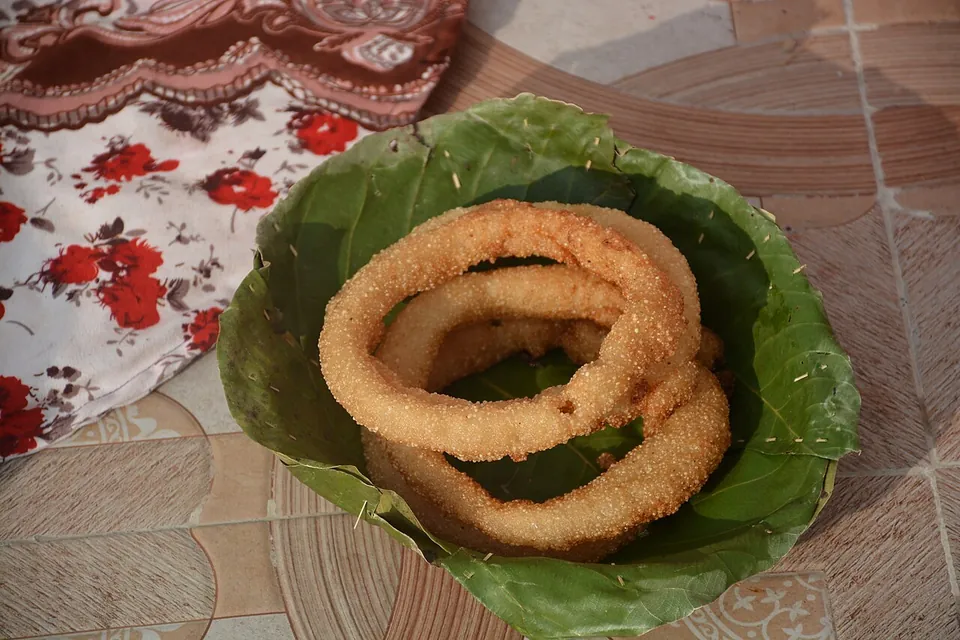
Sel roti is a Nepali festival treat: a fermented rice-flour batter piped into a ring and fried in hot oil. It is often said to be "more than eight hundred years old," yet nothing on record backs that age. What can be traced with confidence is its lineage as an indigenous fermented rice food.
Verification highlight popular claim → verdict → evidence
One widely repeated claim puts the dish's origin at over 800 years old, sometimes linked to the Swasthani Vrata Katha religious tradition. This does not hold up: the claim cites no source, and the main scholarly study of the Swasthani tradition contains no mention of sel roti at all. The earliest confirmed record of the word 'sel' (a round loaf/sweet) is an entry in a 1931 Nepali dictionary. Main sources: R. L. Turner's Comparative and Etymological Dictionary of the Nepali Language (1931) and Birkenholtz's 2018 study of the Swasthani tradition.
The three gates
- Ingredient-supply gate
- Rice has long been grown locally in the Himalayan region of Nepal
- Cooking-technique gate
- Fermented rice-flour batter piped into rings and deep-fried
- Venue gate
- A homemade festival sweet for Nepali celebrations such as Tihar and Dashain
Overview
Sel roti is made from rice flour blended with sugar and ghee (clarified butter). The batter is left to ferment on its own, then piped in a thin ring onto the surface of hot oil and fried until golden. Households prepare it for festivals such as Tihar and Dashain, and for weddings. Its main ingredient, rice, is a long-established crop of the Himalayan and Nepali highlands, on everyday tables from early on; sugar and ghee are likewise familiar staples of South Asian kitchens.
Food scientists are clear that these ingredients are homegrown. In a set of 2010 papers, Yonzan and Tamang classed sel roti as an indigenous ethnic fermented cereal food of the Nepalis. Letting the batter rest and ferment, then piping it into rings as it fries, is understood as a local craft handed down within the region rather than something imported.
What gives the treat its character is the fermentation of the batter and the skill of piping and frying it into a ring. Fermentation makes the batter rise, lending it a distinctive texture and flavour. Trickling a thin thread of batter onto hot oil to trace a clean circle takes practice, and the knack has passed from one home cook to the next. That these rings have been fried in kitchens at every festival is what makes sel roti a food of the people.
When it comes to when it first appeared, though, the picture blurs at once. Its standing as an indigenous fermented rice food is firm, but the sources that would pin down a precise date remain out of reach. No earliest year has been established for a Nepali or Newar text naming sel roti, and its emergence can only be sketched within a broad window from the early modern period onward.
How we know
Sel roti's origin is often traced to a claim that it has been made "for more than eight hundred years." The estimate is attributed to Dinesh Raj Panta of Nepal Sanskrit University.
But nothing supports that figure of eight hundred years. There is no contemporary record of such antiquity, no excavated find, no documented first mention, no independent corroboration of any kind. Even where Wikipedia repeats the claim, it does so without a source, and the number circulates on its own. That the genre of fermented rice food is itself old and rooted in the land is one thing; that a specific figure of eight hundred years is correct is quite another. The work of Yonzan and Tamang confirms the former, treating sel roti as an indigenous ethnic fermented food, while a precise dating of this kind has no ground beneath it. The age of the lineage has been pressed into service as proof of a particular number of years.
Apart from the dating, a few hypotheses about the treat's lineage also circulate. The food columnist Madhulika Dash suggests that a rice-flour pancake cooked on a griddle, called Babari, was the forerunner of sel roti, and that at first it was a plain thing made without sugar or spice. As for the name, one account derives it from a rice variety called sel, another from saal roti, a New Year (saal) ritual food. Both remain at the level of reporting and oral tradition, hypotheses without documentary backing.
What is left, then, is a sharp line between what can be verified and what cannot. That sel roti is an indigenous fermented rice food is supported by food science. But so long as the earliest record naming it has yet to surface, its emergence stays within a rough window from the early modern period onward. The claim of eight hundred years lies outside that window. Studies of Newar cuisine and books on Himalayan fermented foods may one day narrow the upper bound of a first attestation. Until then, the honest answer about this treat's age is that it is still unknown.
The full set of origin theories and the detailed verification log — traceable all the way to their sources — are available on the Japanese edition.
See the full origin theories and verification log (Japanese) →