All dishes / 東南アジア
Adobo (Filipino adobo) Period BOrigin theory CVerified
Some fields (dish name, region and gates) are shown from the Japanese-edition data.
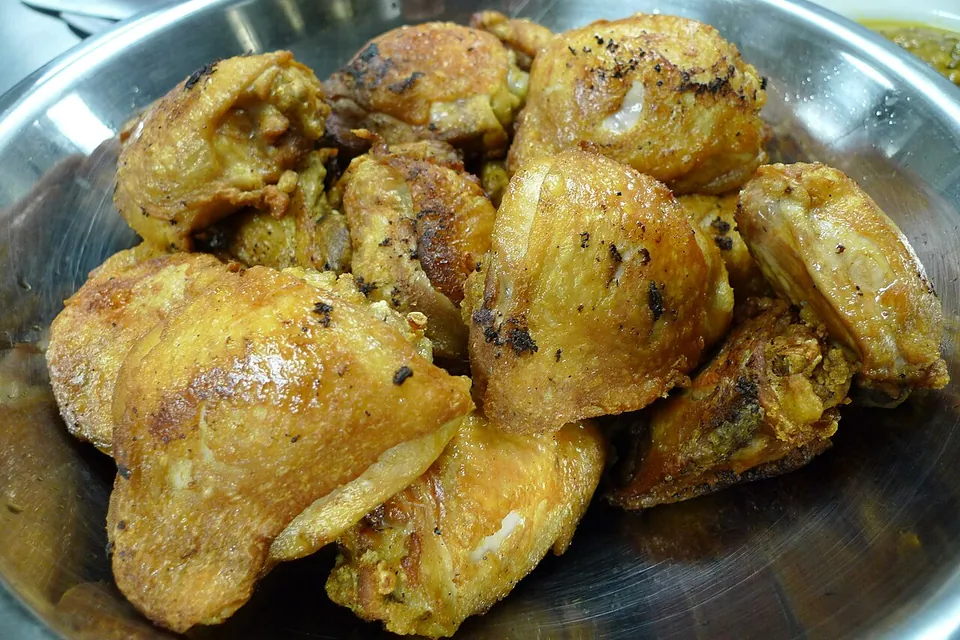
Adobo, the Filipino national dish, is slowly braised in vinegar. It bears a Spanish name meaning "to marinate," yet the cooking itself was a local craft that predates the arrival of the Spanish. The name came from the colony and the dish was raised by the native people—a single plate made of two layers.
Verification highlight popular claim → verdict → evidence
Myth: the explorer Antonio Pigafetta (1521) recorded 'adobo de los naturales'. Verdict: rejected — the phrase first appears in Pedro de San Buenaventura's 1613 Vocabulario de la lengua tagala, not in Pigafetta's 1521 account, a roughly century-long mix-up. The vinegar-cooking technique itself is genuinely pre-Hispanic; only the Spanish name 'adobo' was applied later. Key sources: Britannica; Felice Prudente Sta. Maria (2005); Vocabulario de la lengua tagala (1613, primary source).
The three gates
- Ingredient-supply gate
- Vinegar, garlic, and pepper-based stewing predate Spanish contact and are native. Soy sauce was added later through Chinese trade; no New World ingredient is limiting.
- Cooking-technique gate
- Vinegar-braised stewing, a preservation-friendly cooking method.
- Venue gate
- home / common people / everyday food / local
Overview
The name from Spain, the dish from the land
Adobo is a home-cooked dish of Luzon in the Philippines, in which chicken or pork is braised with vinegar, garlic, and pepper. The key to reading it is to separate two layers: the name and the cooking.
The cooking layer is complete with local materials alone. Vinegar made from coconut, sugarcane, nipa palm, or kaong palm was a local ingredient long present in the hot tropics of the Philippines. The practice of braising and preserving with that vinegar and salt had taken root early as a way to make food keep. Pepper and garlic were also close at hand. The soy sauce that lends color and savor was a much later addition: a recipe from 1913 still colored the dish with annatto rather than soy, the standard adobo that entered a textbook in 1922 had no soy either, and soy became fixed in the Manila style only in the late 1950s. In other words, the core of this dish did not come from outside, and its beginnings reach back before the Spanish made contact.
It is a dish that took root locally within tropical daily life, as a preserved food of ordinary households. It appears in written records only from the sixteenth and seventeenth centuries of the colonial period onward, but the cooking itself is older. The dish's certainty rests on the fact that its core—braising in local vinegar—is native to the land.
How we know
The "origin" of adobo is easy to misread if one confuses the name with the cooking. Because it carries a Spanish name, it can look at first glance to be of Spanish derivation. But the dish was verified in two separate layers.
Start with the name. Spanish settlers, seeing the local people braise food in vinegar, applied to it a word meaning "to pickle or marinate" in Spanish. The oldest written record is in a Tagalog vocabulary compiled in 1613 by Pedro de San Buenaventura, where the dish was first set down as "adobo de los naturales," the adobo of the natives. It is a primary source of its time, and that single phrase—"of the natives"—is the very wording in which the Spanish themselves recorded that this dish belonged to the native people.
Here lies one error that has spread too widely. Antonio Pigafetta, the chronicler who accompanied Magellan's expedition, is said in more than a few popular articles to have seen and written down "adobo de los naturales" during his arrival in 1521. But the first time this phrase appears in writing is the 1613 vocabulary, and the word adobo does not occur in Pigafetta's voyage account. It is a mix-up that overlays the voyage of 1521 with the first record of 1613, nearly a century apart. That vinegar braising existed from the pre-Spanish period is itself certain, but to say "Pigafetta wrote it down as adobo" confuses the age of the dish with the age of the name.
The cooking layer is far older than its name. Braising and preserving with vinegar and salt had taken root among the peoples of the Philippines before the Spanish arrived in 1521. A study tracing the history of Filipino food likewise records a group of vinegar-based preserved dishes as a craft long native to the land.
Lay the two layers together and the conclusion is plain. The name adobo is a borrowed word given in the colonial period, while braising in vinegar is a local craft from long before it. Read the origin from the name alone and, as with the confusion of 1521 and 1613, the language of the colony ends up hiding the native dish. Adobo is a fine example of a case where that trap is corrected by a single phrase from a primary source: "of the natives."
The full set of origin theories and the detailed verification log — traceable all the way to their sources — are available on the Japanese edition.
See the full origin theories and verification log (Japanese) →