All dishes / サブサハラ・アフリカ
Ndolé Period COrigin theory CVerified
Some fields (dish name, region and gates) are shown from the Japanese-edition data.
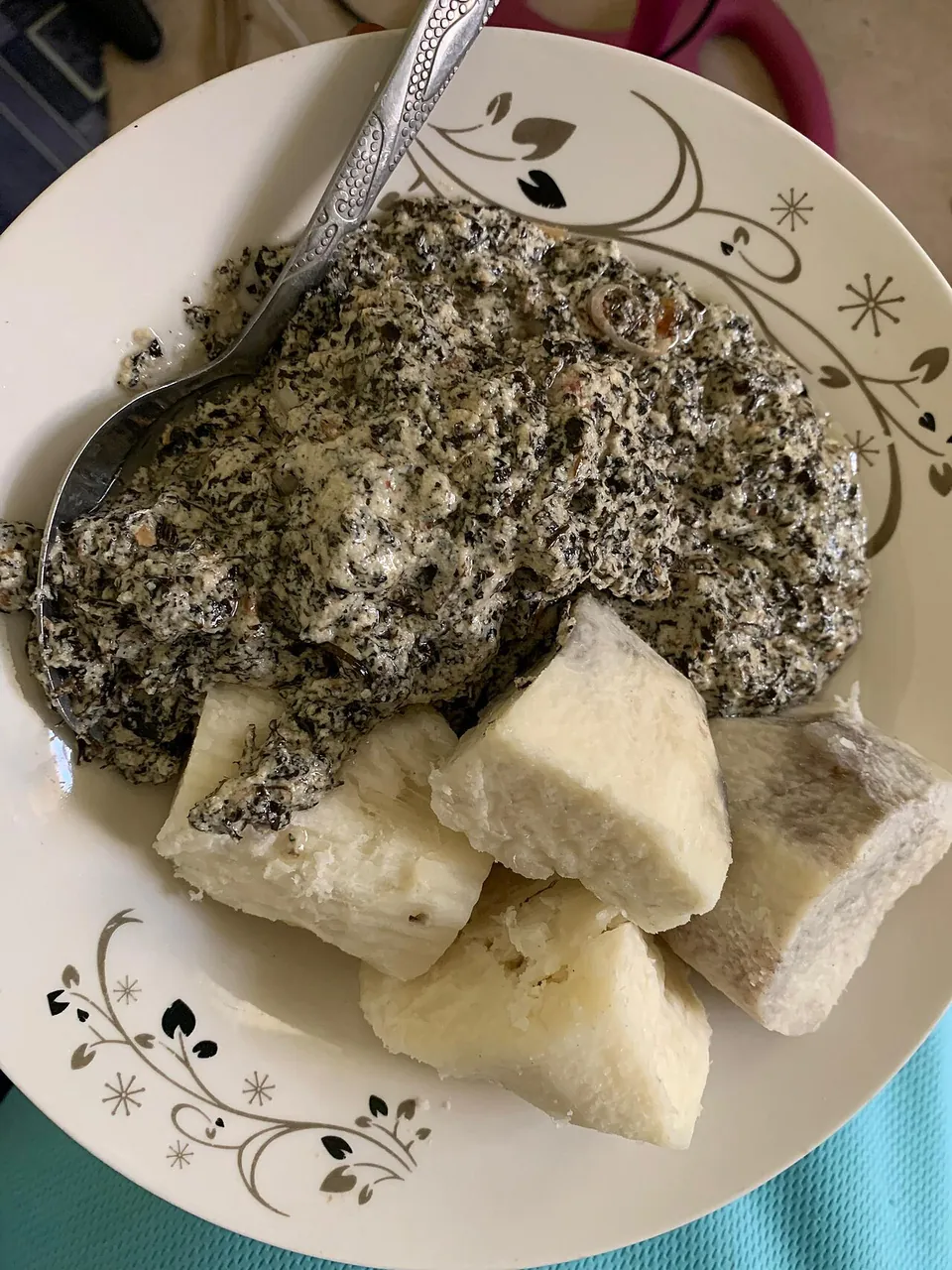
A stew of bitterleaf and groundnut paste that crowns the festive tables of coastal Cameroon. But the groundnut is a New World crop, and only after it crossed the ocean and took root in Central Africa did the dish settle into the form we know.
Verification highlight popular claim → verdict → evidence
A conflation sometimes treats today's peanut-based ndole as though it existed before peanuts reached the region. This is disproven for the current form: peanuts are a New World crop that only reached Central Africa via Atlantic trade around the 1650s, so the peanut-based dish cannot predate that; the bitter leaf itself, by contrast, is native and independently documented. Key source: a firsthand 1687 account by Cavazzi da Montecuccolo recording peanuts in Congo and Angola in the 1650s.
The three gates
- Ingredient-supply gate
- Bitter leaf is native; peanuts are a New World crop that reached West and Central Africa via the Atlantic trade, and their arrival is the candidate limiting factor.
- Cooking-technique gate
- Bitter leaves are parboiled and drained, then simmered in peanut paste.
- Venue gate
- A festive dish served at celebrations and weddings, established - and later made a national dish - in Cameroon, especially around Douala.
Overview
From the Douala table
Ndolé is a dish of the Douala people of Cameroon's coastal Littoral Region. Its star is bitterleaf (Vernonia amygdalina), a leaf vegetable whose strong bitterness marks it out. Native across West and Central Africa, it is a local plant grown in gardens throughout Cameroon, and it is still bitterleaf that shapes the outline of the dish.
The making goes like this. The gathered leaves are boiled and drained again and again to draw out the bitterness, then simmered thick with a paste of ground groundnuts. Beef, dried fish, and shrimp are folded in to build a rich plate. The labor of the repeated boiling and the paste-bound simmer sit at the heart of this dish's craft.
Ndolé was served at weddings, christenings, and other festive occasions. Passed around in a large dish as the celebratory food of a special day, it spread until it became one of the plates that stands for Cameroon at the national table.
The groundnuts (Arachis hypogaea) that give the bitterleaf its thickening body were not a crop that had always been here. Native to South America, the legume rode the currents of transatlantic trade and reached Central Africa between the sixteenth and seventeenth centuries. The missionary Cavazzi, writing of the Congo and Angola in the mid-seventeenth century, set down a record in which its settling can be glimpsed. Only once the groundnut had crossed the sea and taken root in Central Africa did today's ndolé take its shape.
How we know
Because simmering bitter leaves is such a plain kind of cooking, ndolé seems as though it has been handed down in its present form since the distant past. Groundnut thickening and all, an ancient Douala taste — so it is sometimes told.
But the groundnut is a South American crop. It was brought to Central Africa on the currents of transatlantic trade during the sixteenth and seventeenth centuries, and the missionary Cavazzi, writing of the Congo and Angola in the mid-seventeenth century, set down an early glimpse of its settling there. To tell today's groundnut ndolé as complete since antiquity is to fold together the age of the dish's genre and the present form, which came after the groundnut. Bitterleaf, noted in the plant-resources literature as a plant native to tropical Africa and a cultivated vegetable in Cameroon, is an old local green that sits at the base of the dish; the groundnut that binds it took its place in Cameroonian kitchens only later.
That the dish of simmered bitter leaves is itself old is not in doubt. A version thickened with native egusi (melon seeds) in place of groundnut is also known, and may keep a trace of an older layer. But the sources are still too thin to say for certain that it was the forerunner of the present groundnut version.
The line of this simmered leaf-vegetable dish has a sister across the Atlantic. Callaloo in the Caribbean shares a common origin with the leaf-vegetable stews of West and Central Africa, a plate carried to the New World with the people moved along the routes of the slave trade. The sources do not go so far as to say it branched directly from ndolé, but the two stand as equal sisters sharing a single source. What holds firm is that the ndolé of today — bitterness drawn from the leaves and bound together with groundnut — belongs to the time after that groundnut had made its home in Central Africa.
The full set of origin theories and the detailed verification log — traceable all the way to their sources — are available on the Japanese edition.
See the full origin theories and verification log (Japanese) →
Related dishes
Cross-links Sister dishes & same-name dishes (separate lineage)
Shares the key ingredient
- SuyaNigeria (Hausa)C
- SatayJava (Indonesia)C
- Gado-gadoJava (Indonesia)C
- Muamba nsusuRepublic of the Congo (Central Africa)B
- MaafeSenegalC