All dishes / サブサハラ・アフリカ
Tibs Period BOrigin theory BVerified
Some fields (dish name, region and gates) are shown from the Japanese-edition data.
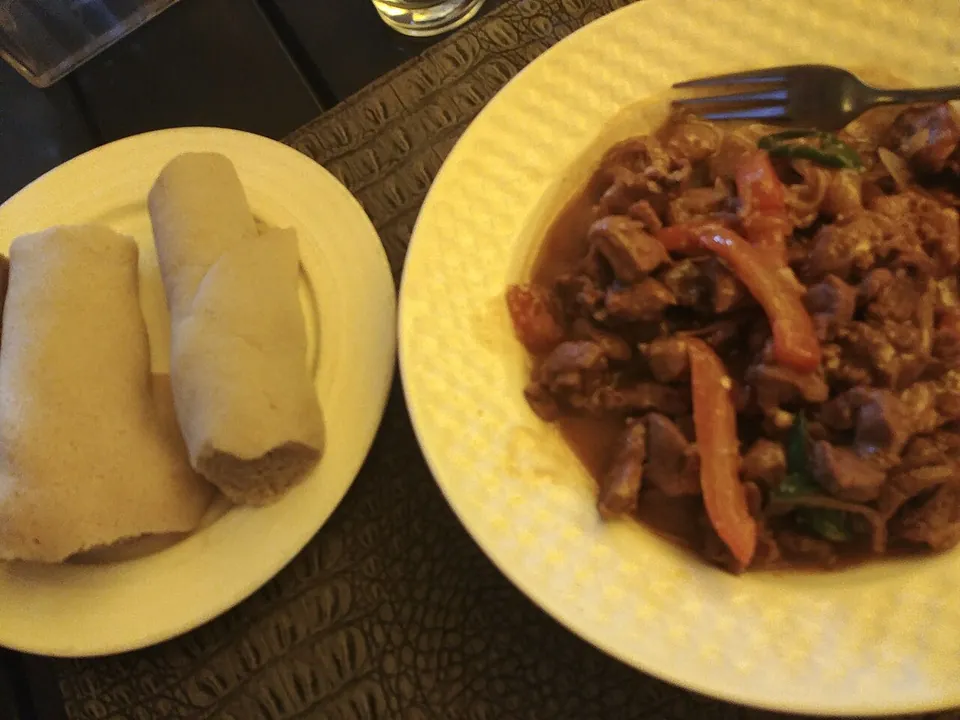
Tibs, the sautéed cubed meat of the Ethiopian highlands, is best known today in its fiery, chili-spiced form. Yet its core is older and plainer: a roast of local livestock finished in spiced clarified butter.
Verification highlight popular claim → verdict → evidence
Tibs, from the Amharic for frying, is cubed beef, mutton or goat seared in spiced butter, and both the animals and the technique are long established in the northern Ethiopian highlands, where mixed herds of cattle, sheep and goats were the mainstay of highland farming well before the Aksumite kingdom. The eighteenth-century traveller Remedius Prutky recorded roast meat served as a mark of respect. The berbere that makes today's tibs hot is another matter: chilli came from the Americas, reaching Ethiopia somewhere between 1520 and 1770, and James Bruce, who travelled in Abyssinia from 1768 to 1773, records capsicum in use. Since the chilli seasons the dish rather than defining it, the plainer tibs of salt and spiced butter comes first.
The three gates
- Ingredient-supply gate
- Cattle, sheep and goats have long been kept in the highlands, and tibs made with nothing but salt and niter kibbeh is not tied to anything later. The chilli in berbere came from the Americas and reached the Ethiopian highlands around 1600 (range 1520-1770; Tewolde Berhan Gebre Egziabher, 1984); that arrival sets the earliest possible date for the hot version alone.
- Cooking-technique gate
- Cubes of meat seared and sautéed over high heat.
- Venue gate
- Served at celebrations and to honoured guests, in homes and in eating houses alike.
Overview
Tibs is a highland Ethiopian dish of beef, mutton, or goat cut into cubes and sautéed over high heat in niter kibbeh, a clarified butter infused with spices. The name comes from the Amharic word for frying or searing, so that the plain act of cooking gave the dish its name.
The ingredients behind this dish were long at home on the land. Across the northern Ethiopian highlands, herders kept cattle, sheep, and goats together from the pre-Aksumite period onward, and both the cubed meat and the clarified butter were part of everyday life. This was a dish made from local animals and their dairy.
Cooking the meat quickly over high heat has long belonged to feasts and to the welcoming of guests. Rather than stewing a large joint, cooks seared cut pieces until they browned and served them as a mark of respect. Remedius Prutky, a Bohemian missionary who travelled the region in the eighteenth century, recorded being honored with meat cooked this way.
The red heat that defines tibs today, the flavor of berbere, a blend built around chili, belongs to a later layer. Chili is a New World crop, and it reached Ethiopia only between the sixteenth and eighteenth centuries. Before then, tibs was a roast without heat, finished with salt and the fragrance of niter kibbeh.
How we know
The tibs most people know is red and hot with berbere, and it is easy to assume the dish itself was born together with chili. But chili is a New World crop, and it came to the Ethiopian highlands only between the sixteenth and eighteenth centuries. The account of Francisco Álvares, who walked the region in the early sixteenth century, still says nothing of chili; cultivation began around the time of Pedro Páez at the century's end, and it was James Bruce in the eighteenth century who finally set the pepper down in writing. Wide cultivation took hold only in the nineteenth century. So the hot tibs, and the derek tibs made with green chili, can only come after that arrival.
The older layer of tibs, however, runs deeper. Its core, cubed local livestock seared in clarified butter, already existed within the herding and dairy of the pre-Aksumite highlands. The economic historian Richard Pankhurst likewise recorded that a cuisine of meat and spiced butter existed before chili arrived. As a roast finished with nothing but salt and niter kibbeh, tibs was served at highland tables from early times.
Here lies the difference from a dish for which heat is the defining element. In shiro, split pulses simmered with berbere, the flavor of chili is what makes the dish. For tibs, chili is a later, optional flavor rather than an essential ingredient. The hot version is a newer face from the sixteenth century onward, but tibs itself, cubed meat seared in clarified butter, has been passed down as an old roast rooted in local animals and dairy.
The full set of origin theories and the detailed verification log — traceable all the way to their sources — are available on the Japanese edition.
See the full origin theories and verification log (Japanese) →
Related dishes
Shares the key ingredient
- PhoVietnamC
- Beef StroganoffRussiaC
- Chicago Italian beefChicago (USA)C
- Salt beef (the layer before canning)Ireland (Cork / Dublin)C
- AsadoRío de la Plata (Argentina / Uruguay)C
- Lomo saltadoLima (Peru)C
- BulgogiKorean Peninsula (South Korea)B
- ĆevapčićiBalkans (Serbia, etc.)C
- Proto-bulgogi (native grilled-meat proto-layer)Korean PeninsulaC
- Proto-goulash (pre-paprika herdsmen's meat stew proto-layer)HungaryC
- KharchoGeorgia (Caucasus)B
- Proto-rendang (pre-chili merendang proto-layer)West Sumatra (Minangkabau), IndonesiaC
- Nyama chomaEast Africa (Kenya, Tanzania)C
- Philly cheesesteakPhiladelphia (USA)B
- Pastel de chocloChileC
- NihariNorth India (Delhi / Awadh)C
- NikujagaJapanC
- Australian meat pieAustraliaC
- FajitasRio Grande Valley, Texas (USA)B
- Loco mocoHilo, Hawaii (USA)B
- KitfoGurage (Ethiopia)C
- Ropa viejaCubaC
- MachacaNorthern Mexico (Sonora / Sinaloa)C
- Ropa vieja (Iberian prototype)Canary Islands, SpainB
- BiltongSouth AfricaC
- Lok lakPhnom Penh (Cambodia)C
- Carne asadaNorthern Mexico (Sonora)C
- Hamburg steakHamburg (Germany)B
- Bò lúc lắc (Vietnamese shaking beef)Southern VietnamC
- Montreal-style smoked meatQuebec (Canada)D
- Kare-karePhilippinesC
- PastramiNew York (USA)D
- BraaiSouth AfricaC
- French dip sandwichLos Angeles, California (USA)C