All dishes / 中東・北アフリカ
Shawarma Period BOrigin theory BVerified
Some fields (dish name, region and gates) are shown from the Japanese-edition data.
Shawarma is a Levantine roast-meat dish in which the meat is stacked on a vertical spit, turned as it cooks, and shaved from the surface to serve. Trace its history and the widely told tale that a Bursa butcher named İskender invented it turns out to lack primary-source support; what can be said with confidence is only that the Ottoman vertical spit took root in the Levant.
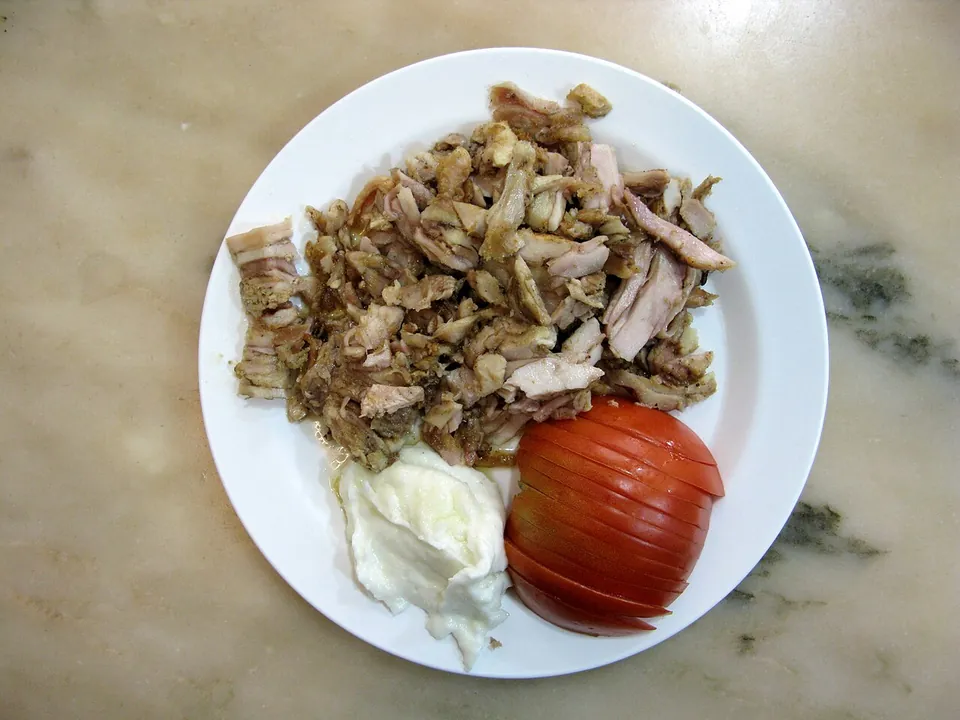
Verification highlight popular claim → verdict → evidence
A widely told story credits a single Turkish butcher, Iskender Efendi of Bursa, with inventing the vertical rotisserie around 1867. This is disproven by a photograph taken in Istanbul in 1855 that already shows an established vertical-rotisserie stall staffed by a master and apprentice - years before that invention date - and shawarma is better understood as a Levantine adoption of the Ottoman vertical doner technique that spread in the 19th century. Key source: an 1895 Egyptian Arabic dictionary (Spiro) recording the word šawirma, and the 1855 Robertson photograph.
The three gates
- Ingredient-supply gate
- Lamb, chicken, and beef were all locally available; what limited the dish was cooking technology - the vertical rotisserie (vertical grill).
- Cooking-technique gate
- A vertical rotisserie that stacks sliced meat on a rotating spit and shaves the surface as it cooks (the vertical doner technique spread from Anatolia to the Levant in the late 19th century).
- Venue gate
- Street food sold at shops - everyday urban food for ordinary people.
Overview
Shawarma came into its present form in the late nineteenth century across the Levant—Syria, Lebanon, Jordan. The Arabic name shawarma derives from the Turkish çevirme, meaning "turning," and it appears as šāwirma in Spiro's colloquial Arabic vocabulary of Egypt, compiled in 1895. That entry is one of the footholds telling us the dish was present in the streets within the nineteenth century.
What shapes this dish is a piece of equipment: the vertical rotating roaster. Lamb, chicken, and beef are ingredients long present in the Levant, but the way of stacking thinly sliced meat, turning it on a vertical axis, and shaving off the cooked face layer by layer takes form only with this vertical roaster. The device developed as the vertical döner of Anatolia in the nineteenth-century Ottoman Empire, and it passed to the Levant, settling there under a local name and with local meats. Until the vertical spit reached this ground, the Levantine shawarma had no way of taking shape.
Its setting is urban street food. Roasting a large mass of meat on the vertical roaster and shaving it off to order, wrapped in flatbread and handed over quickly, fits neatly the setting of ordinary street eating. Levantine shawarma arose at the point where an Ottoman-derived spit technique met the setting of the urban shop. From the same Ottoman vertical spit came döner kebab in Anatolia and gyro in Greece; shawarma is one of these siblings.
How we know
In telling shawarma's origin, the name of İskender, a Turkish butcher of Bursa, is often invoked. The tale that he devised the vertical rotating spit in the mid-nineteenth century is widely circulated. But an old photograph leaves a tear in the story.
A single image taken by the photographer James Robertson in Istanbul in 1855 already shows a street stall roasting meat stacked on a vertical spit, a master and an apprentice standing side by side. Held to be the oldest surviving image of the vertical döner, it tells us the vertical spit had taken root as a commercial trade in the streets by 1855 at the latest. The year İskender is said to have invented it ranges across accounts from the 1850s to 1867 and settles on no single date; either way, the technique had already spread across too many cities to be credited to one butcher's hand. The tale that pins the invention on a single man is set, in this way, on the side of an invented origin story.
What remains once the personal credit collapses is the history of the technique. The method of stacking thinly sliced meat on a vertical spit and roasting it as it turns came together as döner kebab in the nineteenth-century Ottoman Empire, passed to Syria, Lebanon, and Jordan, and was called shawarma, a name derived from the Turkish çevirme ("turning"). This line holds firm because several independent sources gather onto the same mid-to-late-nineteenth-century window. Robertson's 1855 photograph as an image, the word šāwirma recorded in Spiro's Arabic vocabulary of 1895, and Priscilla Mary Işın's study of Ottoman cuisine noting that the vertical roaster was introduced by the mid-nineteenth century—each points at the same era from a different angle. Greek gyro is a sibling born of the same technique.
Who first thought of it is not settled. The exact year the technique spread from the Ottoman core to the various parts of the Levant can be given, in the sources, only within the span of the late nineteenth century. The genre of rotating roast meat itself is older still if one reaches back to the horizontal spit. Even so, the Levantine shawarma came into its present form only after the vertical spit had passed to this ground and taken its place at the storefront.
The full set of origin theories and the detailed verification log — traceable all the way to their sources — are available on the Japanese edition.
See the full origin theories and verification log (Japanese) →