All dishes / 西欧
Tiramisu Period BOrigin theory CVerified
Some fields (dish name, region and gates) are shown from the Japanese-edition data.
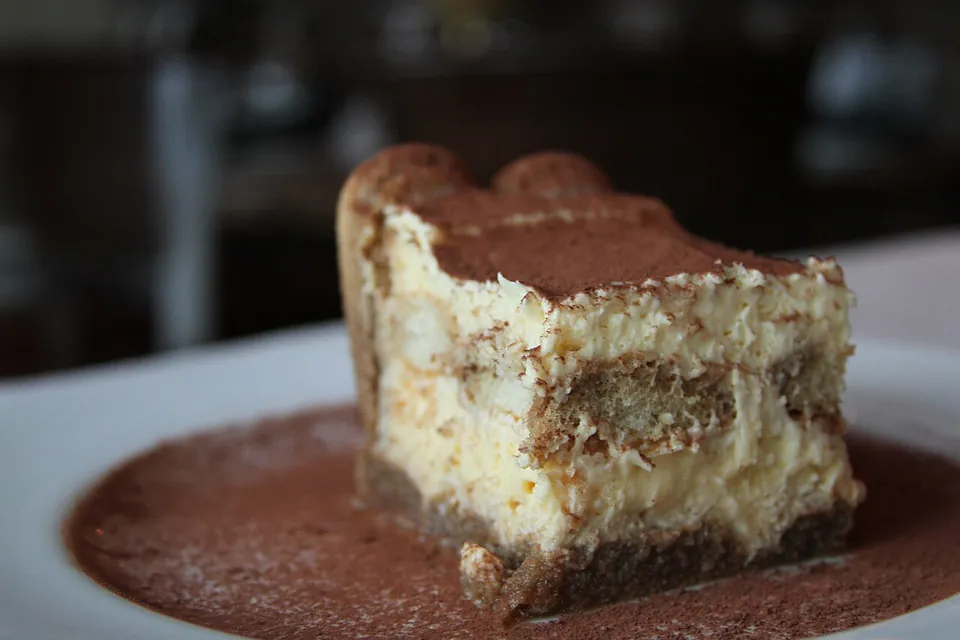
Tiramisu is not an "old traditional sweet of uncertain age." This cold dessert of espresso and mascarpone layered together took shape in the town of Treviso in northern Italy, roughly between the 1960s and the 1980s. And which shop made it first is still disputed today.
Verification highlight popular claim → verdict → evidence
Myth: tiramisu is an age-old tradition, or Friuli was clearly first. Verdict: the word 'tiramisu' only enters dictionaries in 1980 (Italian) and 1982 (English), and no pre-1960s cookbook records the recipe. The best-documented origin is Le Beccherie in Treviso (Alba di Pillo Campeol and Roberto Linguanotto, 1969-72), historically dated by food historian Giuseppe Maffioli in 1981. Friuli's rival claims (Pieris 1938, Tolmezzo 1950s) rest on oral tradition and later recollection rather than contemporary sources, so the dispute remains open rather than settled.
The three gates
- Ingredient-supply gate
- Milk, eggs, and sugar are native. Coffee (espresso) is an Old World crop whose availability depends on the local spread of Italy's espresso culture; cocoa is New World-derived but had already arrived through trade. The limiting factor is not the first arrival of any foreign ingredient but the general availability of espresso.
- Cooking-technique gate
- An unbaked layered dolce: ladyfingers soaked in espresso, layered with a mascarpone-and-egg cream, and set by chilling. This depends on the spread of refrigeration.
- Venue gate
- restaurant / citizens / commercial / local
Overview
Tiramisu is said to have been created in Treviso, in the Veneto region of northern Italy, sometime between about 1960 and 1990. That it is a new sweet of the later 20th century is well supported by the record; but when it comes to the question of which shop made it first, several accounts still stand side by side.
What gave rise to this dessert was the postwar life built around coffee. Milk, eggs, and sugar were all long-familiar ingredients, and so were the two other stars, mascarpone and the finger biscuits called savoiardi. What changed was that espresso became something pulled and drunk every day, widely. Soaking biscuits in strong espresso and layering them with mascarpone cream became possible only once espresso had settled into daily life and refrigeration had reached ordinary homes, in the northern Italy of the postwar years.
The conditions for an uncooked, cold layered sweet came together in the second half of the 20th century. Its setting is modern too: it arose not from household lore but from the commercial world of restaurants and pastry shops, and spread from there into homes and across borders.
How we know
The origin of tiramisu is not a "tradition invented after the fact" like the Margherita of Naples. If anything the opposite: its past is so recent that two regions are matching documentary records to contest which came first, in a dispute still under way.
The leading account traces it to a shop in Treviso. The owner's wife and a pastry chef are said to have devised it around 1969 to 1972, its distinctive feature being the use of egg yolks alone. What strengthens this account is that two separate threads meet in the same window of years. One is the word. "Tiramisù" first enters the dictionaries in Italian in 1980 and in English in 1982, and its root goes back to the Treviso-area dialect tireme su ("lift me up, pick me up"). The other is a written record. Giuseppe Maffioli, a local food historian, tied the sweet to Le Beccherie in Treviso and to the late 1960s and early 1970s in the spring 1981 issue of the magazine Vin Veneto, and set it down again in his book La cucina trevigiana (1983). As the account of a food historian who was close to the events in time, rather than a shop's own claim, this carries weight. In 2010 the Italian Academy of Cuisine registered the shop's recipe as the authentic Treviso version.
Contesting priority is the account that places its origin in neighboring Friuli-Venezia Giulia. One version has it made at a hotel in Tolmezzo in the early 1950s; a still earlier version holds that a half-frozen tiremesù was served from 1938 at a shop in Pieris. This form differs from the Treviso version in that the egg whites, too, are whipped and folded in. In 2017 it was registered as a traditional food of Friuli-Venezia Giulia, competing with the Treviso version for precedence.
The two accounts, however, do not carry equal weight. What supports the Friuli claim is mostly word of mouth and later recollection; no cookbook before the 1960s shows a recipe for tiramisu, and the word appears in dictionaries only in 1980. The 2017 traditional-food registration, too, is an administrative recognition of tradition, not a period source proving existence in 1938. Yet because it stands as a competing account, the question of which came first remains unsettled. Egg yolks alone or egg whites folded in, Treviso or Friuli: this difference suggests that separate lines of recipe may have grown up in parallel in different places. Tiramisu is closer to the surviving evidence when read as a young sweet whose origin several places claim, records in hand, than as something that can be pinned to a single inventor.
The full set of origin theories and the detailed verification log — traceable all the way to their sources — are available on the Japanese edition.
See the full origin theories and verification log (Japanese) →