All dishes / 東欧
Sarma Period COrigin theory CVerified
Some fields (dish name, region and gates) are shown from the Japanese-edition data.
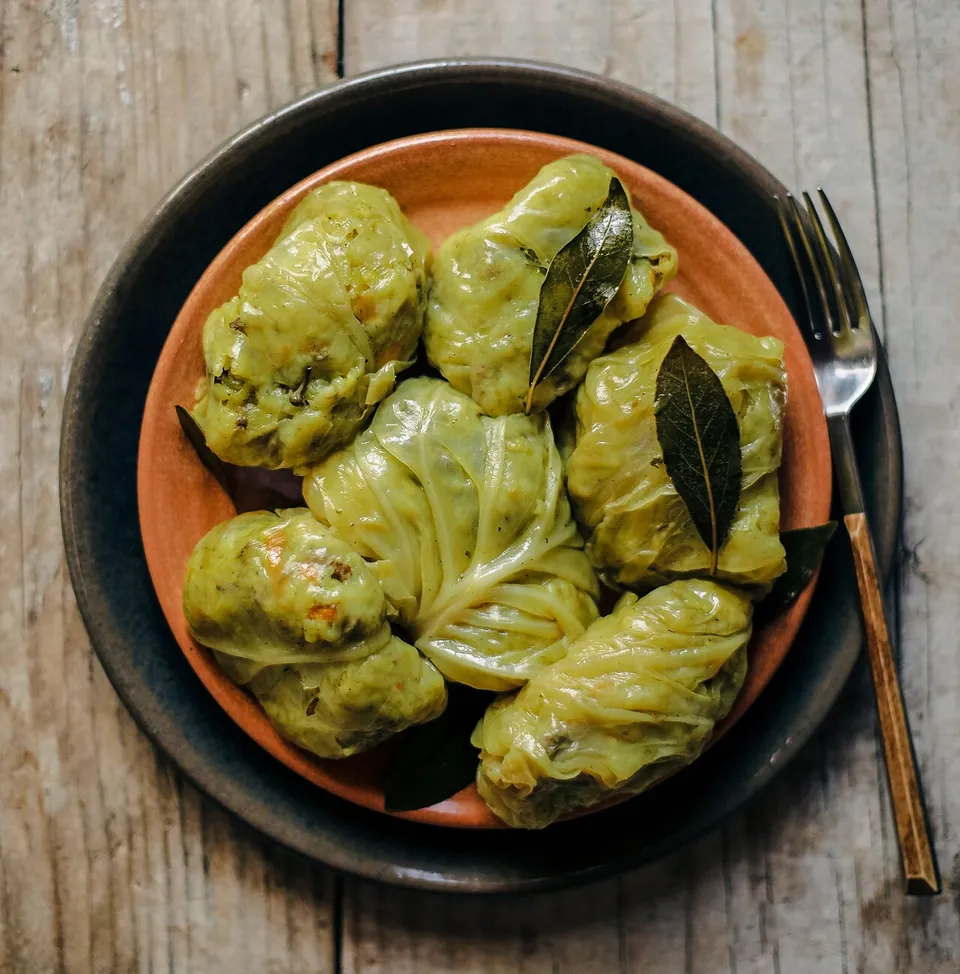
Sarma is a Balkan home and holiday dish of rice and minced meat rolled in vine or cabbage leaves and simmered slowly. It took its lasting shape within Ottoman cooking, and the winter cabbage-leaf version, born where fresh vine leaves ran out in the cold months, became the ancestor of the cabbage rolls of Eastern Europe.
Verification highlight popular claim → verdict → evidence
Sarma was codified in Ottoman court cuisine and spread across Anatolia, the Balkans, and the Levant from the 15th century on, with the earliest hard documentary record from 1553/55. Wrapping food in leaves is older still — ancient Greek and Byzantine sources describe fig-leaf-wrapped dishes (thria) centuries earlier — but no source bridges the roughly 1,900-year gap between that practice and Ottoman sarma, and it used fig leaves rather than grape or cabbage leaves, so it stands as a technique precedent, not a direct ancestor.
The three gates
- Ingredient-supply gate
- Cabbage and grape leaves were both native to the region (cabbage, the limiting ingredient, was locally available). Fillings are wrapped in fermented (sour) cabbage leaves or grape leaves.
- Cooking-technique gate
- Filling is rolled in leaves and simmered; includes the technique of fermenting cabbage.
- Venue gate
- From Ottoman court kitchens to home cooking; a festive dish across the Balkans.
Overview
A rolled-leaf dish finds its form in Ottoman cooking
Sarma is rice and minced meat wrapped in leaves and simmered. Its name comes from the Turkish verb for "to wrap." The wrapping is either a grape leaf or a cabbage leaf soured by fermentation, and across the Balkans the dish has long belonged to both the everyday table and the festive spread.
Cabbage, the main ingredient, and the vine leaves used to wrap it were both long-established in this land, on local tables from early on. Once the handwork of rolling filling in a leaf and the craft of souring cabbage were in place, the dish could be made. Ottoman cooking drew these elements together and settled them into a single dish with a recognizable form. In sixteenth-century Istanbul, fresh grape leaves for sarma were sold in the markets, and the dish was eaten day to day alongside dolma.
The choice of leaf follows the seasons. Grape leaves are gone in winter, and in that season the cabbage leaf took their place. Cabbage sarma was being sold in Istanbul by the seventeenth century and appeared on the banquet menus of the wealthy. This winter cabbage roll is what later connected to the cabbage-roll dishes of Eastern Europe, such as golubtsi and gołąbki.
How we know
The history of sarma is best told in two layers.
What is firm is that its present form settled within Ottoman cooking. In the mid-sixteenth century, Hans Dernschwam, who stayed in Istanbul, wrote in his travel diary that dolma and sarma were everyday fare and that fresh grape leaves for sarma were sold about the city. This is the earliest written record of the dish. Cabbage-leaf sarma was on sale in Istanbul by 1640 and stood on the banquet menus of the wealthy by 1660. Dogan and colleagues, whose ethnobotanical study (2015) gathered these sources, see sarma as a festive dish codified over the Ottoman period. The same work supports the thread by which the winter substitution of cabbage for absent grape leaves carried over into the cabbage rolls of Eastern Europe.
At the same time, the handwork of wrapping food in leaves is far older than the Ottomans. Ancient Greece had thrion, a dish of filling wrapped in fig leaves and cooked; it appears in Aristophanes' Acharnians (425 BC) and is noted later by Athenaeus. The antiquity of cooking in wrapped leaves is not in doubt. Yet some nineteen centuries separate thrion from sarma as it is made now, and nothing has turned up to bridge them. Dogan and colleagues, too, begin their documentary account in the sixteenth-century Ottoman period. The ancient wrapped leaf is a forerunner of the technique, but not a direct ancestor of the dish we eat today.
The full set of origin theories and the detailed verification log — traceable all the way to their sources — are available on the Japanese edition.
See the full origin theories and verification log (Japanese) →
Related dishes
Cross-links Sister dishes & same-name dishes (separate lineage)
- Sister dish (shared ancestor)KåldolmarSwedenC
- Sister dish (shared ancestor)HolubtsiUkraineC
- Sister dish (shared ancestor)Gołąbki (Polish cabbage rolls)PolandC