All dishes / ラテンアメリカ
Baleada Period BOrigin theory BVerified
Some fields (dish name, region and gates) are shown from the Japanese-edition data.
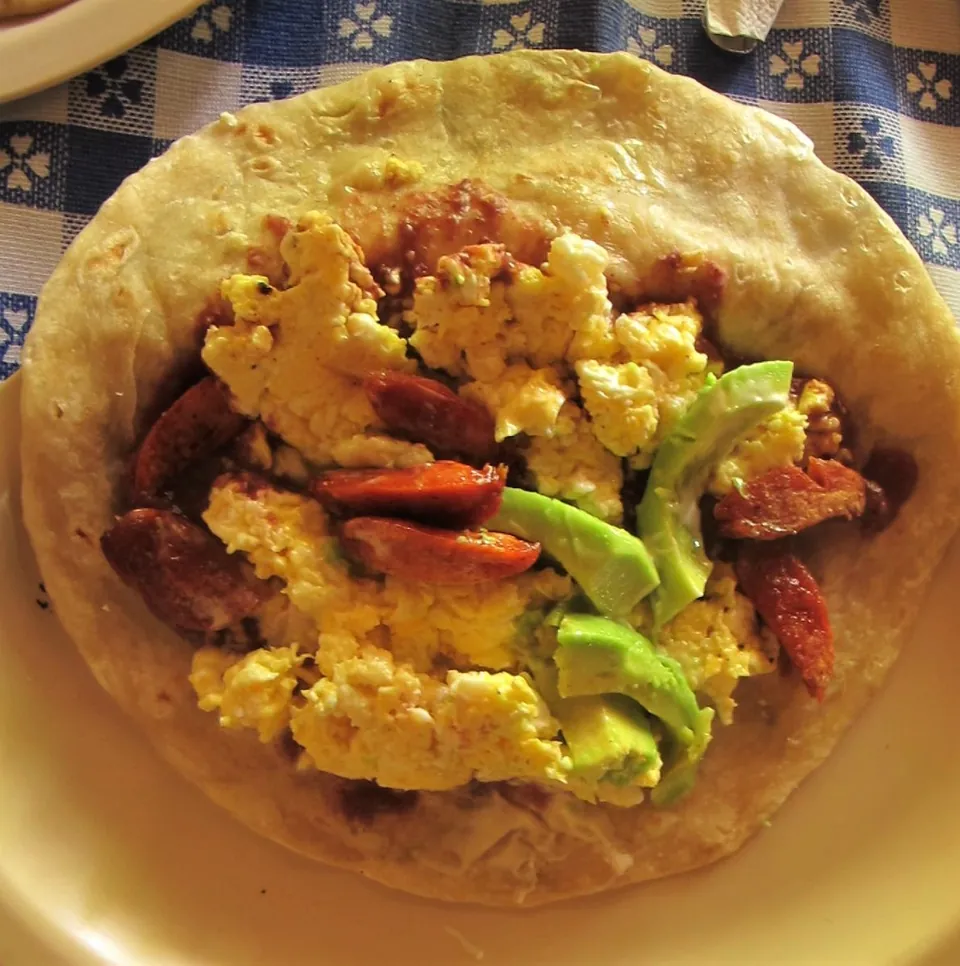
The baleada is a humble Honduran snack: a wheat-flour tortilla spread with beans and folded shut. Yet its name comes from bala, the Spanish word for bullet. It was born on the north coast, in a port town that boomed on the banana trade, as food for migrants and laborers.
Verification highlight popular claim → verdict → evidence
A folk story claims the dish is named for a street vendor who was shot ('baleada' means 'a woman who was shot'), but the tale's setting shifts between tellings and no contemporary record supports it — a later folk etymology. The name more plausibly comes from the beans resembling bullets (bala), as explained by Teresa de Jesús Montiño ('Doña Tere'), who began selling baleadas in La Ceiba in 1964.
The three gates
- Ingredient-supply gate
- Requires a wheat-tortilla tradition established on the north coast.
- Cooking-technique gate
- A wheat tortilla is grilled, spread with beans, and folded around fillings.
- Venue gate
- Street food for workers on Honduras's north coast.
Overview
A baleada is a Honduran snack of a wheat-flour tortilla spread with mashed red beans, topped with crema and cheese, and folded over. It stands out among Central American dishes for using wheat rather than the corn tortilla that dominates the region.
Its home is La Ceiba, a port town on the north coast. Through the twentieth century this stretch of coast thrived on the banana trade, led by companies such as Standard Fruit, and drew foreigners, migrants, and hired laborers. Many of the cooks the companies brought in for their executives came from India and Pakistan, and the unleavened flatbreads they baked, chapati and naan, eventually passed to local people. Butter gave way to margarine, water to milk or coconut milk, and the bread took root as the wheat-flour tortilla. This is the account of the Honduran historian Julio Cesar Zepeda: in a land where corn is the staple, the baleada wears wheat because it came down this path of migration and labor.
It spread as a street snack, and by the 1950s it was widely eaten. It was everyday food in the port town, something to fill the stomach quickly between shifts of work.
How we know
The name baleada echoes a grim Spanish word, one that means shot with a bullet. Why a folded bean snack should carry such a name has been explained in several ways.
The most widely accepted explanation is a simple comparison: the wrapped beans resemble bullets (bala). Some tellers push the image further, casting the whole dish as ammunition: the beans are the bullets, the cheese the gunpowder, the tortilla the cartridge case.
There are also stories about people. The most enduring holds that a woman running a food stall was shot (baleada in Spanish), and that her notoriety gave the dish its name. But the tale shifts from teller to teller: the setting is San Pedro Sula in one version, La Lima or La Ceiba in another, and the shot woman is never pinned to a name or a year. No newspaper report of such a shooting turns up to anchor it. These are stories built after the fact to explain a name, and where a name came from is not the same as where the dish came from.
What is clear is where and among whom the dish grew up. The earliest recorded sale is from 1964, at a stall on Avenida Republica in La Ceiba, beside the Standard Fruit railway. The seller was Teresa de Jesus Montino, a woman of twenty. That is the first point at which the finished dish appears in the record; the wheat-flour tortilla itself was on the north coast before then. The origin of the name may never settle into one story, but the baleada's lineage lies in the hands of the migrants and laborers of the banana-boom port of La Ceiba.
The full set of origin theories and the detailed verification log — traceable all the way to their sources — are available on the Japanese edition.
See the full origin theories and verification log (Japanese) →