All dishes / (未分類)
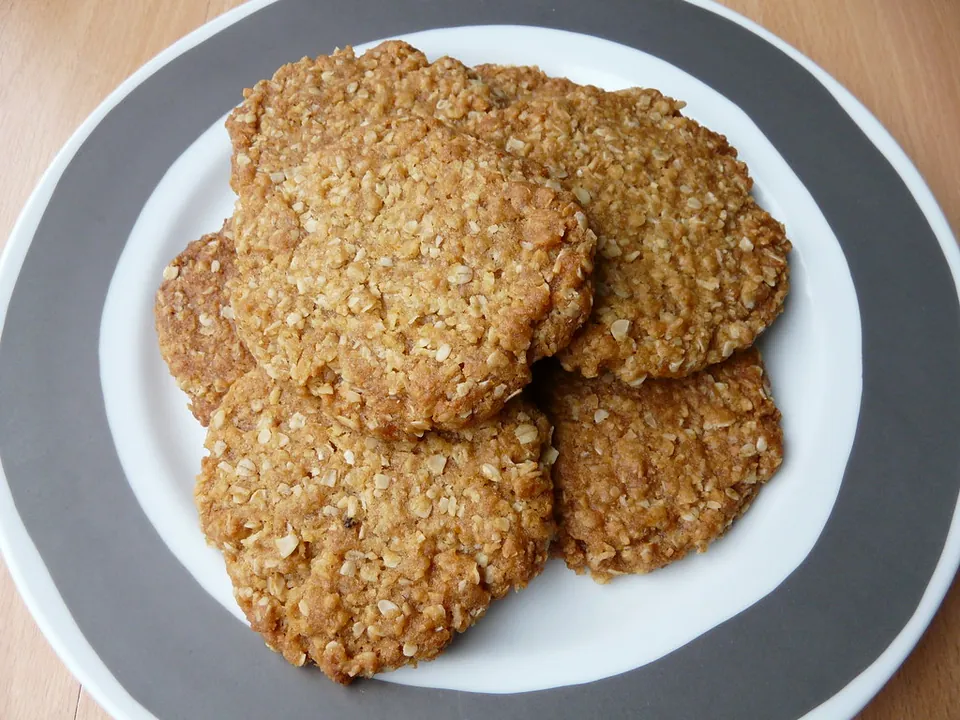
Anzac biscuit Period BOrigin theory BVerified
Some fields (dish name, region and gates) are shown from the Japanese-edition data.
The Anzac biscuit is known through a moving story: mothers and wives baked them and shipped them to soldiers at the front. But the oats-and-golden-syrup biscuit we know today was born after the First World War, and the touching war story is the later invention, a tradition created after the fact.
Verification highlight popular claim → verdict → evidence
The popular story — that women baked today's biscuit (oats, golden syrup, coconut) during the war and mailed it to soldiers at the front because it kept well — doesn't hold up against the record. Biscuits bearing the name 'Anzac' appear from 1916 as patriotic naming, but the current recipe first appears in print only after the war, in 1920, and coconut wasn't standard until the mid-1920s — the name came first, and the recipe settled into its familiar form afterward.
The three gates
- Ingredient-supply gate
- Oats, golden syrup, and coconut, all obtained through ordinary trade.
- Cooking-technique gate
- An egg-free baking formula built for a keeping biscuit.
- Venue gate
- From wartime home-front fundraising during World War I to a national biscuit.
Overview
The Anzac biscuit is a hard, long-keeping biscuit made with oats and golden syrup and no egg. It is a national favourite in Australia and New Zealand, and around Anzac Day, which commemorates the war dead of both countries, it is baked in homes and shops alike.
Several conditions had to fall into place, one after another, before the biscuit took its present form. First the ingredients. Oats, golden syrup and the coconut later added to them all became available through import and domestic trade, and only once they were fixtures in the household pantry could such a biscuit become an everyday bake.
The second condition was the recipe itself. A dough that sets with oats and syrup and no egg is built to keep for a long time. Only once this long-keeping recipe had settled, and the form with coconut added had spread through home kitchens, did the Anzac biscuit we now know appear. That happened not during the war but afterward, in the 1920s.
How we know
A national story follows the Anzac biscuit: that during the First World War mothers, wives and women's groups baked the biscuit as we know it and, because it kept well, shipped it across the sea to soldiers on the Gallipoli front. Binding sacrifice to the thoughts of those at home, this story has become part of both countries' sense of themselves.
Look at the story from the side of the records, though, and the order of events does not fit. The oats-and-golden-syrup recipe we know today first appears in print in Melbourne's newspaper The Argus, contributed by Josephine of East Brunswick, in 1920, that is, after the war. The form with coconut spread later still, through the mid-1920s. Coconut, moreover, turns rancid easily in transit and makes a poor keeping-food to send to a distant front. Baking today's recipe during the war and shipping it out was simply not possible.
That does not mean no biscuit bore the name 'Anzac.' Perth's The Sunday Times carried a patriotically named Anzac ginger biscuit in 1916, and Sydney's War Chest Cookery Book of 1917 records a biscuit of quite different make, with egg, rice flour and cinnamon. The name came first, and the recipe we know attached to it only after the war. The truth is not a myth of comforts sent to the front but something closer to the fundraising and comfort work of women at home, such as the Australian Comforts Fund founded in 1916.
The work of the food historian Garritt Van Dyk, and the examination of early recipes published by Sydney Living Museums, points to the same rereading. The stirring war story is the tale arranged in later years, and the biscuit itself settled after the war: this is how the Anzac biscuit truly came to be.
The full set of origin theories and the detailed verification log — traceable all the way to their sources — are available on the Japanese edition.
See the full origin theories and verification log (Japanese) →