All dishes / 南アジア
Misal pav Period COrigin theory CVerified
Some fields (dish name, region and gates) are shown from the Japanese-edition data.
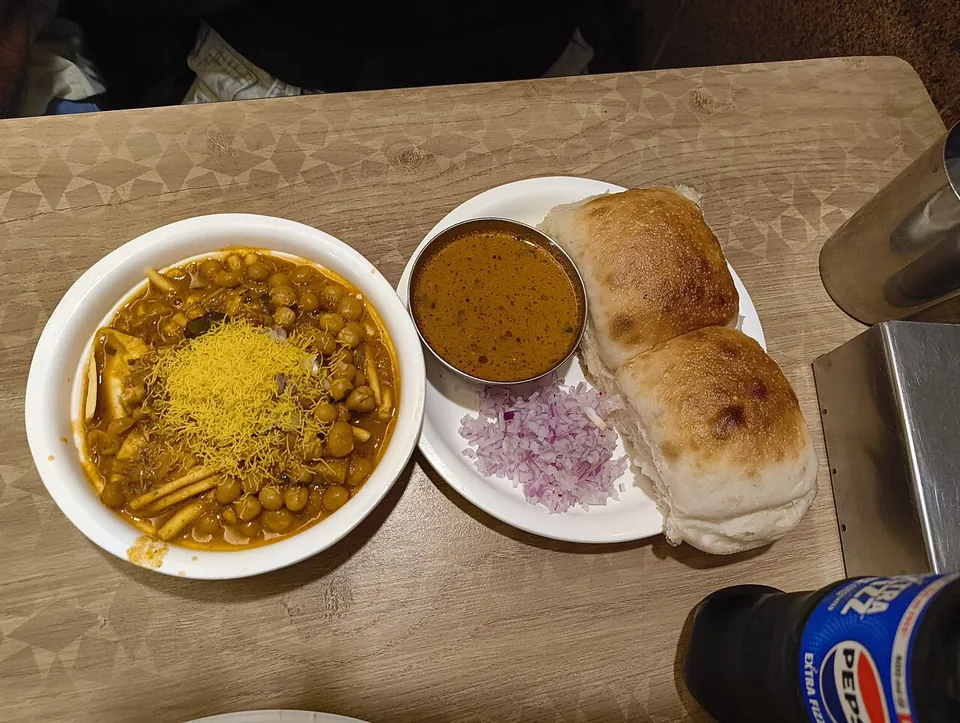
A spicy moth-bean curry served with a soft bread roll, one of Mumbai's signature snacks. The pav that gives the dish its present form descends from the bread the Portuguese brought to the coast of western India. The local legend that a 19th-century warrior created it has no support from its own time.
Verification highlight popular claim → verdict → evidence
A local legend credits a 19th-century Maratha warrior in Kolhapur with inventing misal, but there is no independent contemporary record, and the word misal itself first appears only in 20th-century texts. The better-supported account is that misal pav took shape in the early 20th century as a filling breakfast for mill workers in western Maharashtra (Kolhapur, Nashik, and Pune all lay claim), with the curry originally eaten with flatbread before Portuguese-descended pav bread became the norm.
The three gates
- Ingredient-supply gate
- Sprouted beans are native, while pav (round bread) only entered the picture after Portuguese-introduced bread baking took hold on India's west coast.
- Cooking-technique gate
- Sprouted beans are boiled into a spicy curry (usal) and paired with bread.
- Venue gate
- Urban street stalls and snack shops (naashta).
Overview
Misal pav pairs usal (misal), a spicy simmer of sprouted moth beans, with pav, a plump soft roll, in a snack that spread from western Maharashtra to Mumbai. The bean curry itself is an old, locally rooted food, and the people of Kolhapur and Nashik put this fiery dish on the table from early on. For a long time they scooped up the soupy curry with bhakri, a flat griddle bread.
For the present "misal plus pav" to take shape, the pav roll first had to establish itself along the coast of western India. Pav descends from the bread the Portuguese carried across the sea. Portuguese bread culture entered the coast at Goa and Bombay (now Mumbai), and in time local bakers began turning out these soft rolls as everyday fare. The tender bread was well suited to soaking up the juices of the spicy curry. When pav took bhakri's place as misal's partner, the outline of the dish enjoyed today came into being.
What carried that pairing into daily use were the cities of western Maharashtra in the early 20th century. For the people working the textile mills of Kolhapur and Nashik, the combination of a filling spicy curry and bread made a quick, sustaining snack for the morning or a break in the shift. Street stalls and small snack houses (nashta shops) served it, and it worked its way into the daily life of the urban workforce. Which city first produced it stays unsettled, with Kolhapur, Nashik, and Pune all in contention, but the account of a modern urban workers' snack is one on which food history agrees.
How we know
Misal pav carries a stirring local legend that a 19th-century Maratha warrior devised the dish at Kolhapur. A pedigree tied to a fighting man makes an appealing story, but no independent record from the same period supports the anecdote. The word misal itself first appears in writing only in 20th-century texts. No independent source turns up early enough to confirm the dish existed by the year the legend claims.
Following the food-history accounts, the present misal pav appears in the early 20th century as a workers' snack in Nashik and Kolhapur, where a curry once eaten with flat bhakri came later to be received on pav. The antiquity of the genre itself, the spicy simmer of sprouted beans, is not in doubt. But that antiquity cannot be used to push today's roll-and-curry misal pav back into the 19th century. Only after pav had settled into western India could this dish reach its present form.
For these reasons the warrior-inventor story is set aside as an origin legend that dresses the dish in a falsely early date, and the view that it took shape as an early-20th-century urban workers' snack, several candidate birthplaces still in play, is treated as the mainstream account.
The full set of origin theories and the detailed verification log — traceable all the way to their sources — are available on the Japanese edition.
See the full origin theories and verification log (Japanese) →