All dishes / 西欧
Ovos moles de Aveiro Period COrigin theory CVerified
Some fields (dish name, region and gates) are shown from the Japanese-edition data.
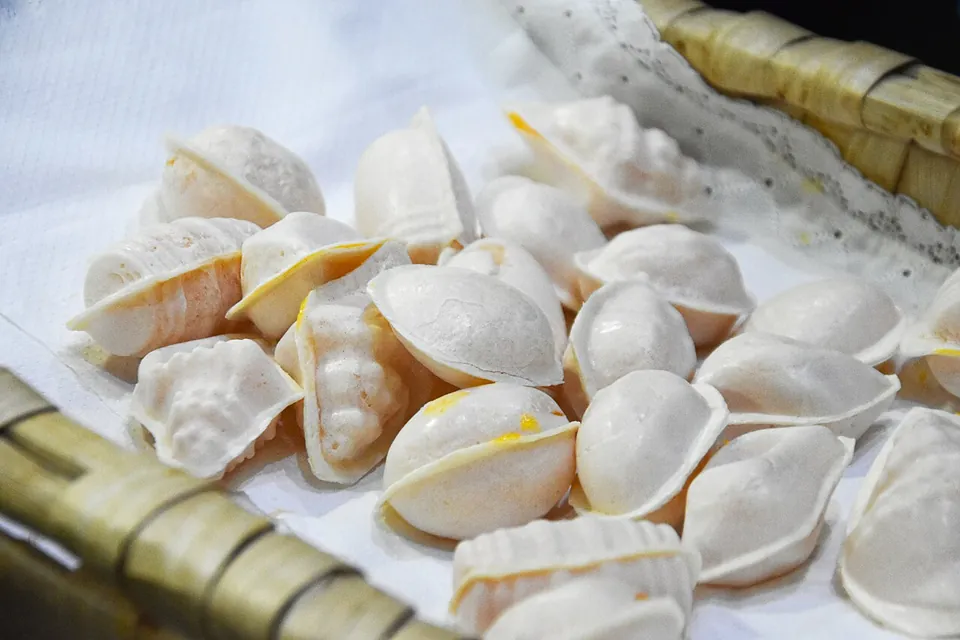
Ovos moles de Aveiro are a Portuguese convent sweet: a rich, sweet egg-yolk paste sealed inside thin wafer shells shaped like fish and shellfish. A charming tale says the nuns of Aveiro were left with surplus yolks after using the whites for other work and turned them into this candy—but no source specific to this sweet backs it up. What is documented is the convent kitchen itself, sustained by Atlantic sugar.
Verification highlight popular claim → verdict → evidence
The popular story that nuns used leftover egg yolks after using egg whites to starch habits or clarify wine is a stock legend attached to many Portuguese convent sweets, unsupported by independent sources. The well-documented account: the sweet was made at Aveiro's Jesuit convent, underpinned by King Manuel I's 1502 grant of Madeira sugar to the convent; the name itself is first attested in print only in Eça de Queiroz's novel Os Maias (1888) — a documented lower bound, not the year the dish was invented.
The three gates
- Ingredient-supply gate
- Egg yolk and rice are native; abundant, affordable sugar via Atlantic trade was what made the dense sweetness possible, the decisive factor in the dish's formation.
- Cooking-technique gate
- A convent confectionery technique of working egg yolk and syrup into a wafer-like shell.
- Venue gate
- Made at the Jesuit convent of Aveiro, later becoming a regional specialty.
Overview
Ovos moles de Aveiro are made by cooking egg yolks with sugar syrup into a dense, sweet paste and packing it into a delicate wafer casing of rice flour, molded to look like fish or shells. The star is the yolk, and the sugar that lifts it into something intensely sweet; the pale shell is made from local rice flour.
Sugar is what made the sweet possible. Egg yolks and rice had long been at hand in Aveiro, but to use sweetness lavishly enough to work yolks into a syrup-rich paste, you needed the refined sugar that Atlantic trade brought in. In 1502, King Manuel I granted the Jesus Convent of Aveiro an annual gift of sugar from Madeira. That sugar, carried across the ocean, became the foundation on which the convent's egg-yolk sweets grew.
Convents were the great centers of confectionery in early-modern Portugal. Rich sweets built on generous quantities of egg yolk spread from these convent kitchens to become regional specialties, and ovos moles belongs to that lineage—an Aveiro convent sweet.
The dish's name first appears clearly in print in Eça de Queiroz's novel Os Maias (1888). But the year a name reaches the page is not the year the sweet was born. The form we know today most likely took shape somewhere in the long span between the sugar's arrival in the early 1500s and the name's first record in the late 1800s.
How we know
This sweet comes with a story people love to tell. The nuns, it goes, used egg whites to clarify wine and to starch and press their habits, and were left with great quantities of yolks they had no use for—so they turned them into this sweet candy. A picture of thrift in the convent, yielding something delicious: it lodges easily in the memory.
But no contemporary record specific to ovos moles supports this surplus-yolk tale. Wikipedia flatly calls it a popular legend. And the very same story has been attached, in nearly identical form, to other Portuguese egg-yolk sweets such as pastéis de nata and papos de anjo. It reads less like the history of one sweet than a stock legend recycled across the whole family of yolk confections.
What is solid is different. The framing of ovos moles as a convent sweet made at the Jesus Convent of Aveiro is documented and firmly established. DGADR, a Portuguese public body, and the EU protected geographical indication (PGI) dossier both cite the record of Manuel I's 1502 annual grant of Madeira sugar to that convent. That grant, however, supplied sugar for convent confectionery in general; it did not name ovos moles. The first mention of the name in print is the Os Maias reference of 1888.
The real background of this sweet—an Aveiro convent supplied with colonial sugar—runs deeper than the heartwarming surplus-yolk anecdote. The year its present form settled lies somewhere in the window between the sugar's arrival in the early sixteenth century and the name's first record in the late nineteenth, and the year of first mention cannot be taken as the year of origin.
The full set of origin theories and the detailed verification log — traceable all the way to their sources — are available on the Japanese edition.
See the full origin theories and verification log (Japanese) →