All dishes / 中東・北アフリカ
Ful medames Period BOrigin theory BVerified
Some fields (dish name, region and gates) are shown from the Japanese-edition data.
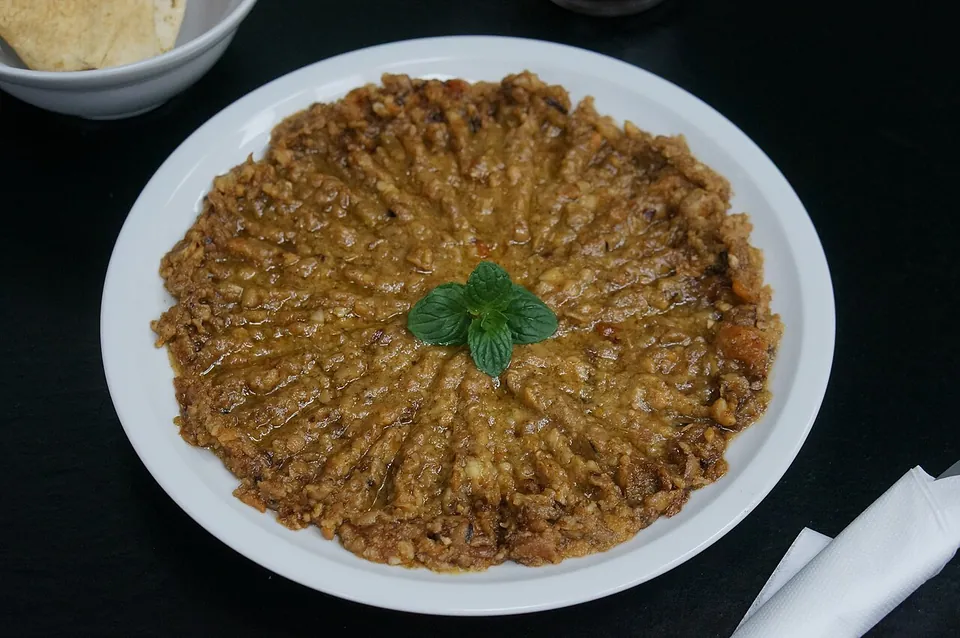
A slow-simmered dish of fava beans, ful medames is the backbone of the Egyptian breakfast. It is often said to reach back to the age of the pharaohs, yet the overnight, low-flame cooking that gives it its present shape took form in medieval Cairo.
Verification highlight popular claim → verdict → evidence
Fava beans were already a local staple in the Near East, but the technique and shape that define ful medames — burying a pot up to its neck in hot embers to simmer overnight — developed in medieval Cairo. Edward William Lane's contemporary 1836/1860 account of this buried-pot technique is cited as the standard source (Oxford Companion to Food). The claim of ancient-Egyptian (pharaonic) origin is a popular legend based on the antiquity of fava-bean eating generally; it does not establish that the current slow-simmered dish itself dates to antiquity.
The three gates
- Ingredient-supply gate
- Fava beans were a local staple, so they were not the limiting factor — they had long been available locally.
- Cooking-technique gate
- Long, slow simmering (traditionally in a damma, buried in embers in the ground); the beans are mashed before serving.
- Venue gate
- Everyday food and breakfast for ordinary people, later a café and street-food staple.
Overview
When and where it took shape
Ful medames is an everyday Egyptian dish of fava beans simmered until soft and dressed with olive oil, garlic, lemon, and cumin. The beans are usually mashed a little before serving, and the dish has long been a fixture of the morning table.
The fava bean itself is a long-established crop of Egypt and the wider Near East. It is a bean that has grown on this land for a very long time, an everyday staple always within reach of the kitchen.
What makes ful medames the dish it is, though, is the way it is cooked. The beans are simmered over a very low flame through the night, and this long, gentle cooking is what gives them their distinctive smoothness and depth. Traditionally the beans were placed in a pear-shaped earthenware pot, buried up to the neck in hot ashes, and left to cook until morning. The name medames is said to point to this very act of burying. It is this laborious overnight simmer that separates ful medames from a plain pot of boiled beans.
The places where it was eaten widened over time. Once a dish of the home, and above all a breakfast, it later became a staple sold at cafes and street stalls, growing into one of the dishes that stand for Egyptian food.
How we know
A familiar line accompanies ful medames: that it has been eaten since the age of the pharaohs. The story most often cited is that traces of the beans were found in a tomb of Egypt's Twelfth Dynasty, from before the common era.
Follow that tomb story, however, and it traces back to a single tourist blog, with no scholarly survey or primary record to support it. The antiquity of the fava bean as a foodstuff, on the other hand, is real. More than two thousand beans were unearthed together at a Late Neolithic site near Nazareth (recorded in Gil Marks's food encyclopedia), and the Jerusalem Talmud of the fourth century mentions bean dishes. What is old is the culture of eating fava beans, not the overnight-simmered ful medames of today as an unbroken inheritance from antiquity.
The records that describe the dish itself in concrete form survive in medieval Cairo. According to the historian Janet Abu-Lughod, a district known as the Princess Baths held a monopoly on residual heat and simmered beans through the night in enormous pots to supply the city with breakfast. In the nineteenth century, Edward William Lane, who lived long in Egypt, saw with his own eyes and set down this cooking: a pear-shaped pot buried up to its neck in hot ashes, left to simmer overnight, the beans eaten with linseed oil and lime juice. His account was later taken up in Alan Davidson's Oxford Companion to Food and became the settled point of reference for writing about the dish.
So while the culture of eating fava beans reaches back to antiquity, the overnight low-flame simmer that shapes today's ful medames is seen, in food history, as something that grew up in medieval Cairo. The age of an ingredient and the moment a dish took form are two different matters.
The full set of origin theories and the detailed verification log — traceable all the way to their sources — are available on the Japanese edition.
See the full origin theories and verification log (Japanese) →