All dishes / 北米
Brownie Period BOrigin theory DVerified
Some fields (dish name, region and gates) are shown from the Japanese-edition data.
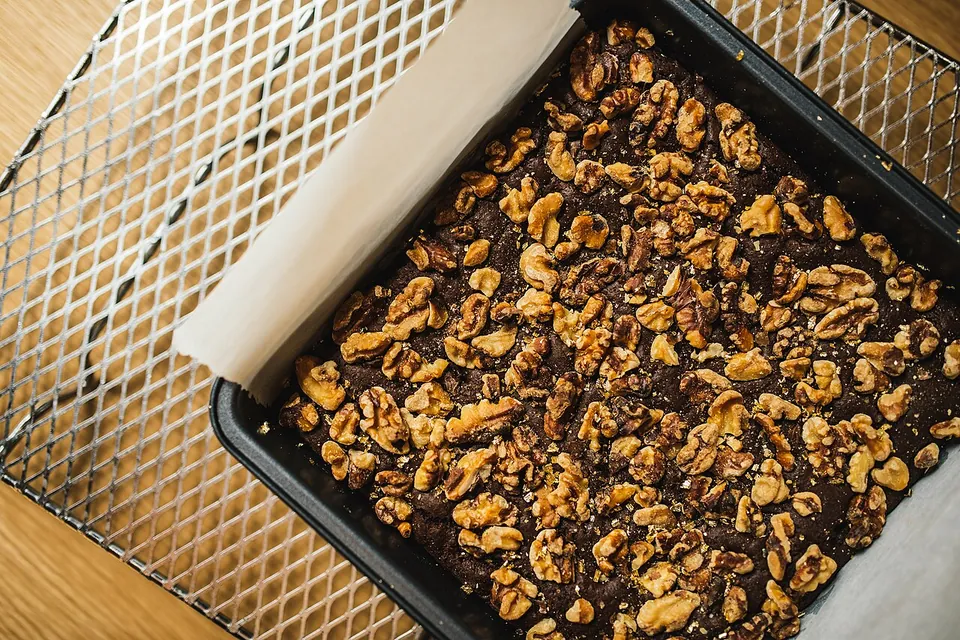
The brownie is a dense, fudgy chocolate square. The oft-repeated story that Chicago's Palmer House Hotel invented it for the 1893 World's Fair has no support in the record of the time.
Verification highlight popular claim → verdict → evidence
Popular claim: the Palmer House Hotel in Chicago invented the brownie for Bertha Palmer at the 1893 World's Fair. Verdict: refuted -- no contemporary record ties the Palmer House to the name, and the word 'brownie' itself came from Palmer Cox's 1887 illustrated book about elfin characters, already applied to unrelated candy by 1897 before ever being used for a chocolate baked good. The earliest known chocolate brownie recipes appear independently in 1899, in a Chicago cookbook and in Maine's Machias Cook Book, suggesting a shared, unrecorded prototype rather than a single inventor. Key sources: Stella Parks (BraveTart) research; Barry Popik's etymological dictionary.
The three gates
- Ingredient-supply gate
- Cocoa itself is native to the New World, but confectionery-grade solid chocolate only became available after 19th-century Western manufacturing was established. The limiting factor was access to that processing-grade chocolate.
- Cooking-technique gate
- Oven baking, with a dense, low-flour dessert formulation.
- Venue gate
- Hotel and world's-fair confectionery culture in cities, later spread through home recipe books.
Overview
A brownie is a dense, moist square baked from chocolate, butter, sugar, and eggs with only a little flour. It is heavier than cake, and the sparing use of wheat gives it that chewy, close-grained bite. It settled early into the American home-baking repertoire and has stayed a fixture there ever since.
Chocolate carries the dish. Cacao itself is an old New World crop, but the solid, sweetened baking chocolate you can fold into a batter did not reach American and European shelves until manufacturers worked out how to make it in the nineteenth century. Once that kind of chocolate was on hand, bakers could build a rich, chocolate-forward square around it.
The earliest recipes on record surface in the United States at the very end of the nineteenth century. In 1899 a Chicago cookbook printed a 'Brownie cake,' and a charity cookbook from Machias, Maine, carried a 'Brownie's Food'—two near-modern chocolate versions appearing the same year in places far apart. Between 1899 and 1904 similar recipes turned up across quite different kinds of print: newspaper advertisements, mail-order catalogs, and cookbooks. In 1906 Fannie Farmer put a chocolate version in her cookbook, and from there the dish spread across the country. Hotels, the World's Fair, the confectionery culture of the cities, and home recipe books were the venues that carried it.
How we know
The origin most often told for the brownie belongs to the Palmer House Hotel in Chicago. The hotel's own account holds that the dessert was created there in 1893, at Bertha Palmer's request, for the World's Columbian Exposition.
The trouble is that nothing from the time backs it up. No publication from 1893 ties the name 'brownie' to any Palmer House sweet. The word itself was in the air for other reasons: the little sprites of Palmer Cox's illustrated book 'The Brownies: Their Book' (1887) made 'brownie' a fashionable name in the 1890s, and it was already being borrowed for candies and cakes with no connection to any single invention. A chocolate 'brownie' shows up in the 1897 Sears mail-order catalog and in an 1898 Kansas City Star advertisement. The etymologist Barry Popik's dictionary of word histories and the work of the pastry writer Stella Parks lay this out and place the Palmer House story where it belongs—the most polished of the popular tales, a tradition tidied into shape after the fact.
So who made the first one? That stays unsettled. Near-modern chocolate versions appear in 1899 in two separate places, Chicago and Machias, Maine, and over the next few years recipes bearing the Maine town of Bangor's name turn up in scattered spots. Cookbooks, newspaper advertisements, and mail-order catalogs—independent kinds of sources—all cross in the same span of years. From how wide and how close together they are, Parks infers a shared parent recipe that left no direct trace of its own. The brownie cannot be pinned on any one person or shop; it branched from an anonymous ancestor. The question of who made the first brownie ends in the conclusion that it will not be answered.
The full set of origin theories and the detailed verification log — traceable all the way to their sources — are available on the Japanese edition.
See the full origin theories and verification log (Japanese) →