All dishes / 北米
Haupia Period COrigin theory BVerified
Some fields (dish name, region and gates) are shown from the Japanese-edition data.
Haupia, Hawaii's white coconut confection, is often described as a pudding that could only set once imported starches such as cornstarch arrived. Yet the starch that had always bound it, an arrowroot called pia, was native to the islands from the start.
Verification highlight popular claim → verdict → evidence
It is often assumed haupia only became a solid pudding once modern starches like cornstarch or kudzu arrived, but pia -- the traditional Polynesian arrowroot thickener -- is itself an ancient canoe plant that could set the pudding long before Western contact in 1778. Andrews' 19th-century Hawaiian dictionary defines haupia using arrow-root (pia), not cornstarch, confirming the traditional form predates the modern substitute.
The three gates
- Ingredient-supply gate
- Coconut milk, pia (Polynesian arrowroot, Tacca leontopetaloides), and ko (sugarcane) are all Polynesian canoe plants available since Hawaii's settlement around 400-450 AD. Modern cornstarch is a later substitute for pia, not something the dish needed in order to exist.
- Cooking-technique gate
- Coconut milk is thickened and set with pia starch, then cooled -- an old technique that needed no modern method to solidify.
- Venue gate
- A traditional sweet served at luau feasts, part of everyday food culture.
Overview
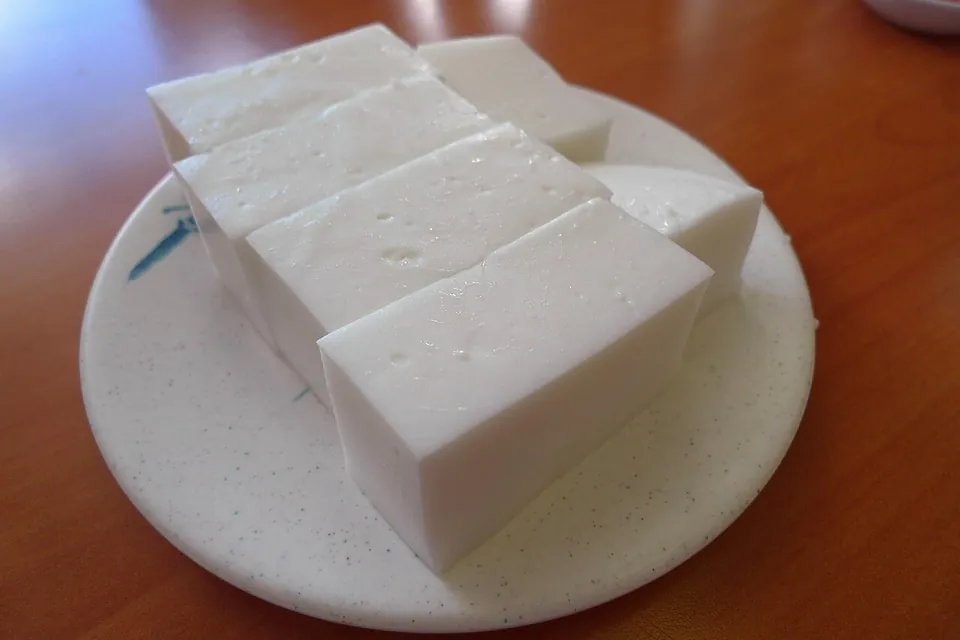
Haupia is a white confection made by simmering the milk pressed from coconut with a starch, then chilling it until it sets. Long a favourite sweet at the luau, the Hawaiian feast, it is defined by its distinctive mouthfeel: soft enough to quiver, yet firm enough to slice with a knife.
Its ingredients all descend from plants the Polynesians carried in their canoes when they crossed the ocean and reached these islands. The coconut whose milk is pressed, the sugarcane (kō) that lends sweetness, and the arrowroot that binds the milk into shape, called pia in the islands' language, the starch drawn from the root of Polynesian arrowroot. People settled Hawaii around 250 to 450 AD, and these plants took root on the islands at about that time. The name of the confection speaks of its very materials: hau means "cold," and pia is this arrowroot starch. A chilled, set arrowroot sweet, its meaning carried straight into its name.
Haupia was made with the plants and skills the islanders had at hand. The coconut milk is set over a fire, pia starch is stirred in to thicken it, and it is then left to chill and set. Pia is itself an arrowroot with the power to gel the milk into a firm mass, and its action had been used in island life since prehistoric times. As a feast-day sweet, this confection stood complete on local materials and craft alone.
How we know
A certain story trails after haupia: that the confection took its present firm shape only after imported starches, cornstarch or Japanese kudzu, reached the islands in modern times. That trembling white form, the story goes, was something only a starch from elsewhere first made possible.
But the story has the order backwards. The arrowroot that has set haupia, pia, is no new starch from abroad. It is a native plant the Polynesians brought in their canoes, and long before Western ships appeared off Hawaii in 1778, islanders were setting coconut milk with this arrowroot into a sliceable sweet. Both botanical and cultural records tell us that pia is Polynesian arrowroot, rooted in Hawaii since prehistoric times.
Why, then, did the tale of imported starch arise? Pia is a laborious arrowroot: the root must be dug, crushed, and the starch washed out in water. When the plant grew hard to obtain in modern times, cheaper and easier cornstarch came to be used in its place. The finished mouthfeel shifted from that of the original arrowroot toward a springier, gelatin-like set. What the imported starch did was not to make possible a confection that had not existed, but to replace the contents of one that already did. Told with the modern starch as the starting point, this substitution can look as though it were the moment of birth. Haupia's true origin lies with the arrowroot rooted in the islands.
The full set of origin theories and the detailed verification log — traceable all the way to their sources — are available on the Japanese edition.
See the full origin theories and verification log (Japanese) →