All dishes / ラテンアメリカ
Pisco sour Period AOrigin theory BVerified
Some fields (dish name, region and gates) are shown from the Japanese-edition data.
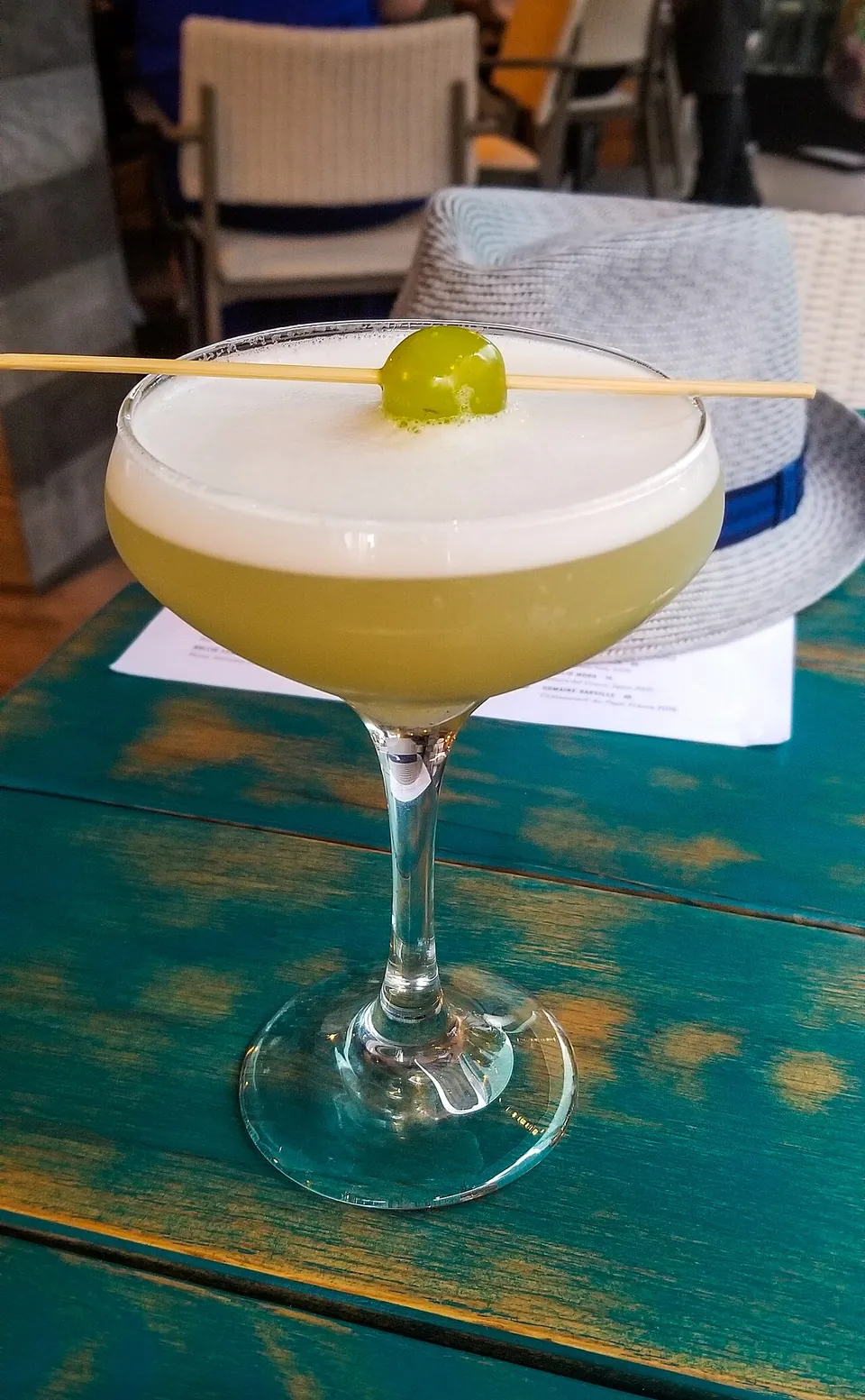
Pisco sour, the grape-brandy cocktail born in a Lima bar. Peru and Chile both claim it as their own, but the Chilean story of an 1872 invention in Iquique turns out, when you follow its source, to be about a different drink altogether.
Verification highlight popular claim → verdict → evidence
The pisco sour is credited to Victor Vaughn Morris, an American bartender who opened Morris' Bar in Lima in 1916 and devised the drink (a variant of the whiskey sour) in the early 1920s; his Peruvian bartender Mario Bruiget later added Angostura bitters and egg white to complete today's recipe. A rival Chilean folk tradition credits Elliot Stubb, a British steward, with inventing it in Iquique in 1872, but researcher Guillermo Toro-Lira traced the supposed source to a newspaper article that actually describes a whiskey sour, not a pisco sour -- a misreading that debunks the claim.
The three gates
- Ingredient-supply gate
- The limiting ingredient is pisco, a grape brandy. Grapes are native to the Old World but were brought to Peru during the Spanish colonial period and established there as pisco; citrus is likewise an Old World import that arrived during the colonial period.
- Cooking-technique gate
- Emulsifying egg white by shaking, together with general cocktail-bartending technique.
- Venue gate
- From bars in Lima, such as Morris' Bar, to a national cocktail.
Overview
Pisco sour is a cocktail of Peru's native grape brandy, pisco, shaken with lime, egg white, and sugar until it foams. Pisco itself, distilled from grapevines transplanted to Peru in the colonial period, is old enough that its making is recorded in a will from the early seventeenth century. Citrus, too, had come over from the Old World in colonial times and taken root. All the ingredients were on hand in the region long before the twentieth century.
What brought the drink into being was the bartending craft that assembled these into a single cocktail, and the city bars where it was served. Add egg white and shake, and a smooth white layer of foam rises to the surface. This trick of emulsion, together with the manner of the sour cocktails led by the whiskey sour, came together within the bar culture of Lima. In the Lima of the 1920s, pisco sour took its form, and in time it became the national cocktail of Peru.
How we know
The origin of pisco sour has long been contested between Peru and Chile. Tangled up with the dispute over the very name pisco, the question of which country it belongs to has become a matter of national pride.
The Chilean side has long told the story of Elliot Stubb, a British ship's steward who is said to have invented the drink in 1872 in Iquique—then Peruvian territory, now part of Chile. The local newspaper El Comercio de Iquique has been cited as its source. But when the drinks historian Guillermo Toro-Lira reread that article, he found that what it described was the invention of a whiskey sour, not a pisco sour. The old story rested on a misread source. With this rereading, gathered into Oxford University Press's encyclopedia of Latin American history (2022), the Stubb origin has been set aside as a popular myth.
The Peruvian history rests on records left on paper. The earliest documentary appearance of the name pisco sour is an advertisement in the September 1920 issue of Hogar magazine in Lima, which introduced it as a white drink devised by a Mr. Morris; the name appears again in an April 1921 advertisement in Mundial. The visitors' register of Morris' Bar, opened in Lima in 1916 by the American bartender Victor Vaughn Morris, records a pisco sour in February 1926. Analyzing that same register, Toro-Lira notes that the records do not go so far as to prove Morris alone devised the drink; it is more reasonable to see the cocktail as having taken shape at Morris' Bar between 1916 and the mid-1920s. A Peruvian bartender at the same bar, Mario Bruiget, is said to have brought it closer to the modern recipe by adding Angostura bitters and egg white. The primary sources and the scholarship point the same way—to the Lima of the 1920s, not the Iquique of 1872.
The full set of origin theories and the detailed verification log — traceable all the way to their sources — are available on the Japanese edition.
See the full origin theories and verification log (Japanese) →