All dishes / 東アジア
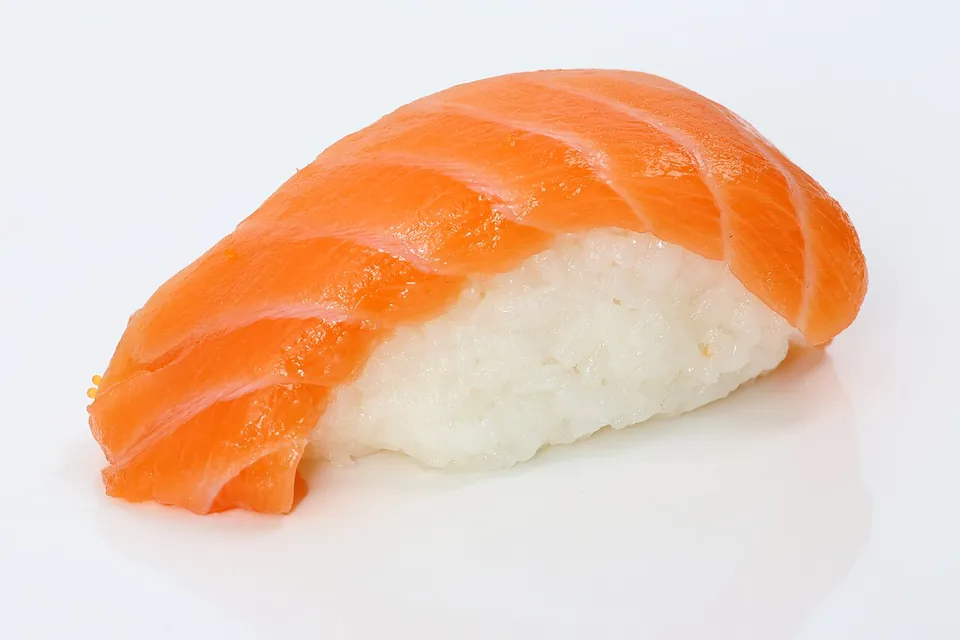
Nigiri sushi Period BOrigin theory CVerified
Some fields (dish name, region and gates) are shown from the Japanese-edition data.
The idea that a single Edo genius, Hanaya Yohei, "invented" nigiri-zushi is less a story of one man than of a gradual shift in style: as cheap vinegar spread through Edo, the older pressed sushi slowly gave way to the hand-formed piece.
Verification highlight popular claim → verdict → evidence
Popular legend credits Hanaya Yohei as the sole inventor of nigiri sushi, but the story is heavily embellished and poorly attested in contemporary records. The likelier account is gradual development: nigiri sushi evolved step by step out of pressed sushi (hayazushi), and Yohei was its foremost popularizer rather than its single inventor (Kitagawa Morisada's Morisada Manko, c.1853; Yanagidaru senryu, 1829).
The three gates
- Ingredient-supply gate
- The limiting factor was cheap kasu-zu (red rice vinegar, pioneered in Owari by Nakano Matazaemon in 1804) reaching Edo, which made vinegared rice affordable from around 1804. Fresh fish from Edo Bay was already locally available; it reached Edo through domestic distribution.
- Cooking-technique gate
- Hand-formed nigiri with vinegared rice (no specially limiting cooking technique; non-limiting).
- Venue gate
- street stalls / common people / coastal port
Overview
Nigiri-zushi took on its modern form in Edo—present-day Tokyo—in the first half of the nineteenth century, roughly between 1804 and 1850.
Around 1804, a cheap red vinegar known as kasu-zu, brewed from sake lees by Nakano Matazaemon in Handa near Nagoya, began reaching Edo. Vinegared rice, until then relatively costly, could now be made inexpensively, and a trade in hand-formed sushi sold in quantity from street stalls became viable. Edo Bay was already rich in fresh fish, and pressing a slice onto a small mound of seasoned rice by hand called for no special or hard-to-acquire technique. Only once vinegar arrived cheaply in Edo did this dish stand up as a product worth selling.
The setting in which it was served shaped its form as much as anything. Early-nineteenth-century Edo was a densely packed city whose streets were lined with stand-up food stalls. Formed to order and eaten on the spot, nigiri-zushi was a style honed to fit exactly that: quick, cheap food for the crowds of an overcrowded city. Where the flow of cheap vinegar into Edo met the world of the street stall, nigiri-zushi came into being.
How we know
Ask who created nigiri-zushi and one name always comes up: Hanaya Yohei, who is said to have devised the hand-formed piece in the Bunsei era (1818–1830) at his shop before the Ekoin temple in Ryogoku.
But the claim that he alone invented it finds no support in the records of his own time. That Yohei was a real man and his shop a real place is well attested. Yet the leading cookbooks and books of manners of the period do not name him as the sole inventor. If anything, Sakaiya Matsugoro of the shop "Matsu-no-sushi" is named independently as a rival candidate. That several shops surface as candidates is itself enough to unsettle any story that credits one man. The Morisada Manko, a record of manners compiled around 1853, calls Yohei's shop a famous Edo establishment but stops short of naming him the inventor.
When hand-formed sushi first appeared in Edo can be established without leaning on the Yohei legend. A senryu verse in the Haifu Yanagidaru—"a sorcerer's hand, the way he presses the sushi rice"—was composed in 1827 and printed in 1829, and it is the oldest surviving text to mention nigiri-zushi. The verse names no inventor at all. Hand-formed sushi was already on the streets of Edo before anyone's claim to have invented it.
So what spread the hand-formed piece? Once cheap kasu-zu began circulating in Edo from 1804, the style drifted, shop by shop, from the older pressed sushi toward the hand-formed one. The Morisada Manko notes that in Edo pressed sushi fell out of use until only hand-formed sushi remained, recording that replacement from the side of a contemporary source. Yohei may well have been the first great popularizer, but he was not a lone genius conjuring the form from nothing. The record we have sits closer to a slow shift driven by the arrival of cheap vinegar than to a bright moment of invention credited to one man.
The full set of origin theories and the detailed verification log — traceable all the way to their sources — are available on the Japanese edition.
See the full origin theories and verification log (Japanese) →