All dishes / オセアニア
Flat white Period BOrigin theory CVerified
Some fields (dish name, region and gates) are shown from the Japanese-edition data.
Which country gave the world the flat white—Australia or New Zealand? The rivalry burns hot enough to stake national pride on. Yet it was Britain, in fact, that first wrote the term down.
Verification highlight popular claim → verdict → evidence
Where the flat white was invented remains unsettled: a Sydney claim (Alan Preston at Moors Espresso Bar, 1985) and New Zealand claims (Wellington and Auckland) are each backed by independent evidence, and the sources don't converge. Note also that the term 'flat white' itself predates today's style — it's attested in Britain before the Australian/New Zealand café scene of the 1980s — so the earliest use of the word and the origin of the modern drink are two different questions.
The three gates
- Ingredient-supply gate
- Coffee beans and milk, both readily available through trade.
- Cooking-technique gate
- Pressure-extracted espresso combined with finely steamed milk poured in a particular way.
- Venue gate
- The Australian and New Zealand cafe culture of the 1980s.
Overview
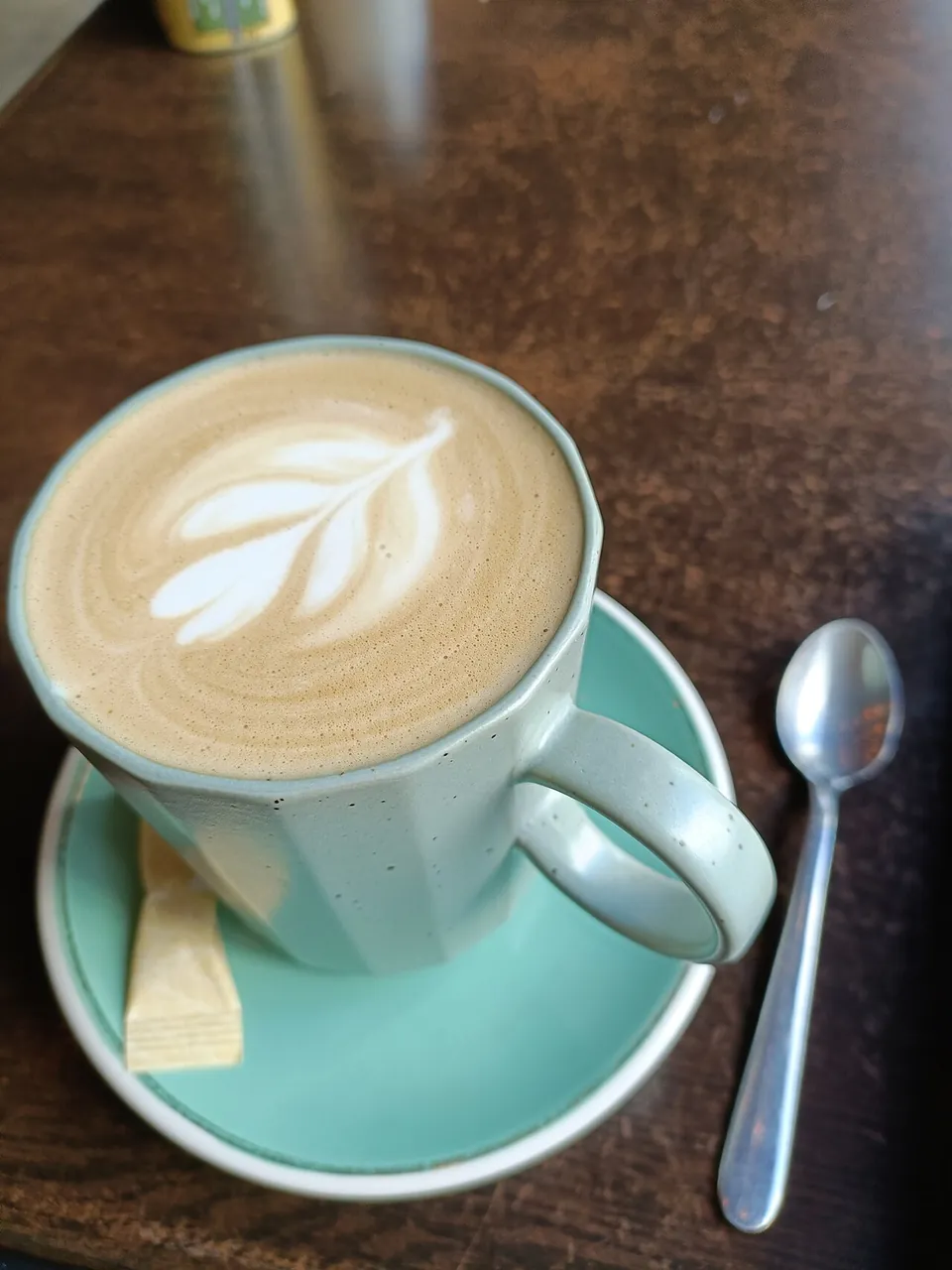
A flat white is coffee made by pulling a strong shot of espresso under pressure and pouring finely steamed milk in a thin layer over it. Rather than the thick foam of a cappuccino, the point of this cup is a smooth surface with a thin layer laid on top, and the pouring craft behind it shows in the name itself (flat, meaning level; white, meaning milk).
Both the coffee beans and the milk were ordinary items to be had through commerce in the cities of Australia and New Zealand at the time. What shaped this cup was the tools and the handwork more than the ingredients. The espresso machine, which extracts under high pressure in a short time, took root on Australian street corners after the machines had arrived (from around 1928 through the 1950s). Then the technique of pouring milk thin while keeping the surface smooth spread, and the cup took form. The stage was the 1980s, in the cafés of Australia and New Zealand where espresso culture flowered. The coffee culture brought by Italian immigrants settled into the cities' cafés, and as shops competed over how they poured, the drink was standardized as a smooth cup with the foam held down.
How we know
This cup carries a twisted story on two layers.
One is the dispute between Australia and New Zealand over the birthplace. Australia's strongest piece of evidence is the record—a photograph of the menu—that Alan Preston of Sydney's Chinatown Moors Espresso Bar put "flat white" on his menu in 1985. Preston says it derives from the "white coffee-flat" served in the Italian immigrant cafés of North Queensland. A May 1983 Sydney review (Miller's Treat) also mentions "flat white coffee." New Zealand, on the other hand, points to Wellington's Bar Bodega (1989, said to have come from a failed cappuccino) and Auckland (Cafe DKD) in claiming its own origin. Each country's claim rests on its own separate sources, and the two do not converge on either side. The rivalry, waged for national pride, is still unsettled—which is why the drink's origin remains a matter of several accounts.
The other layer is in the name. The term "flat white" was, in fact, written down in Britain before the Australia–New Zealand dispute. The Oxford English Dictionary records it from a British publication of 1971, and the 1963 British film Danger by My Side has a scene in which a character orders a flat white at an espresso bar. The coffee historian Ian Bersten notes the drink itself may have arisen in 1950s Britain. But this is a record of first appearance—that the term existed by that year at the latest—not proof that the present-day style now drunk around the world, the cup of pressurized extraction and finely steamed milk, was born there. That the word was written earlier in Britain and that the present style was set and spread in the cafés of Australia and New Zealand are matters on different layers. The claim that "Australia and New Zealand named the flat white" does not hold up against Britain's earlier record. And yet what shaped today's flat white and spread it into a national drink was the 1980s café culture of Australia and New Zealand. The first appearance of the term and the origin of the style need to be read apart.
The full set of origin theories and the detailed verification log — traceable all the way to their sources — are available on the Japanese edition.
See the full origin theories and verification log (Japanese) →